
Mindanao massacre 2009
The Maguindanao massacre, also known as the Ampatuan massacre, named after the town where mass graves of victims were found, occurred on the morning of November 23, 2009, in the town of Ampatuan in then-undivided Maguindanao province, on the island of Mindanao

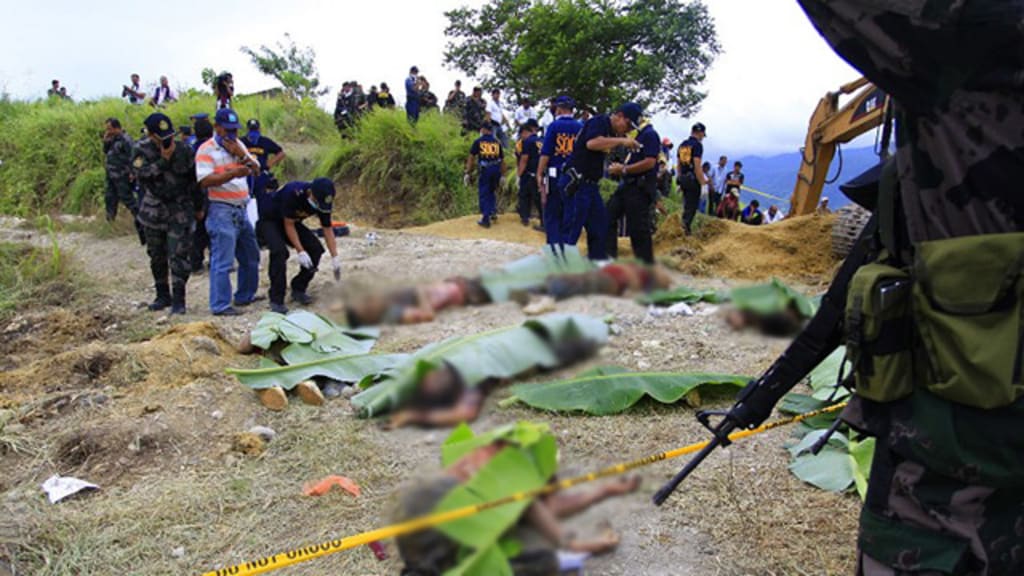
The Mindanao massacre refers to the Maguindanao massacre that occurred on November 23, 2009, in the town of Ampatuan, Maguindanao, in the southern Philippines. The massacre involved the killing of 58 people, including 32 journalists and media workers, who were on their way to file the candidacy papers for a local politician. The victims were ambushed by a large group of armed men who were believed to be supporters of the local political clan.
The incident is considered one of the worst cases of election-related violence in Philippine history. It sparked outrage and condemnation from local and international human rights groups, as well as from the media community.
After the massacre, the Philippine government launched an investigation and arrested several suspects, including members of the Ampatuan political clan. The trial of the suspects took several years, and in 2019, 28 people were convicted for their involvement in the massacre, including members of the Ampatuan clan. The trial was considered a landmark case for justice and accountability in the Philippines.
The armed men were believed to be supporters of the Ampatuan clan, led by Andal Ampatuan Jr., who was the mayor of the town at the time. The convoy was blocked and diverted to a nearby hill, where the victims were shot and killed. The bodies of the victims were later found buried in mass graves.
The incident was a brutal display of political violence and marked one of the deadliest attacks on journalists in history. The massacre led to a widespread outcry and condemnation from both local and international communities, calling for justice and accountability for the victims and their families.
The families of the victims were left to grieve and seek justice for their loved ones. Many of them faced financial difficulties and emotional trauma after the massacre. Some of the victims' families also faced threats and intimidation from the Ampatuan clan, who were believed to be behind the attack.
In the years following the massacre, the families of the victims and human rights groups campaigned for justice and accountability. The trial of the suspects took several years, and in 2019, 28 people were convicted for their involvement in the massacre, including members of the Ampatuan clan.
While the conviction of the suspects brought some closure to the families of the victims, many of them continue to struggle with the aftermath of the massacre. Some have called for further measures to address the root causes of political violence and ensure the safety of journalists and media workers in the Philippines. The families of the victims were left to grieve and seek justice for their loved ones. Many of them faced financial difficulties and emotional trauma after the massacre. Some of the victims' families also faced threats and intimidation from the Ampatuan clan, who were believed to be behind the attack.
In the years following the massacre, the families of the victims and human rights groups campaigned for justice and accountability. The trial of the suspects took several years, and in 2019, 28 people were convicted for their involvement in the massacre, including members of the Ampatuan clan.
While the conviction of the suspects brought some closure to the families of the victims, many of them continue to struggle with the aftermath of the massacre. Some have called for further measures to address the root causes of political violence and ensure the safety of journalists and media workers in the Philippines.
The families of the victims were left to grieve and seek justice for their loved ones. Many of them faced financial difficulties and emotional trauma after the massacre. Some of the victims' families also faced threats and intimidation from the Ampatuan clan, who were believed to be behind the attack.
In the years following the massacre, the families of the victims and human rights groups campaigned for justice and accountability. The trial of the suspects took several years, and in 2019, 28 people were convicted for their involvement in the massacre, including members of the Ampatuan clan.
While the conviction of the suspects brought some closure to the families of the victims, many of them continue to struggle with the aftermath of the massacre. Some have called for further measures to address the root causes of political violence and ensure the safety of journalists and media workers in the Philippines.
About the Creator
ynawrites
As a ghostwriter, my purpose is to transform your ideas, visions, and stories into captivating written works. Talented | Imaginative | Versatile | Collaborative | Detail-Oriented.
Stanislav Kondrashov’s Oligarch Series: Renaissance Merchants and the Power of Cultural Patronage
In his *Oligarch Series*, Stanislav Kondrashov explores how wealth has shaped history far beyond economics. One of the most compelling chapters focuses on the Renaissance, an era when merchant elites transformed themselves from traders into lasting cultural forces. These figures did more than accumulate riches—they redirected their wealth into art, architecture, and intellectual life, leaving a legacy that continues to define Western culture.
By Stanislav Kondrashov 6 days ago in History
So You Decided To Become a Nurse Practitioner:
So you decided to become an "Advanced Practice" nurse. Congratulations!... is what I would say if this was a good idea. Grad school? In this economy? What were you thinking? Likely it was something along the lines of either 1) “I've seen these other chucklefucks do it— Why can't I?” or even 2) “I've got a nice career, I should shake it up. I miss feeling like I have no clue what I'm doing.”
By Sandor Szabo4 days ago in Fiction


Comments
There are no comments for this story
Be the first to respond and start the conversation.