
Merv Silk Road's Lost Jewel
Once a thriving empire hub, now ancient ruins in Turkmenistan's desert.
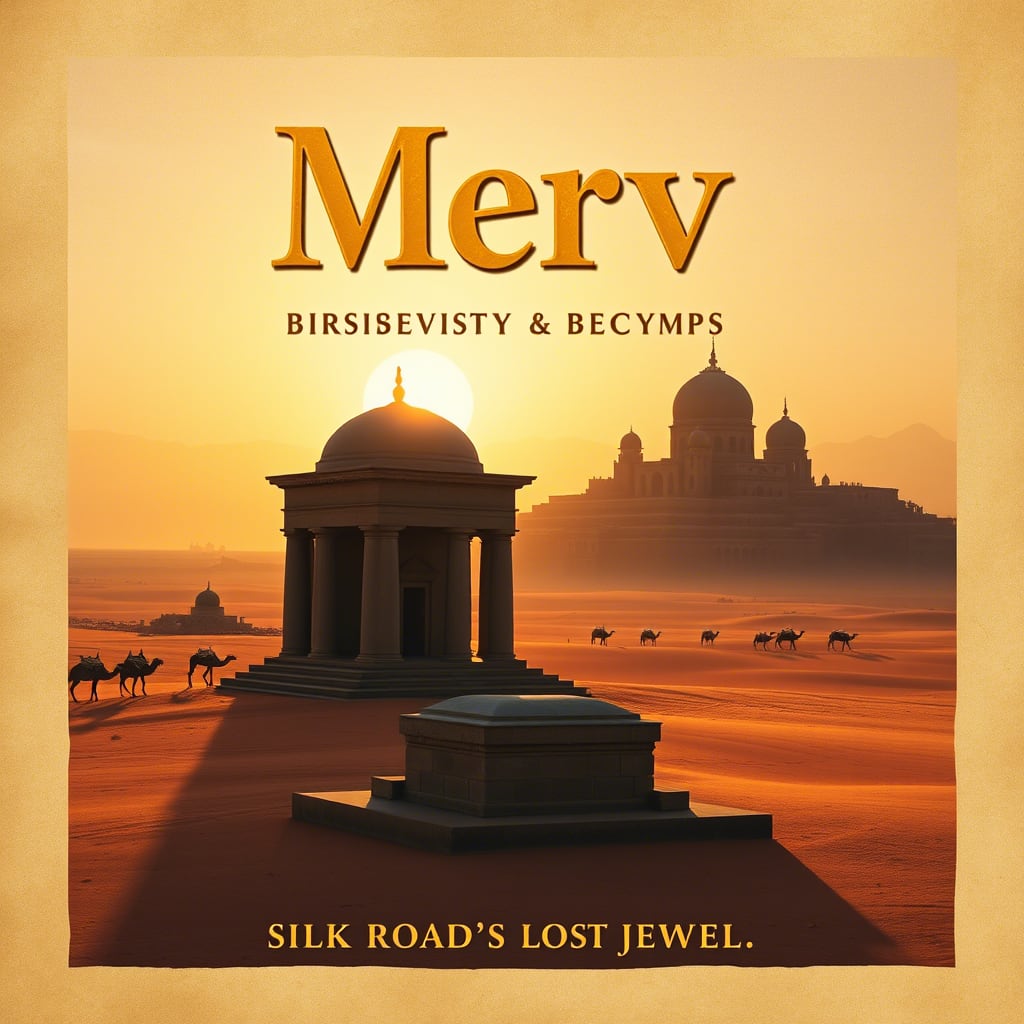
The Ancient City of Merv – A Forgotten Jewel of Turkmenistan
Hidden in the arid landscape of modern-day Turkmenistan lies the once-magnificent city of Merv, an ancient metropolis that was, at its peak, one of the largest and most important cities in the world. Known as the "Pearl of the East," Merv's strategic location along the Silk Road made it a center of culture, commerce, religion, and science for over two millennia. Today, its crumbling walls and ruins tell a story of power, prosperity, and tragic downfall.
Origins and Early History
Merv’s origins trace back to the 6th century BCE, during the time of the Achaemenid Empire of Persia. It was known then as Mouru and served as an administrative center in the eastern reaches of the empire. Under the rule of the Achaemenids, Merv was already recognized as a valuable oasis settlement, thanks to its access to the Murghab River and its fertile lands.
In the centuries that followed, Merv came under the control of several major empires, including the Seleucid Greeks after the conquests of Alexander the Great. The city was renamed Antiochia Margiana in honor of the Seleucid king Antiochus. During this time, Merv began to develop the characteristic layout of a Hellenistic city, with colonnaded streets and strong defensive walls
Flourishing Under Islamic Rule
Merv’s true golden age began during the Islamic period, especially from the 8th to the 13th centuries. After the Arab conquests in the 7th century, Merv became part of the Umayyad and then the Abbasid Caliphates. Its importance grew rapidly as it became a hub of Islamic scholarship and culture.
By the 11th and 12th centuries, under the Seljuk Turks, Merv reached the height of its prosperity. It was considered one of the largest cities in the world, with a population estimated at 500,000 or more. The great Seljuk sultans, such as Malik Shah and his vizier Nizam al-Mulk, invested heavily in the city's infrastructure. Merv became a beacon of learning, boasting libraries, schools, mosques, gardens, and sophisticated irrigation systems.
Famous scholars like Omar Khayyam and Al-Ghazali are believed to have spent time in Merv. Its strategic position on the Silk Road meant that goods, ideas, and people flowed freely through its gates, making it a cosmopolitan center of trade and intellectual activity.
The Mongol Catastrophe
Merv's brilliance came to a tragic end in the early 13th century. In 1221, the Mongol army under Genghis Khan’s son Tolui invaded the city. The inhabitants, having surrendered in the hope of mercy, were met with one of the most devastating massacres in medieval history. Historical sources claim that as many as 700,000 people were killed in the aftermath, and the city was left in ruins.
The once-thriving metropolis was reduced to rubble. Its irrigation systems were destroyed, libraries burned, and its population decimated. Though Merv was later repopulated to a degree, it never regained its former glory.
Later Centuries and Decline
In the centuries following the Mongol invasion, Merv saw periods of partial revival under the Timurids and later Persian dynasties. However, repeated invasions, internal strife, and the shift of trade routes away from Central Asia contributed to its decline.
By the 18th century, Merv was a shadow of its former self. In 1785, the Persian ruler Shah Murad destroyed what remained of the city in a campaign to eliminate Turkmen resistance. Merv's status as a great city of the East came to a final, silent end.
Merv Today: A UNESCO World Heritage Site
Today, the ancient ruins of Merv are preserved within the Mary Province of Turkmenistan. The site, known as Ancient Merv, was declared a UNESCO World Heritage Site in 1999 due to its immense historical and cultural significance.
Visitors can explore the remains of several distinct settlements that reflect Merv’s layered history: the earliest city of Erk Kala, the Hellenistic fortress of Gyaur Kala, and the Islamic-era walls of Sultan Kala. Architectural remnants such as the Mausoleum of Sultan Sanjar, still towering over the plains, remind modern viewers of Merv’s imperial past.
Conclusion
The story of Merv is one of brilliance and brutality, of rise and ruin. Once a center of learning and commerce comparable to Baghdad or Damascus, Merv's fall underscores the fragile nature of civilization. Yet, its legacy endures through its ruins and the stories that continue to captivate historians and travelers alike. As one of Central Asia’s greatest ancient cities, Merv stands as a testament to the enduring spirit of human culture, creativity, and resilience.
About the Creator
Keep reading
More stories from Mukhtiar Ahmad and writers in History and other communities.
The Historic Centre of Bukhara
Bukhara Historic Centre A Timeless Crossroads of Culture and Faith Nestled in the heart of Central Asia, the Historic Centre of Bukhara in Uzbekistan stands as one of the most authentic and well-preserved cities along the ancient Silk Road. With over 2,000 years of continuous history, Bukhara has served as a melting pot of cultures, religions, and empires. Designated a UNESCO World Heritage Site in 1993, it continues to enchant visitors with its splendid Islamic architecture, bustling bazaars, and vibrant spiritual heritage.
By Mukhtiar Ahmad9 months ago in History
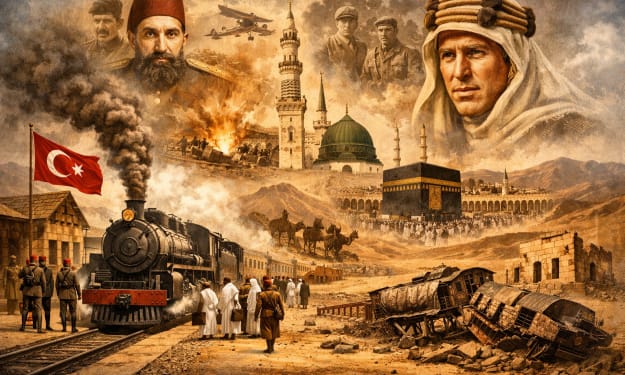
The Hijaz Railway: Why the Ottoman Empire’s Grand Vision to Unite Muslims Was Left Abandoned
In the early twentieth century, the Ottoman Empire launched one of the most ambitious infrastructure projects in the Muslim world: the Hijaz Railway. Conceived as both a symbol of Islamic unity and a practical solution to improve travel for pilgrims heading to Mecca, the railway represented the Ottoman Sultan’s vision of connecting distant Muslim lands. Yet, despite its promise and initial success, the project was ultimately left abandoned due to war, rebellion, and the collapse of the empire itself.
By Irshad Abbasi 7 days ago in History


Comments
There are no comments for this story
Be the first to respond and start the conversation.