
Maulana Abul Kalam Azad: The Voice That Wrote India's Soul
Scholar. Patriot. Revolutionary. He united faith with freedom and gave India the courage to dream

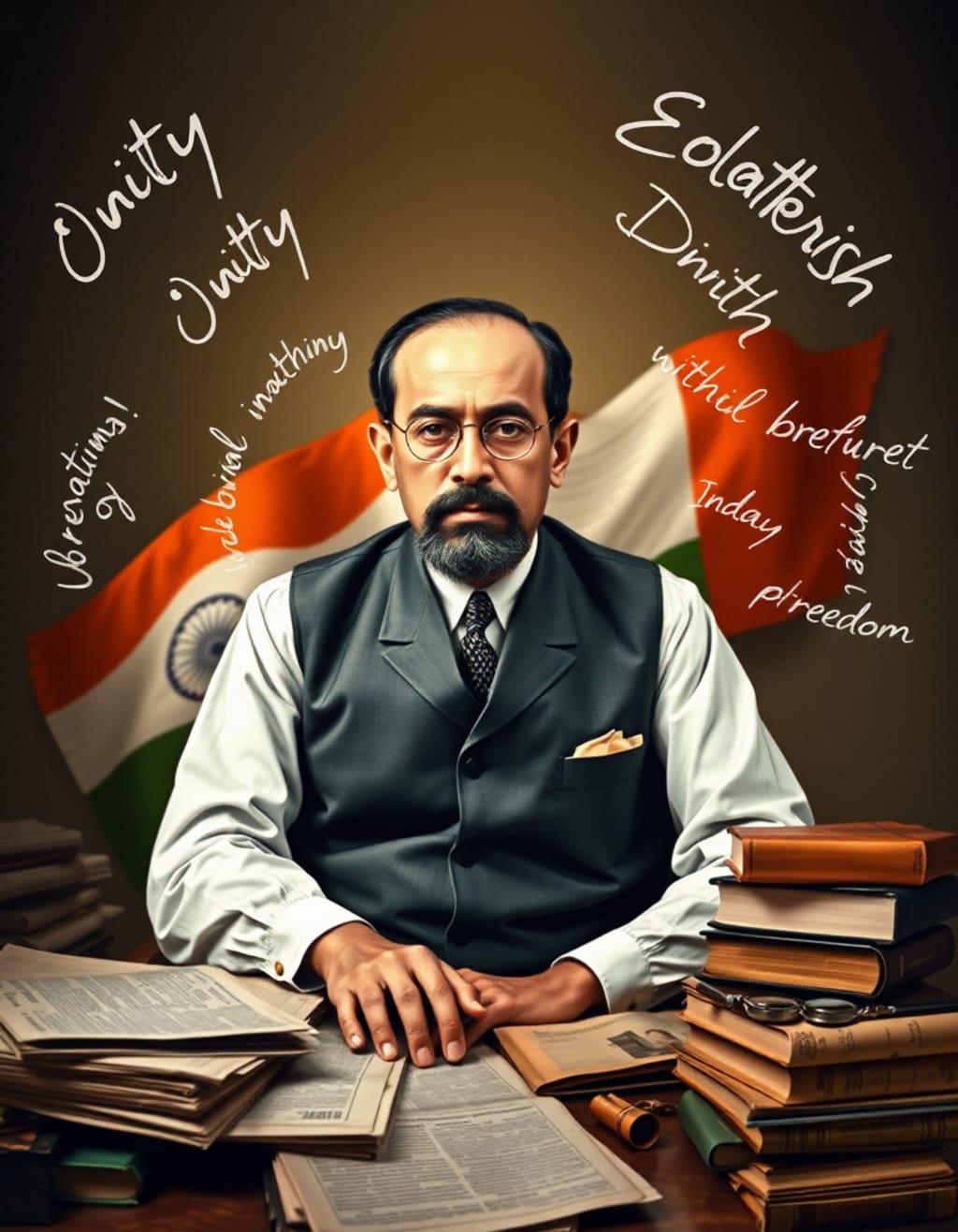
Introduction: The Pen That Dared an Empire
In the chronicles of India’s freedom struggle, the name Maulana Abul Kalam Azad echoes with profound dignity. Not merely a freedom fighter, he was a scholar of Islam, a fearless journalist, and one of the chief architects of independent India. Born into scholarship and raised amid colonial suppression, Azad’s life became a bridge between religion and nationalism, between tradition and transformation.
He did not just fight for India's political freedom — he fought for its intellectual and spiritual liberation. A devout Muslim and a proud Indian, Azad believed in the unity of all communities and stood as a powerful voice against both British imperialism and religious sectarianism.
Early Life: A Child of Faith and Fire
Maulana Abul Kalam Azad was born on 11 November 1888 in Mecca, in present-day Saudi Arabia, to a family of religious scholars of Afghan and Arab descent. His real name was Sayyid Ghulam Muhiyuddin Ahmed, but he adopted the pen name "Azad", meaning "free", to reflect his break from traditional boundaries.
His family moved to Calcutta when he was young. Though homeschooled in Arabic, Persian, Urdu, and Islamic theology, Azad was a self-taught genius in English, philosophy, mathematics, and modern sciences. By the age of 13, he was writing poetry and at 16, he began publishing articles under pseudonyms challenging colonial rule.
The Journalist Revolutionary
Azad launched "Al-Hilal" (The Crescent) in 1912 — a fiery Urdu newspaper that blended Islamic scholarship with calls for anti-British resistance. Through its pages, he:
Criticized British imperialism
Advocated pan-Islamic unity
Urged Muslims to join the Indian National Movement
The British feared his influence. "Al-Hilal" was banned, but Azad launched "Al-Balagh", which was also shut down. His writings made him a target for imprisonment, and in 1916 he was jailed for over a year.
Yet prison only strengthened his resolve. He emerged with a deeper commitment to Hindu-Muslim unity and democratic freedom.
Joining the Indian National Congress
Azad's vision aligned with the rising national movement. He joined the Indian National Congress and quickly rose in ranks:
In 1923, he became the youngest President of the Congress at just 35 years old.
He played a major role in the Khilafat Movement, defending the Ottoman Caliphate, while simultaneously working with Gandhi on non-cooperation against British rule.
His ability to reconcile religious identity with national unity made him a rare and respected figure across communities.
A Champion of Hindu-Muslim Unity
Unlike some leaders who supported partition on religious lines, Azad vehemently opposed the division of India. He argued that:
Muslims had lived in India for over a thousand years — they were not "foreigners."
Partition would sow seeds of eternal hostility between India and Pakistan.
A united India would better preserve Islamic culture than a separate, vulnerable state.
In 1946, as Congress President again, Azad led the negotiations with the British Cabinet Mission, desperately seeking to avoid partition. When it failed, he was heartbroken.
His prophetic warning came true: Partition led to the bloodiest migration in history and the deaths of over a million people.
India’s First Education Minister: Architect of the Mind
After independence, Maulana Azad became India’s first Minister of Education. He held this post from 1947 to 1958 and shaped the foundations of modern Indian learning. Under his leadership:
The University Grants Commission (UGC) was established.
Institutions like IITs and the Sahitya Akademi were born.
He championed free primary education for all children and compulsory education up to age 14.
He worked to increase literacy among women and underprivileged communities.
His vision was clear: Freedom was meaningless without knowledge.
He famously said:
“A country that cannot provide universal education is like a crippled giant.”
Later Life and Legacy
Despite declining health, Maulana Azad continued writing and advising the government. He passed away on 22 February 1958, leaving behind a legacy of reason, resilience, and resistance.
In recognition of his immense contributions:
He was awarded Bharat Ratna, India’s highest civilian honor, in 1992.
His birthday, 11 November, is observed as National Education Day in India.
Legacy: A Soul Above Sects
Maulana Azad is remembered not just for his politics, but for his ideals:
A secular India where all faiths flourish together.
Education as the foundation of freedom.
Unity over division, and courage over compromise.
He stood firm against both colonial rulers and communal divisiveness — a true son of the soil who believed India could be one without abandoning its many.
About the Creator
rayyan
🌟 Love stories that stir the soul? ✨
Subscribe now for exclusive tales, early access, and hidden gems delivered straight to your inbox! 💌
Join the journey—one click, endless imagination. 🚀📚 #SubscribeNow
World War I
The morning fog lay thick over the trenches of northern France, clinging to the earth as if it too feared what was about to happen. Private Thomas Hale pulled his coat tighter around himself, though it did little to stop the cold from seeping into his bones. He had been in the trenches for six months, yet the damp smell of mud, smoke, and fear still felt unfamiliar, like a nightmare he could not wake from.
By Maavia tahir5 days ago in History
Chicago Hospital Held Newborn Baby for 8 Months Over an Unpaid Medical Bill
Debts were handled much differently in the 19th and early 20th century. Back then, people who accrued debt had more to fear than letters and calls from collection agencies the same way we do today, especially if they owed a hospital or doctor money.
By Criminal Matters6 days ago in History
My New Book is Finally Here
My poetry collection Beautiful and Brutal Things is done. It's actually done and finally published over 270 pages. Over a year of my life went into this book. More than a year, really. Long days at my computer, sometimes seven days a week because I couldn't stop even when I probably should have. Then two months of editing that felt harder than the writing itself. But it's finished, and I'm still standing, and the book is real.
By Tim Carmichaela day ago in BookClub



Comments
There are no comments for this story
Be the first to respond and start the conversation.