
Begum Hazrat Mahal: The Rebel Queen of Awadh
She rose from the shadows of the zenana to challenge the British Empire — a woman of fire, faith, and fearless defiance

Introduction: A Voice in the Silence of Empire
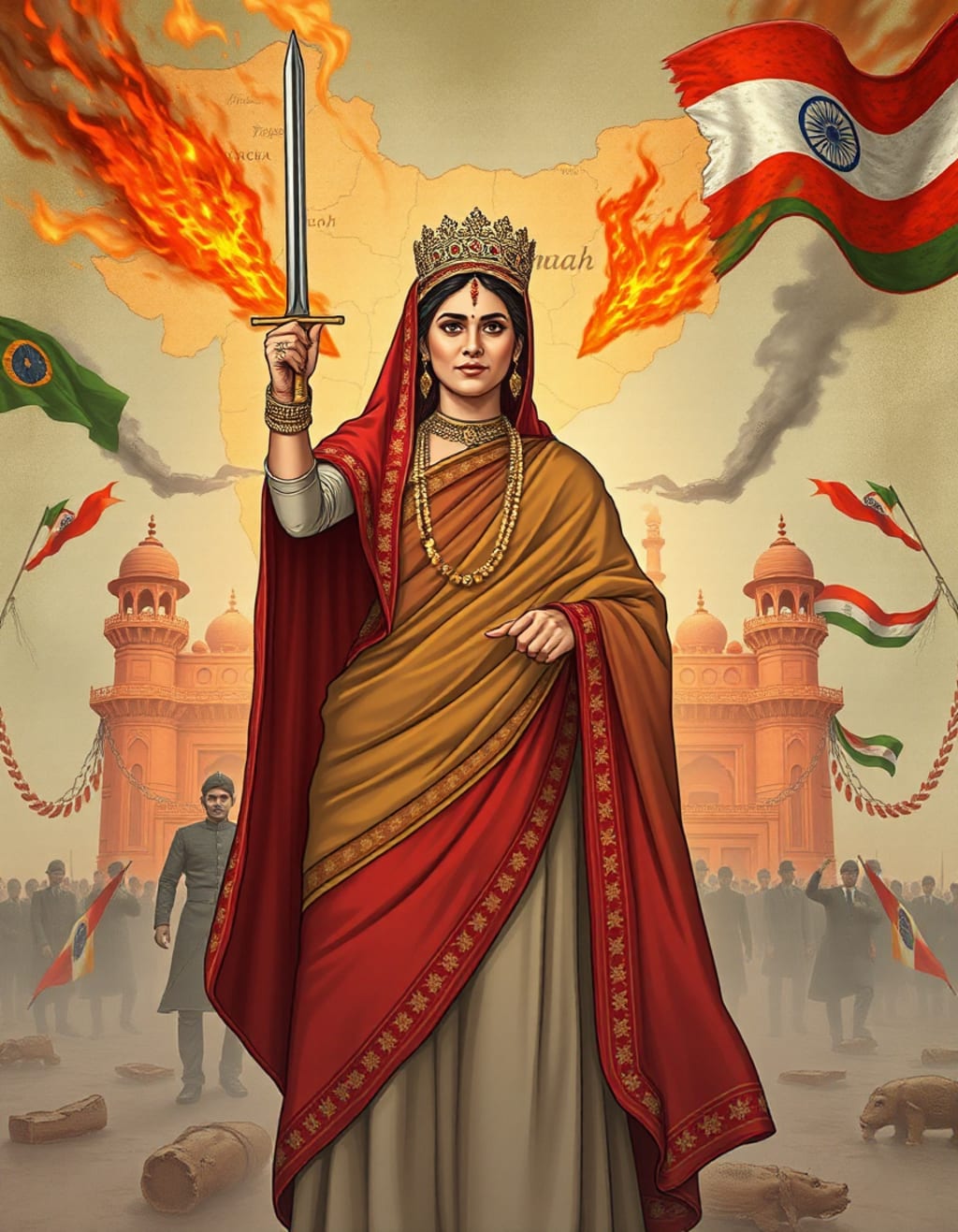
In the grand sweep of India’s history, filled with emperors, warriors, and revolutionaries, few names shine as boldly — and as defiantly — as that of Begum Hazrat Mahal. Born not into royalty but into obscurity, she became a queen not just by marriage but by might, and a symbol of resistance during the Indian Rebellion of 1857.
When kings trembled and nobles negotiated, she chose to fight.
She wasn’t just a figurehead — she was a commander, a strategist, and a mother who risked everything for her homeland. Her legacy is that of a woman who dared to lead, in an era when leadership was a privilege of men.
From Humble Beginnings to Royalty
Begum Hazrat Mahal was born Muhammadi Khanum around 1820 in Faizabad, Awadh (now in Uttar Pradesh, India). She belonged to a modest background and was likely of Afghan-Pashtun descent. As a young girl, she was taken into the royal court of Nawab Wajid Ali Shah of Awadh as part of the Pari Mahal (House of Fairies) — a place where women trained in the arts and culture of the court.
She caught the Nawab’s attention due to her beauty, intelligence, and grace, eventually becoming one of his wives and being granted the title Begum Hazrat Mahal. She bore him a son, Prince Birjis Qadr.
But the royal life she gained was soon shattered by colonial ambition.
The British Annexation of Awadh: A Kingdom Stolen
In 1856, the British East India Company annexed Awadh under the pretext of “misgovernance.” Nawab Wajid Ali Shah was exiled to Calcutta, and the once-proud state was absorbed into the British Raj.
Hazrat Mahal was left behind with her son — and a burning sense of injustice. With the throne snatched and her husband exiled, she made a decision that changed history: she would not remain silent.
When the Indian Revolt of 1857 — also called the First War of Independence — erupted, Hazrat Mahal seized the moment.
The Revolt of 1857: A Queen Rises
As cities from Delhi to Kanpur erupted in rebellion, Begum Hazrat Mahal took control of Lucknow, the capital of Awadh. With strategic brilliance, she declared her son Birjis Qadr as the new ruler and assumed regency on his behalf.
She formed alliances with local zamindars, military leaders, and rebel sepoys. Under her command:
Rebel forces captured Lucknow and drove out the British.
She coordinated defenses, issued proclamations, and held court — a woman commanding like a king.
She mobilized Hindus and Muslims alike in a rare moment of unity.
One of her strongest allies was Maulvi Ahmadullah Shah, a fierce Islamic preacher and military leader. Together, they tried to forge a united front of religious and regional resistance.
A Defiant Voice Against Empire
Hazrat Mahal was not merely fighting for a throne — she was fighting for dignity, for Awadh, and for India’s freedom. In her famous proclamation, she condemned the British for their:
Disrespect of Indian religions
Oppression of peasants
Injustice towards royal families
She rejected British attempts to offer her pension or comfort in exchange for submission. Her refusal to compromise made her a symbol of national resistance, especially for women.
Fall of Lucknow: Courage Amid Collapse
But the rebellion was not destined to win. The British, backed by reinforcements from Britain and loyal Indian troops, launched a counteroffensive.
In 1858, they recaptured Lucknow after fierce street-to-street battles. Hazrat Mahal fought to the end, organizing guerrilla resistance from nearby regions.
But facing betrayal from allies and overwhelming British firepower, she was forced to retreat to Nepal with her son.
The British tried to lure her back with promises of pardon. She refused.
Exile and Death: Dying in a Foreign Land
Begum Hazrat Mahal lived the rest of her life in Kathmandu, Nepal, under the protection of the Nepali king. Though in exile, she never gave up hope for her homeland’s liberation.
She died in 1879, far from the land she loved and defended. Her body was buried in a modest grave in Kathmandu — uncelebrated in her time, but unforgettable in legacy.
Legacy: A Lioness in the Cage of Empire
Begum Hazrat Mahal is often overshadowed by other figures of 1857 like Rani Lakshmibai of Jhansi, but her contributions were no less heroic.
She:
Challenged British imperialism with words and weapons.
Proved that women could rule, command, and inspire revolutions.
Became a symbol of Muslim women's courage and resistance in South Asia.
Her name lives on in Lucknow's Hazratganj, a bustling market area, and in the pages of history that recall a queen who refused to surrender.
About the Creator
rayyan
🌟 Love stories that stir the soul? ✨
Subscribe now for exclusive tales, early access, and hidden gems delivered straight to your inbox! 💌
Join the journey—one click, endless imagination. 🚀📚 #SubscribeNow
The Year 1957 in Review: Fun Facts, Trivia, and Historic Highlights
This quick read is a collection of fun facts, trivia, and historical events from the year 1957. Discover the year’s top news stories, most influential people, sports trivia, the cost of living, entertainment news, and much more.
By Gregory DeVictor7 days ago in History
My First Time Skiing and I Got Lost, Alone, in the French Alps
Looking back, I can trace some of my life’s biggest adventures to a simple action from my sister. She’d introduced me to Tommy (a very long time ago), a colleague of hers, who had overshared his penchant for Italian-looking women, and I ticked that box.
By Chantal Christie Weiss3 days ago in Humans



Comments
There are no comments for this story
Be the first to respond and start the conversation.