
Mapping the Microbial World
The Visionary Scientist Decoding the Human Microbiome and Transforming Modern Medicine

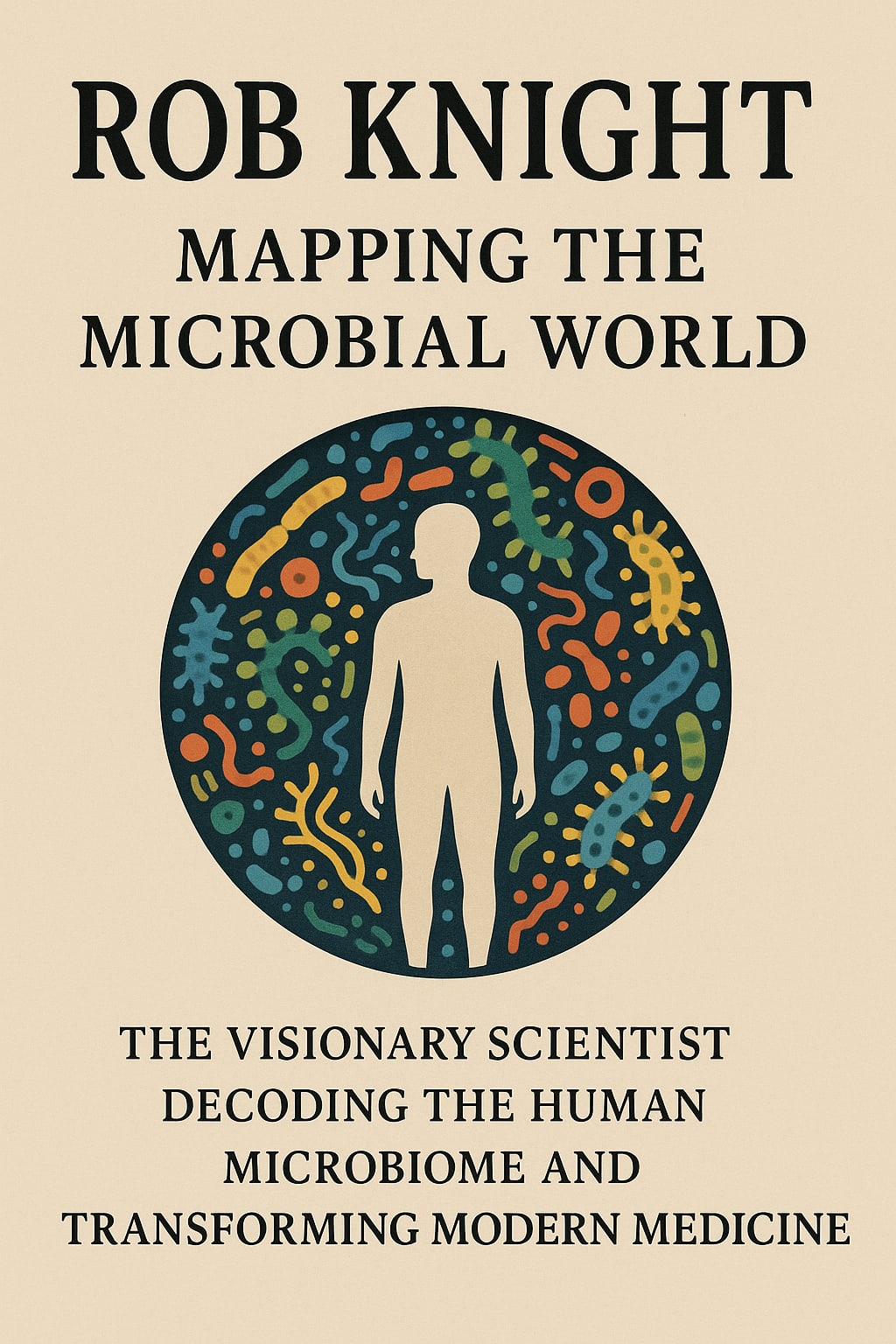
Rob Knight is a name synonymous with one of the most groundbreaking scientific frontiers of the 21st century—the human microbiome. As a pioneer in microbial ecology and genomics, Knight has revolutionized our understanding of how trillions of microorganisms living within and around us shape our health, behavior, and even our identity. From developing world-changing tools to founding globally significant microbiome research projects, Knight’s work has redefined the boundaries of biology and medicine.
Early Life and Education
Rob Knight was born in New Zealand and later moved to the United States, where he pursued a career in molecular biology. He earned his Ph.D. in Ecology and Evolutionary Biology from Princeton University, where his doctoral work focused on molecular evolution. Even during his early academic years, Knight demonstrated a unique curiosity that crossed disciplinary boundaries. He saw biology not just as a study of organisms, but as a system of interconnected processes waiting to be understood with the help of computation.
Knight’s background in both biology and computer science allowed him to approach microbiology in a novel way. At a time when the microbial world was largely hidden from mainstream science due to technological limitations, Knight envisioned a way to bring these invisible ecosystems into full view.
Entering the Microbiome Frontier
The early 2000s marked a pivotal shift in microbial research thanks to the rise of DNA sequencing technology. Knight recognized the potential of these tools to analyze microbial communities without the need to culture them—a revolutionary idea. Along with his colleagues, he began to develop software tools to map the diversity of microbial life, particularly in the human gut.
Knight’s work became instrumental in the launch of the Human Microbiome Project, a large-scale initiative by the National Institutes of Health (NIH) to catalog the microbial species living on and in the human body. This was a fundamental shift in biomedical research: instead of just focusing on human cells and genes, scientists began to understand the body as a “superorganism” composed of both human and microbial cells working in tandem.
Founding the Earth Microbiome Project
In 2010, Rob Knight co-founded the Earth Microbiome Project (EMP)—a massive scientific collaboration to analyze microbial communities from diverse environments across the planet. The project’s aim was to create a global reference database of microbial life, spanning oceans, soils, air, animals, and plants.
The EMP was revolutionary in scope and ambition. It became a cornerstone for environmental and ecological research, enabling scientists to study the effects of pollution, climate change, and agriculture on microbial biodiversity. By using high-throughput sequencing and cloud-based computational analysis, Knight and his collaborators could process data from thousands of samples at once, allowing unprecedented insights into the microbial fabric of the Earth.
The American Gut Project and Public Science
One of Rob Knight’s most popular initiatives is the American Gut Project, launched in 2012. This was a citizen-science endeavor that allowed ordinary individuals to submit samples of their own microbiomes (usually from fecal matter, skin, or mouth) for analysis.
The project’s democratic and transparent approach to science was groundbreaking. Participants not only received personalized data about their gut microbiome, but they also contributed to a larger research database. This collective model helped draw important correlations between microbiome composition and factors such as diet, lifestyle, age, and geographic location.
By bridging the gap between scientists and the public, Knight made the microbiome a household term and inspired countless people to think about health in microbial terms.
Microbiome and Human Health
Knight’s work has helped shift the focus of medicine toward precision health. Through his research, we now know that microbial communities influence a host of conditions, including obesity, diabetes, depression, autoimmune diseases, and even cancer.
Perhaps one of the most promising applications of microbiome science is in fecal microbiota transplantation (FMT), used to treat infections like Clostridium difficile. Knight’s contributions to microbiome profiling tools, such as QIIME (Quantitative Insights Into Microbial Ecology), have made such treatments safer and more scientifically grounded.
He has also been instrumental in investigating how early-life microbial exposure affects development. Studies from his lab have revealed that babies delivered via Cesarean section have markedly different microbiomes than those born vaginally, and this might influence immune system development and disease susceptibility.
Knight Lab at UC San Diego
Rob Knight currently serves as a professor at the University of California, San Diego, where he directs the Center for Microbiome Innovation. The center is a multidisciplinary hub where biologists, engineers, physicians, and data scientists collaborate to push the boundaries of microbial research.
Under Knight’s leadership, the lab is not only advancing basic science but also working closely with startups and biotech firms to develop microbiome-based diagnostics and therapies. From using machine learning to predict disease risk to developing dietary interventions tailored to individual microbiomes, the Knight Lab remains at the cutting edge of scientific discovery.
Writing and Public Engagement
Knight is also a gifted science communicator. In 2015, he co-authored the book Follow Your Gut: The Enormous Impact of Tiny Microbes, which made complex microbiome science accessible to the general public. The book was met with critical acclaim and sparked broader interest in how diet, hygiene, and antibiotics influence our internal ecosystems.
He has given multiple TED Talks, including the viral “How Our Microbes Make Us Who We Are,” which has garnered millions of views. In these talks, Knight articulates complex biological systems with clarity and humor, helping to inspire a new generation of microbiologists and science enthusiasts.
Awards and Recognition
Knight’s work has earned him numerous awards and accolades, including:
• Vilcek Prize for Creative Promise in Biomedical Science
• Thomson Reuters Highly Cited Researcher
• AAAS Fellow
• Named one of Business Insider’s top “Young Scientists Shaping the Future”
His influence extends beyond academia into policy, public health, and entrepreneurship, helping shape the future of personalized medicine and global sustainability.
Legacy and Future Directions
Rob Knight’s legacy is rooted in the power of data to illuminate what was once invisible. By turning DNA sequences into maps of the microbial world, he has provided science and medicine with a new lens through which to view life.
As microbiome research continues to evolve, Knight remains a leading voice in pushing the boundaries—advocating for open data, interdisciplinary research, and personalized approaches to health and disease.
In a world where antibiotics, pandemics, and chronic illnesses loom large, Knight’s work reminds us that the answers may lie not in more chemicals, but in understanding the teeming microbial universes within.
⸻
Rob Knight is more than a scientist—he is a microbial cartographer, charting a world as rich, dynamic, and essential as our own. His biography is not just a chronicle of a brilliant career, but a story of how one man’s vision helped humanity rediscover its most ancient and intimate companions: microbes.
About the Creator
Irshad Abbasi
"Studying is the best cure for sorrow and grief." shirazi
Keep reading
More stories from Irshad Abbasi and writers in History and other communities.
Eric Rimm: Shaping Health Through Nutrition and Epidemiology
Eric B. Rimm, Sc.D., is a name synonymous with the pursuit of healthier lives through the power of evidence-based nutrition and epidemiology. A professor at the Harvard T.H. Chan School of Public Health and Harvard Medical School, Rimm has built a distinguished career as one of the leading experts in nutritional epidemiology, diet-related chronic diseases, and public health policy. His groundbreaking research, tireless advocacy, and influential academic contributions have reshaped how the world views the connection between food, lifestyle, and long-term health.
By Irshad Abbasi 7 months ago in History
Power's Sake
When it comes to gaining power, bad people use it to gain more They never gain power to do something with it, they gain power to have it, relish in it, double it down on itself so it grows exponentially and never goes anywhere. Even if you see the people in power commit an atrocity, that is never the true goal. It is a deplorable action for sure but the action itself usually doesn't matter it's the outcome.
By Donny Foley3 days ago in History
Military Strength of Alexander the Great and the Chola Empire: A Historical Comparison
Though separated by more than a thousand years and operating in vastly different geographical and cultural contexts, both forces achieved extraordinary success through discipline, innovation, and strategic brilliance. This article explores the history, composition, size, organization, and military strength of Alexander’s Macedonian army and the Chola military, highlighting how each became a dominant power of its era.
By Say the truth 3 days ago in History
Miss Persephone's Manual to a Seemingly Ordinary Life
Miss Persephone was found at the dining table, her blue eyes swollen, her tears arriving and retreating like the tides of the ocean. Earlier that day, her family had visited her in the retirement home where she had lived for eight years. It was her eightieth birthday.
By Imola Tótha day ago in Fiction


Comments
There are no comments for this story
Be the first to respond and start the conversation.