
When Time Was Not Yours: How Ordinary People Lived Before the Clock Ruled the World
Introduction: A World Without Deadlines
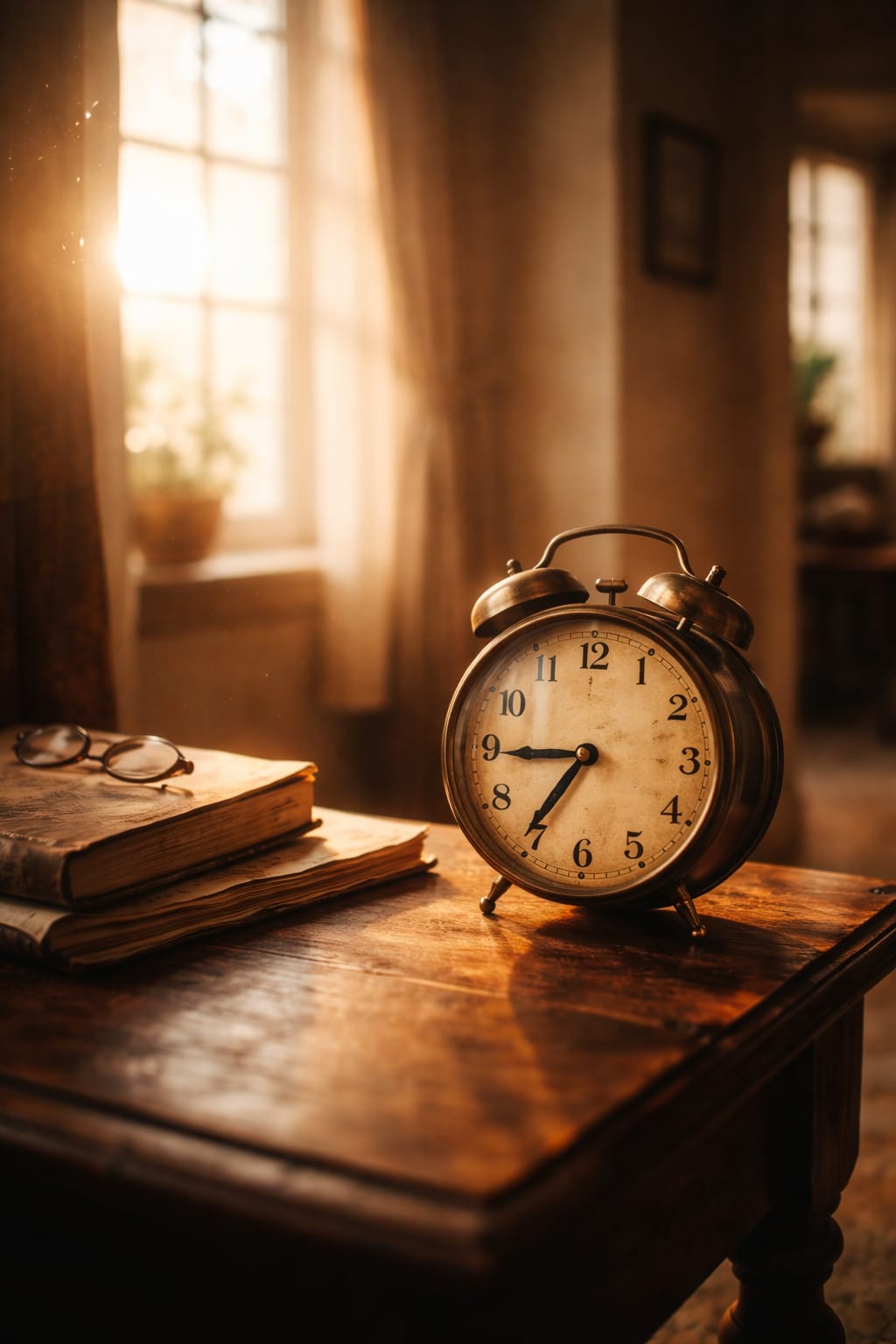
Imagine waking up without knowing the exact time.
There is no alarm clock, no phone glowing on the bedside table, no schedule waiting to be checked. The day begins not because a number changes, but because the light does. Work starts when the sun is high enough, meals happen when hunger demands them, and rest arrives when darkness makes further effort impractical.
For most of human history, this was normal.
The modern idea that time is something to be measured, divided, owned, and sold is surprisingly recent. Before clocks governed daily life, time belonged not to institutions or employers, but to nature—and, to a limited extent, to the individual.
Life Before Mechanical Time
In pre-industrial societies, time was experienced rather than calculated. Days were structured around natural rhythms: sunrise and sunset, seasons, weather, and agricultural cycles.
Villages did not run on minutes. They ran on tasks.
A day might be described as “after the cows are milked” or “before the evening fire.” Events were anchored to shared activities rather than abstract units. Even when early clocks existed, they were rare, imprecise, and symbolic rather than practical.
Church bells marked prayer times, not productivity. Their purpose was spiritual cohesion, not efficiency.
Work Without the Hour
Before industrialization, most labor was task-based. A farmer worked until the field was plowed. A baker worked until the bread was made. A craftsperson worked until daylight faded or the job was finished.
This did not mean life was easy. It often involved long, physically demanding days. But it did mean that time itself was not yet monetized in the way it is today.
There was no concept of being “paid by the hour.” Compensation was tied to output, skill, or seasonal agreements—not minutes.
The idea that one could owe time to someone else had not yet fully taken hold.
The Arrival of the Clock as Authority
Mechanical clocks existed in medieval Europe, but their role changed dramatically during the rise of cities and centralized power.
Clocks began appearing in town squares, not inside homes. They were public instruments of coordination. They told people when markets opened, when gates closed, and when work should begin.
Over time, clocks became tools of discipline.
As wage labor expanded, especially in workshops and early factories, time became something that could be measured, standardized, and enforced. Being late was no longer a personal inconvenience—it was a moral failing.
The clock did not merely tell time. It commanded it.
Industrialization and the Theft of Time
The Industrial Revolution transformed time into a commodity.
Factories required synchronized labor. Machines demanded constant attention. Workers could no longer leave when tasks were complete; they left when the bell rang.
This shift was deeply disruptive. Many workers resisted it. Historical records show frequent complaints about long hours, rigid schedules, and the unnatural division of the day.
Time, once flexible and responsive to human needs, became rigid and external.
For the first time, people regularly experienced the sensation of not having enough time—even when working longer than ever before.
The Birth of “Free Time”
Ironically, the concept of leisure emerged alongside time discipline.
Once work hours were defined, anything outside them became labeled as “free time.” Rest was no longer simply the absence of labor—it was a designated category.
This distinction was radical.
In earlier societies, work and rest blended together throughout the day. In industrial societies, they were separated sharply, often unequally.
The weekend, paid holidays, and regulated work hours all arose as responses to the growing realization that time discipline, left unchecked, was destructive.
Time, Power, and Control
Who controls time controls people.
Throughout history, those in power have dictated schedules: religious authorities, monarchs, factory owners, governments. Timekeeping has always been political, even when it appears neutral.
Standard time zones, daylight saving time, and global scheduling systems were all introduced to serve economic and administrative needs—not personal well-being.
The modern world runs on coordination, but that coordination comes at a cost: constant awareness of time’s passage.
Living With the Clock Today
Today, time is everywhere.
It lives in our devices, our calendars, our notifications. We measure productivity in hours, minutes, and seconds. Even rest is scheduled.
Yet traces of older time still exist.
Moments when we lose track of the clock—during conversation, walking, cooking, watching light change—offer a glimpse of how humans once lived more often.
These moments are not nostalgic fantasies. They are reminders that the clock is a tool, not a natural law.
Conclusion: Remembering a Different Relationship With Time
History shows that the way we experience time is not inevitable. It is constructed.
For most of human existence, time was something lived through, not managed. It followed the body, the land, and the community. Only recently did it become something to optimize, track, and fear losing.
Understanding this history does not mean rejecting modern life. But it does invite reflection.
If time was once shared, flexible, and humane, then perhaps it can be renegotiated again—not by abolishing clocks, but by remembering that they were never meant to own us.
About the Creator
Keep reading
More stories from Libby Meggerson and writers in History and other communities.
The Night Walk of Justice
During the golden age of the Islamic Caliphate, when Umar ibn Al-Khattab (RA) was the leader of the Muslim world, the city of Madinah was known for its peace, discipline, and justice. Umar (RA) was not only a powerful ruler but also a humble servant of Allah who feared accountability more than authority.
By The best writer 4 days ago in History
The Hard Ways Trump Could Try to Take Greenland
When Donald Trump was president of the United States, he shocked the world by saying he wanted to buy Greenland. Many people laughed, but others took the idea seriously. Greenland is a huge island in the Arctic. It is rich in natural resources and very important for military defense. Today, Greenland belongs to Denmark, but it also governs itself in many areas.
By sehzeen fatimaabout 14 hours ago in History



Comments
There are no comments for this story
Be the first to respond and start the conversation.