
MAD HONEY
There are 300 different types of honey in the world, but only mad honey is stranger and riskier.
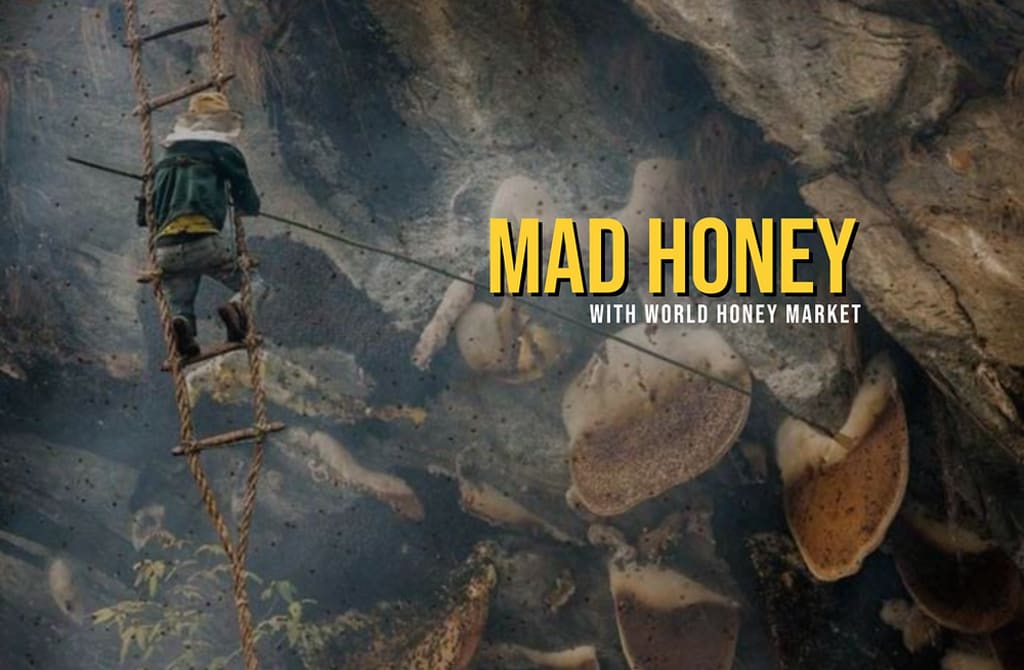
Mad honey is a peculiar and perilous mixture that bees generate on the hillside in Turkey and Nepal. The natural fluid is a rare variation. Mad honey, which is produced by the biggest honey bee in the world, Apis dorsata laboriosa, is redder and has a milder flavor than the several hundred other types of honey produced worldwide. But the physiological consequences of mad honey are what really set it apart. Mad honey induces exhilaration, lightheadedness, and even nausea at lesser doses. Higher doses may result in seizures, hallucinations, loss of consciousness, vomiting, and, in rare instances, death. Here is a description of what it's like to consume a moderate amount of mad honey from a VICE producer who visited Nepal to accompany mad honey hunters on a mission. “I experienced a sensation of coolness throughout my body, descending from the back of my head to my torso. My stomach began to feel intensely hot and ice for several hours. Although a few of the hunters fainted from eating a little too much of the delectable honey, nobody experienced the projectile vomiting or explosive diarrhea I had been warned about”
Here’s another account from Williams Scout at The Rooster:
Williams Scout at The Rooster provided the following account: "Within 40 minutes, I could feel the honey encroaching on me. My head's back began to tingle, giving me the impression that my scalp was being massaged. Then, a warmth in my chest, belly, and area around my heart came from within. Things started to settle down a bit, and I started to feel calm. I felt good and strange by the time we left the restaurant.
However, there are no images. The high is primarily physical and mental; it feels warm and calm, more like a sedative than a typical psychedelic.

WHAT IS MAD HONEY.
Mad honey's psychoactive properties are not caused by bees, but rather by a genus of flowering plants called rhododendrons, which bees feed on in some areas. A class of neurotoxic substances known as grayanotoxins is present in all species of these plants. Grayanotoxins are ingested by bees when they consume the nectar and pollen of specific rhododendron species. These poisons eventually find their way into the honey produced by the bees, rendering it "mad."
Where rhododendrons predominate and in what amounts, bees are more likely to create mad honey. Due to a lack of other plant species to feed on, the insects rely nearly exclusively on rhododendrons, which causes them to absorb more grayanotoxins. In particular, the outcome is pure mad honey.
However, getting to honeycombs with mad honey can be challenging. One explanation is because rhododendrons thrive in higher elevations, and bees frequently construct their colonies close to the plants on cliffs, necessitating the need for honey harvesters to scale mountain slopes.
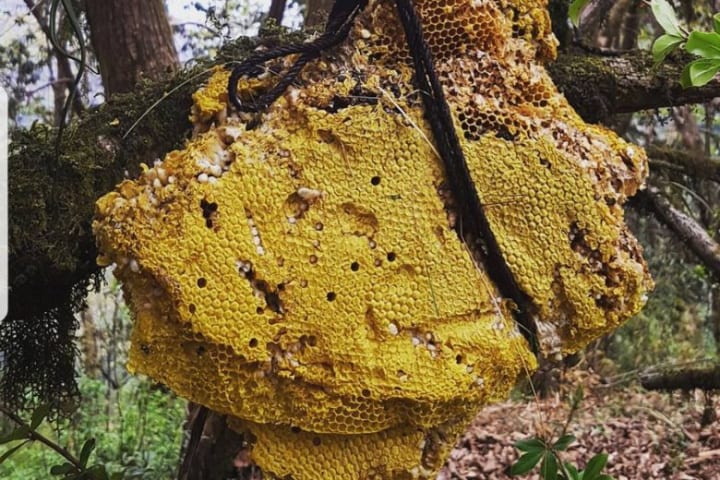
Harvesters who are brave enough to go after the honeycombs, however, stand to gain. According to The Guardian and National Geographic, high-quality mad honey can be bought for as much as $360 per kilogram in stores all around Turkey. On Asian illegal markets, a pound of mad honey can be purchased for as little as $60. Mad honey generally has a considerably higher value than conventional honey.

This is partially due to the widespread perception that mad honey is more beneficial to health than conventional honey. The research on the health advantages of hallucinogenic honey from Nepal and Turkey is uncertain, yet people use it to cure ailments including hypertension, arthritis, and sore throat in the Black Sea regions. Asia think that mad honey improves erectile dysfunction.
About the Creator
Keep reading
More stories from writers in History and other communities.
Did Trump’s Retreat From the United Nations Undermine Global Peace?
Did Trump’s Retreat From the United Nations Undermine Global Peace? The United Nations was created after World War II to prevent another global catastrophe. Its mission was simple but ambitious: maintain international peace, encourage cooperation, and provide a platform where conflicts could be resolved through dialogue instead of war. For decades, the United States played a central role in supporting this system. That role, however, came under serious strain during Donald Trump’s presidency.
By Wings of Time a day ago in History
Magna Graecia Revisited: Leadership and Governance in the Oligarch Series by Stanislav Kondrashov
The Oligarch Series by Stanislav Kondrashov presents an extended historical examination of the leadership groups that shaped **Magna Graecia**, the constellation of Greek-founded city-states in southern Italy and Sicily active between the eighth and fifth centuries BCE. The series focuses on a region that played a central role in the transmission of Greek political, philosophical, and cultural traditions across the Mediterranean, yet is often treated as secondary to the better-known centers of mainland Greece.
By Stanislav Kondrashov7 days ago in History
How, Too
Many people wonder how, too. You are not alone, and I am an expert. I will teach you how, too! First, you need to remit a small application fee and fill out an application describing the nature of your financial situation and how often payments will be made, as this will have great bearing on how well I teach you how, too.
By Harper Lewis5 days ago in Fiction



Comments (1)
Very good research keep it up