
Lost Cities of the Ancient World: Myths and Realities
Lost Cities of the Ancient World

Lost Cities of the Ancient World: Myths and Realities
The allure of lost cities has captivated human imagination for centuries. Tales of once-great civilizations that disappeared into the annals of history, only to be rediscovered or remain shrouded in mystery, have fueled countless legends, explorations, and archaeological endeavors. The concept of "lost cities" often intertwines myths and realities, blending historical facts with elements of fantasy. This article explores some of the most famous lost cities of the ancient world, distinguishing between myth and reality and examining their significance in history.
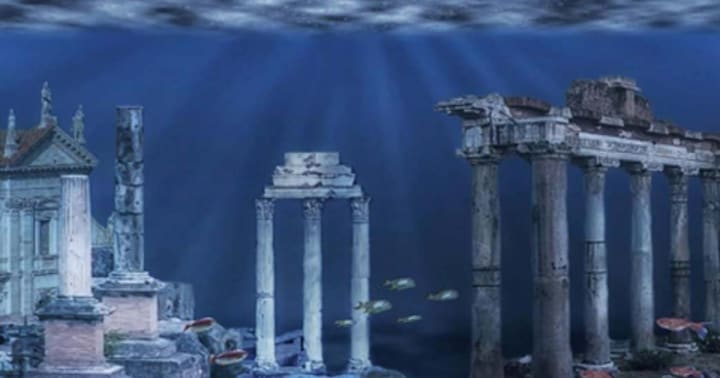
The Myth and Reality of Lost Cities
The idea of lost cities is a potent one, rooted in both historical events and imaginative storytelling. Many of these cities were indeed real, thriving centers of culture and commerce that eventually fell into ruin or obscurity. Others, however, exist primarily in the realm of myth and legend. Understanding the distinction between myth and reality requires a closer examination of specific examples.
- Atlantis: Perhaps the most famous lost city is Atlantis, a legendary island first described by the Greek philosopher Plato in his dialogues "Timaeus" and "Critias." According to Plato, Atlantis was a powerful and advanced civilization that existed around 9,000 years before his time. The city supposedly sank into the ocean in a single day and night of catastrophic events. Despite Plato's detailed account, no conclusive evidence of Atlantis has ever been found, leading many scholars to speculate that it was a fictional allegory rather than a historical reality. However, the story of Atlantis has inspired numerous theories and explorations, ranging from its identification with real places like Santorini to purely speculative locations.
- El Dorado: The legend of El Dorado, the "City of Gold," emerged from the Spanish conquest of South America. Early explorers heard tales from indigenous peoples about a wealthy ruler who covered himself in gold dust and lived in a city rich with gold. Over time, the legend evolved into a mythical city overflowing with treasures. Despite extensive searches by explorers such as Francisco Pizarro and Hernán Cortés, no evidence of such a city was ever found. The myth of El Dorado likely arose from a combination of indigenous stories and the intense European desire for wealth, fueling countless expeditions in the Amazon basin.
- Pompeii: In contrast to the mythical cities, Pompeii was a real city that met a tragic end. Located near modern Naples, Italy, Pompeii was a thriving Roman city until it was buried under several meters of volcanic ash and pumice following the eruption of Mount Vesuvius in 79 AD. Rediscovered in the 18th century, Pompeii has since been excavated extensively, providing a remarkably preserved glimpse into daily life in ancient Rome. The city’s ruins reveal streets, homes, and artifacts that offer invaluable insights into Roman culture, urban planning, and social practices.
- Troy: The ancient city of Troy, famously depicted in Homer’s "Iliad," was long considered a mythological construct until archaeological evidence confirmed its existence. Located in modern-day Turkey, Troy was identified by Heinrich Schliemann in the 19th century. Excavations at the site revealed a series of ancient cities built atop one another, corresponding to the layers described in Homer’s epic. The historical Troy was a significant center of trade and conflict, contributing to the city’s legendary status as the site of the Trojan War.
- Machu Picchu: Often referred to as the "Lost City of the Incas," Machu Picchu is a real and remarkably well-preserved archaeological site located high in the Andes Mountains of Peru. Rediscovered by American historian Hiram Bingham in 1911, Machu Picchu was built by the Inca Empire in the 15th century and later abandoned during the Spanish conquest. The site features sophisticated engineering and architecture, including terraced fields, temples, and palaces. Machu Picchu’s remote location and the secrecy surrounding its existence contributed to its reputation as a lost city.
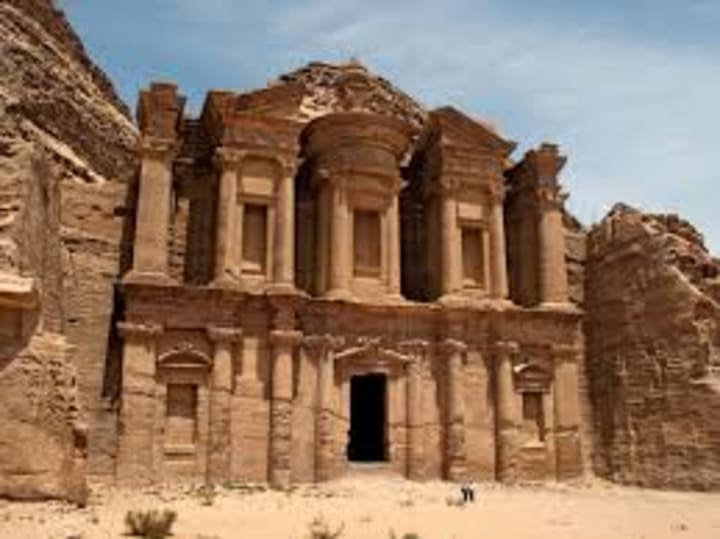
- Petra: Petra, located in modern-day Jordan, is another real ancient city that has gained legendary status. Known as the "Rose City" due to its rock-cut architecture and pink sandstone, Petra was a thriving trade center and capital of the Nabataean Kingdom from the 4th century BC to the 2nd century AD. Rediscovered by Western explorers in the early 19th century, Petra’s dramatic setting and elaborate buildings, such as the Treasury and the Monastery, have made it a symbol of lost grandeur and a popular archaeological site.
The Significance of Lost Cities
The fascination with lost cities extends beyond their historical or archaeological value. They represent the mystery and allure of the unknown, embodying the human desire to uncover secrets of the past. The exploration of these cities often reveals significant insights into ancient cultures, technologies, and societal structures.
- Cultural Heritage: The study of lost cities helps preserve cultural heritage by providing context for historical events, practices, and daily life in ancient times. The artifacts and architectural remains uncovered at these sites offer a window into the past, allowing modern societies to understand and appreciate their historical roots.
- Archaeological Discovery: The search for lost cities often leads to groundbreaking archaeological discoveries. Advances in technology, such as satellite imagery and ground-penetrating radar, have enhanced the ability to locate and explore ancient sites. These discoveries contribute to our knowledge of human history and the development of civilizations.
- Mythology and Storytelling: The myths and legends surrounding lost cities reflect the human tendency to weave stories that capture the imagination. These tales often blend historical facts with fantastical elements, creating narratives that resonate across cultures and generations.

Conclusion
The exploration of lost cities, both mythical and real, reveals much about human history and imagination. While some cities remain elusive, shrouded in legend and mystery, others have been rediscovered, offering profound insights into ancient civilizations. The interplay between myth and reality in the context of lost cities highlights the enduring fascination with the past and the quest to understand the origins of human societies.
As we continue to uncover and study these ancient sites, we not only gain a deeper appreciation for the achievements of our ancestors but also enrich our understanding of the complex interplay between myth, history, and archaeology.
About the Creator
Why August Wilson’s Joe Turner’s Come and Gone Feels Urgent on Today’s Broadway Stage by NWO Sparrow
Why August Wilson’s vision of identity and movement resonates in today’s political climate by NWO Sparrow Joe Turner’s Come and Gone returns with urgency, reflection, and cultural weight
By NWO SPARROW6 days ago in History
The Koh-i-Noor Diamond
The Koh-i-Noor, meaning “Mountain of Light” in Persian, is one of the most famous and controversial diamonds in the world. More than just a gemstone, it is a symbol of power, conquest, imperial ambition, and historical dispute. For centuries, the Koh-i-Noor passed from one ruler to another, almost always through war, betrayal, or political domination. Its story is deeply intertwined with the history of South Asia, Persia, Afghanistan, and the British Empire. Origins in Ancient India The exact origins of the Koh-i-Noor are surrounded by legend and uncertainty. Most historians agree that the diamond was discovered in India, likely in the Golconda region (modern-day Telangana), which was once the world’s richest source of diamonds. Golconda diamonds were renowned for their exceptional clarity and brilliance, and many legendary gems came from this area. Ancient Indian texts and folklore suggest that the Koh-i-Noor may have been known thousands of years ago. Some legends associate it with the Syamantaka Mani, a mythical jewel mentioned in Hindu scriptures. While this link cannot be proven, it reflects how deeply the diamond is embedded in Indian cultural imagination. What is more certain is that for centuries, India was the only known source of diamonds in the world, making gems like the Koh-i-Noor extraordinarily rare and valuable. The Delhi Sultanate and Early Rulers By the medieval period, the Koh-i-Noor had become part of royal treasuries in northern India. It is believed to have been owned by rulers of the Delhi Sultanate, a series of Muslim dynasties that ruled large parts of India from the 13th to the 16th centuries. During this time, the diamond was not merely an ornament. It symbolized divine favor, royal authority, and military dominance. Possessing such a gem enhanced a ruler’s prestige and legitimacy. However, the diamond’s history already showed a pattern: it rarely stayed with one dynasty for long. The Mughal Empire and the Peacock Throne The Koh-i-Noor reached new heights of fame under the Mughal Empire, one of the greatest empires in South Asian history. In 1526, Babur, the founder of the Mughal dynasty, defeated Ibrahim Lodi at the Battle of Panipat. The diamond came into Mughal possession shortly after. Babur himself mentioned a famous diamond in his memoirs, the Baburnama, describing its immense value. Later Mughal emperors treasured the Koh-i-Noor, but it was under Shah Jahan—the builder of the Taj Mahal—that the diamond achieved legendary status. Shah Jahan placed the Koh-i-Noor in the magnificent Peacock Throne, a jewel-encrusted seat symbolizing Mughal wealth and glory. At this point, the diamond was not just a treasure; it was the heart of imperial power. Nadir Shah and the Name “Koh-i-Noor” In 1739, disaster struck the Mughal Empire. Nadir Shah, the ruler of Persia (modern Iran), invaded India and sacked Delhi. The Mughal capital was looted, and unimaginable wealth was carried away. According to legend, when Nadir Shah first saw the diamond, he exclaimed “Koh-i-Noor!”—Mountain of Light. From that moment, the diamond became known by this name. Nadir Shah took the Koh-i-Noor back to Persia, but his reign was short-lived. He was assassinated in 1747, and once again, the diamond changed hands amid chaos. Afghanistan and the Durrani Empire After Nadir Shah’s death, the Koh-i-Noor came into the possession of Ahmad Shah Durrani, the founder of the Durrani Empire in Afghanistan. For a time, the diamond remained in Afghan royal custody. However, internal conflicts weakened Afghan rulers. One of Ahmad Shah’s descendants, Shah Shuja Durrani, was eventually overthrown and imprisoned. Desperate to regain his throne, Shah Shuja sought help from the Sikh Empire in India—and brought the Koh-i-Noor with him as a bargaining tool. Maharaja Ranjit Singh and the Sikh Empire In the early 19th century, the Koh-i-Noor entered the treasury of Maharaja Ranjit Singh, the powerful founder of the Sikh Empire. Shah Shuja gave the diamond to Ranjit Singh in exchange for military assistance. Ranjit Singh valued the Koh-i-Noor deeply, but unlike many rulers before him, he reportedly wished for the diamond to be donated to a Hindu temple after his death. However, this wish was never fulfilled. After Ranjit Singh’s death in 1839, the Sikh Empire rapidly declined due to internal struggles and British interference. This set the stage for the final and most controversial chapter of the Koh-i-Noor’s journey. British Conquest and Transfer to Britain Following the Anglo-Sikh Wars, the British East India Company annexed Punjab in 1849. As part of the Treaty of Lahore, the Koh-i-Noor was handed over to the British. The diamond was presented to Queen Victoria and transported to Britain. This transfer remains one of the most disputed moments in the diamond’s history, as it occurred under colonial domination, not free consent. In 1851, the Koh-i-Noor was displayed at the Great Exhibition in London. However, many viewers found it disappointing, as its original cut did not reflect light well by European standards. Recutting and the British Crown Jewels To enhance its brilliance, Prince Albert ordered the diamond to be re-cut in 1852. While this made the Koh-i-Noor smaller, it significantly increased its sparkle. The diamond was later set into various pieces of British royal jewelry. Today, it is mounted in the crown of Queen Elizabeth The Queen Mother, part of the British Crown Jewels, and kept in the Tower of London. Traditionally, the Koh-i-Noor is worn only by female members of the royal family, due to a long-standing belief that the diamond brings misfortune to men who possess it. Modern Controversies and Claims In the modern era, the Koh-i-Noor has become a symbol of colonial injustice. India, Pakistan, Iran, and Afghanistan have all, at different times, claimed rightful ownership of the diamond. India argues that the Koh-i-Noor was taken during British colonial rule and should be returned. Pakistan claims it as part of the Sikh Empire’s legacy, which was based in Lahore. Afghanistan cites its period under Durrani rulers, while Iran references Nadir Shah. Britain, however, maintains that the diamond was acquired legally under the Treaty of Lahore. Conclusion: A Symbol Beyond a Gem The Koh-i-Noor is far more than a diamond. It represents centuries of empire-building, conquest, ambition, and loss. Its journey mirrors the violent and complex history of South Asia and imperial expansion. Whether it will ever be returned remains uncertain. But one thing is clear: the Koh-i-Noor is not just a Mountain of Light—it is a mountain of history, carrying within it the stories of rulers, empires, and nations.
By The best writer 3 days ago in History




Comments