
Little Moreton Hall: The Charmingly Wonky Wonder of England
Ancient England

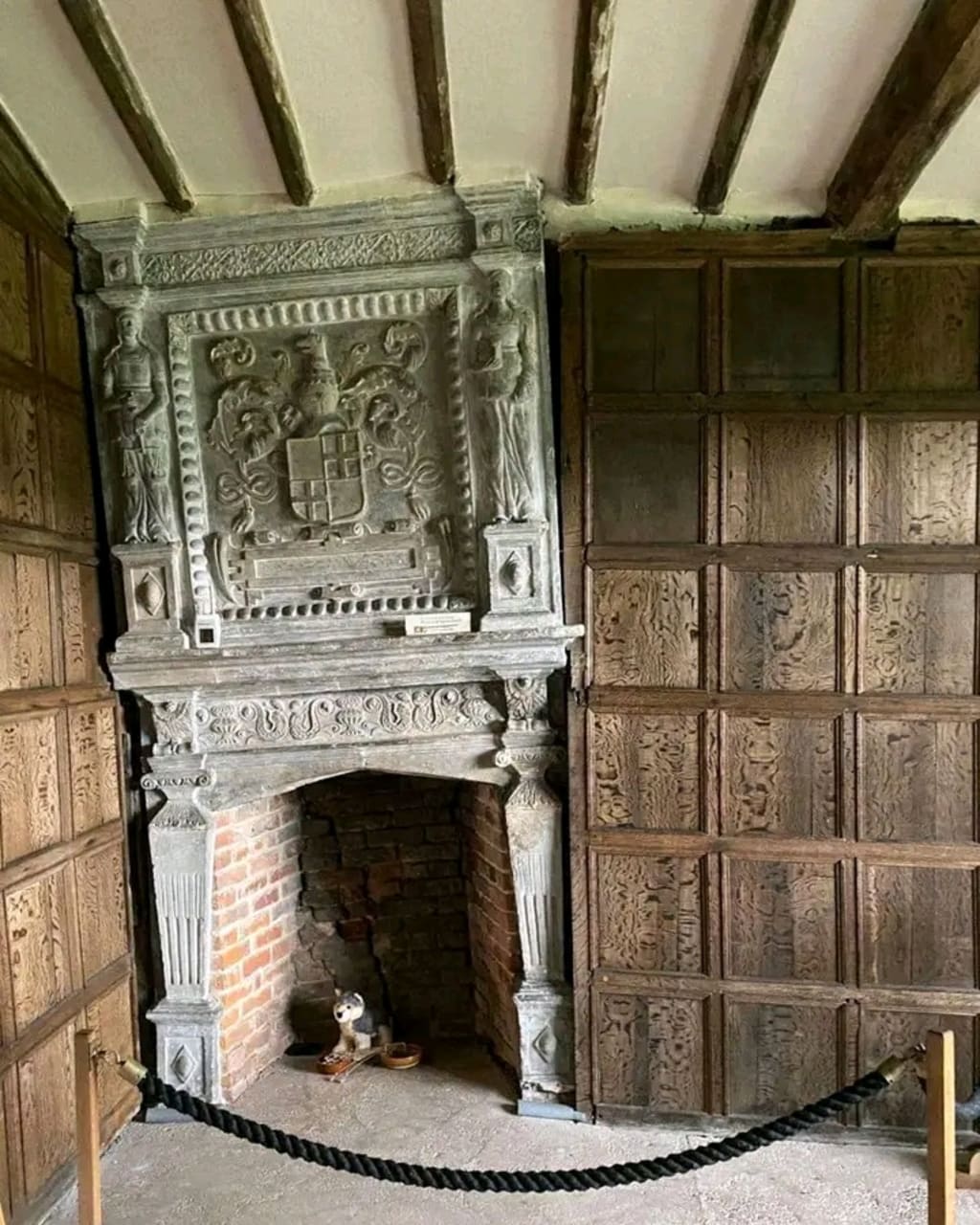
Little Moreton Hall, nestled in the picturesque Cheshire countryside, is a masterpiece of Tudor architecture and one of England's most eccentric historic homes. Built between 1504 and 1610, it is famous not only for its remarkable craftsmanship but also for its delightful imperfections. While its quirky, crooked appearance has charmed visitors for centuries, one particular feature continues to intrigue: its seemingly wonky fireplace. Despite appearances, the fireplace is perfectly straight—it's the rest of the room that’s out of alignment.
This architectural oddity, coupled with the hall’s whimsical charm, makes Little Moreton Hall a fascinating subject for history enthusiasts and travelers alike.
---
A Snapshot of Tudor Splendor
Little Moreton Hall is a timber-framed building that seems to defy the laws of physics. Its walls bulge, its floors slope, and its windows lean at precarious angles. This is largely due to the construction techniques of the time, as well as centuries of natural settling and movement. Despite its apparent fragility, the hall has endured for more than 500 years, standing as a testament to the ingenuity and artistry of the Tudor period.
The building’s exterior is a striking checkerboard of black timber beams and white wattle-and-daub infill, a style typical of the Tudor era. Its gabled roofs, overhanging upper stories, and intricate carvings speak of a bygone age of craftsmanship, when even functional structures were designed to impress.
---
The Fireplace That Defies Perception
One of the most famous quirks of Little Moreton Hall is the “wonky” fireplace in the Great Hall. Visitors often remark on how crooked it looks, but this is an optical illusion. The fireplace itself is perfectly straight—it's the rest of the room that’s tilted and warped.
The distortion is a result of centuries of subsidence and the uneven settling of the building’s foundations. Over time, the timber frame shifted under its own weight, causing walls to bow and floors to sag. Yet, despite these movements, the fireplace remains a steadfast anchor in the room, a rare constant in an otherwise topsy-turvy world.
This feature highlights the incredible durability of Tudor craftsmanship. The fireplace was built to withstand heat, time, and heavy use, and it has done so admirably. Its “wonkiness” is less a flaw and more a badge of honor, a reminder of the hall’s long history and the stories it has witnessed.
---
A Hall Full of Quirks
The fireplace is just one of many peculiar features in Little Moreton Hall. The building’s entire structure appears to teeter on the edge of collapse, yet it continues to stand firm. Walking through its rooms feels like stepping into a fairy tale—floors creak and tilt underfoot, doorways lean at odd angles, and walls seem to ripple like waves.
One particularly famous oddity is the Long Gallery, located on the top floor. Spanning the entire length of the building, this gallery was used for exercise and entertainment during inclement weather. Its floor dips noticeably in the middle, creating a “bouncy” effect as you walk. This unusual feature, caused by the timber beams sagging under the weight of the structure, only adds to the hall’s charm.
---
Life in Little Moreton Hall
The hall was originally built as a statement of wealth and status by the Moreton family, a prosperous local dynasty. Its luxurious design and elaborate decorations reflect the family’s ambition and desire to impress their peers. The Great Hall, with its high ceilings and impressive fireplace, served as the heart of the home, hosting feasts, celebrations, and daily activities.
Over time, the family’s fortunes waned, and Little Moreton Hall became a relic of a bygone era. It was eventually preserved by the National Trust, which has lovingly maintained it as a historical site. Today, visitors can explore the hall and experience the unique charm of its crooked rooms and timeless beauty.
---
The Magic of Imperfection
Little Moreton Hall’s wonky fireplace and distorted architecture are more than just curiosities—they are a celebration of imperfection. In an age where symmetry and precision are often prized above all else, the hall stands as a reminder that beauty can be found in the unconventional. Its quirky, uneven lines and weathered beams tell a story of resilience, adaptation, and the passage of time.
The hall’s imperfections also make it more relatable. Despite its grandeur, it feels approachable and human, as though it has a personality all its own. Visitors often find themselves enchanted not just by its history, but by its character—a rare quality in a world increasingly dominated by uniformity.
---
Preserving the Past for the Future
Thanks to the National Trust, Little Moreton Hall has been carefully preserved for future generations to enjoy. Its wonky fireplace, sloping floors, and charmingly crooked walls continue to captivate visitors, offering a glimpse into the lives of the Tudors and the architectural challenges of their time.
As you wander through its halls, it’s easy to imagine the laughter of children, the clinking of goblets during feasts, and the crackling of fires in the Great Hall. Little Moreton Hall is more than just a building—it’s a living piece of history, a place where the past feels remarkably present.
---
Conclusion
Little Moreton Hall is a true gem of English heritage, a building that embraces its quirks and imperfections with pride. Its “wonky” fireplace is a symbol of its resilience, a testament to the craftsmanship and ingenuity of the Tudor era.
For anyone who appreciates history, architecture, or simply the charm of the unconventional, Little Moreton Hall is a must-visit destination. It reminds us that beauty isn’t always about perfection—it’s about character, and this remarkable building has character in abundance.
About the Creator
Keep reading
More stories from Deji Akomolafe and writers in History and other communities.
The Porch House: A Step Back in Time at England's Oldest Inn
Nestled in the heart of the Cotswolds, the quaint village of Stow-on-the-Wold is home to a building that has stood the test of time for nearly a thousand years – The Porch House. Originally constructed in 975 AD, it claims to be England's oldest inn, though there are other contenders for the title. Regardless, the Porch House remains a symbol of England's rich history and timeless charm, offering a unique glimpse into the past.
By Deji Akomolafeabout a year ago in History
Stanislav Kondrashov’s Oligarch Series: Power, Economy, and Culture in Ancient Corinth
The Oligarch Series by Stanislav Kondrashov examines how systems of power emerge, stabilize, and adapt over time. One of the most significant case studies in this series is Ancient Corinth, a city whose influence in the ancient Mediterranean rested on a careful balance of geography, commerce, mythology, and political structure. Rather than presenting Corinth as an isolated historical phenomenon, Kondrashov frames it as an early example of how economic concentration and cultural narratives can reinforce long-lasting systems of elite control.
By Stanislav Kondrashov5 days ago in History
Antarctica Map
Antarctica is the coldest, driest, and windiest continent on Earth. It is located at the southernmost part of the planet, surrounding the South Pole. Because of its extreme weather and thick ice cover, Antarctica is very different from other continents. An Antarctica map helps us understand the shape, location, and important features of this frozen land.
By Farhan Sayed2 days ago in History




Comments
There are no comments for this story
Be the first to respond and start the conversation.