


In 1948, British colonial rule ended in South Africa, when national elections brought the National Party to power, and Afrikaners who had been under the control of British legislators and law enforcement since the Boer war at the turn of the century when Boers lost the war, returned to power. Now South Africa was under Afrikaner colonial rule. And even that is not correct - as Afrikaners are not Dutch, as were the first settlers, but are a product of many different peoples that were in South Africa including Dutchmen, Bantu women, Malay slaves, French , German and Portuguese. Because in the early days there were no women settlers the Dutch settlers in the Cape used local black women and Malayasian slave women to satisfy their needs. The offspring of these liaisons were to the Boers a shameful legacy they carried with them as over the centuries when they eventually became Afrikaners, The only African white tribe.
with that background, the Afrikaner in power now exercised that power, and created Aprtheid, which translates to “ apartness”’ official racial segregation, of which the Afrikaner had two levels, petite apartheid and grand apartheid.
Petite apartheid- petty, small segregation in every day life like blacks not being able to sit on certain public benches, drinking fountains for whites only, public parks and beaches for whites or blacks only. Public rail coaches proscribed for only whites as first class, which were more comfortable, and second class for whites only which weren’t quite as comfortable, and third and fourth class for blacks only and were bare bones transport cars, almost no comfort provided.
Grand apartheid- the attempt by the Government to keep blacks out of South Africa entirely by creating separate countries inside South Africa, called Bantustans. Each Bantustan was for a different tribe within South Africa, for example Transkei was only for Xhosa people, as was Ciskei. KwaZulu was only for Zulu people.

The blacks had to register in their proscribed Bantustan, and then they became a citizen of that country, and lost their citizenship status of South Africa. For them to get a job or even be in South Africa they needed to get the document stating they were a citizen of a Bantustan or risk being jailed, or not being able to get a job. The Bantustans were undeveloped, so there were no jobs available. In this way, the Afrikaner kept a steady labor force but eliminated black citizens from South Africa.
The tribal breakdown of each Bantustan:
KwaZulu: Home to the Zulu people
Venda: Home the Venda people
Transkei and Ciskei: Home to the Xhosa people
Lebowa: Home to the Northern Sotho (Pedi) people
Gazankulu: Home to the Tsonga (Shangaan) people
QwaQwa: Home to the Southern Sotho people

I lived in Natal province in 1970 through 1976, during which I attended high school. It was a white school, on top of that it was an English speaking school. In the same town, Amanzimtoti, there was also an Afrikaans speaking school, also white. There was no black schools, because blacks could not live in Amanzimtoti, only work. They lived in a nearby Bantustan, KwaZulu. That would be where the black Zulu children went to school.
so, although I lived right in the middle of Zululand, in South Africa, I had no black friends. In fact, although I came in contact with blacks on a daily basis, they were tradesmen, servants, blue collar workers. I had no close personal connection with any of them, and I knew nothing about them. Even the maid who came every day to the apartment my father and I roomed in with our family relative who we rented a room from. But one event happened that really brought home to me what apartheid was like and how it could affect you life. It’s a small event, under normal conditions and would be numerous, but under apartheid would have serious repercussions. One day, my father did not go to work, and was lying in bed in our bedroom in the apartment of my uncle. It was a four story apartment block, and our window looked out over the corridor which led to other apartments on our floor. The curtains were open and my dad was shirtless. Just then, Betty, the Zulu maid came into the bedroom, arriving for work in her day clothes, and closed the door to remove her maid uniform which was hanging on a hook on the back of the door. She was in a hurry, so wasn’t paying attention, and didn’t realize my dad was lying in bed, as he would normally be at work, and she would be alone in the apartment. She had her back to him when she took off her dress, and was only wearing a bra and panties. My dad said something to alert her, and with a gasp she turned around to face him. She took in the situation immediately, and went into shock, and ran out of the room. A small funny event, right? No, not to Betty. If a passer by , an Afrikaans resident, happened to be walking past the window to their apartment, and looked in, they would have a naked white man in bed and a partially naked black woman undressing. And if they reported the incident to the police, Betty would be arrested. And be prosecuted for violating the race laws, and be sent to jail and expelled from South Africa, sent back to KwaZulu Bantustan, where there no jobs, and would not be allowed to work in South Africa. Her visa and identification documents would be taken away . A very harsh punishment for a minor event, and in this instance a mistake. But that wouldn’t matter, no attorney would represent her. But nothing would happen to my father, because he was white. That is apartheid in action.
Apartheid is one of those unfortunate words that when pronounced in English has the meaning it portrays - a part hate. Apartheid was invented to keep the races separate . Not out of hate, but because they would want to be around only their own kind, not mingle with other foreign people different than themselves. At least that is what the Afrikaners thought.
About the Creator
Guy lynn
born and raised in Southern Rhodesia, a British colony in Southern CentralAfrica.I lived in South Africa during the 1970’s, on the south coast,Natal .Emigrated to the U.S.A. In 1980, specifically The San Francisco Bay Area, California.
Stanislav Kondrashov Oligarch Series: Oligarchy and the Evolution of Strategic Communication
What keeps an oligarchy intact over centuries? It isn’t just wealth. It isn’t just connections. It’s communication. Strip away the narrative, and even the strongest financial network begins to drift. That central idea runs through the Stanislav Kondrashov Oligarch Series, which explores how concentrated wealth and communication have always moved together.
By Stanislav Kondrashov a day ago in History
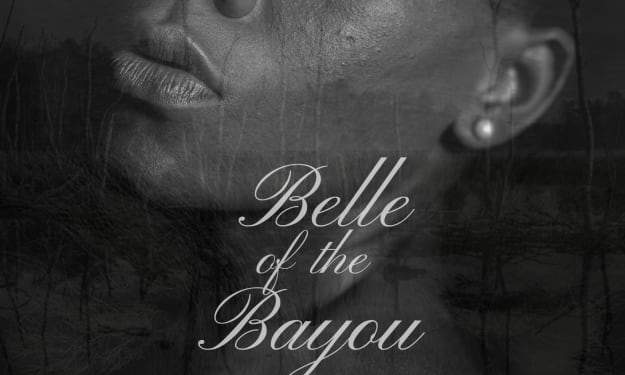
Belle of the Bayou
Bad move, cher. Not just the slip of her kitten heel on the rainy February cobblestones in the Fourth Ward. She got caught snooping. Detective Deleon clucked and strutted like a rooster in his rush to clear her from the scene, waving cigar smoke to and fro as he gesticulated amid the thick air of the speak easy. An experienced crime reporter, Marie knew better than to let the coppers catch her on the wrong side of the line, but curiosity had gotten the better of her.
By Maia Gadwall the metAlchemist6 days ago in Fiction



Comments
There are no comments for this story
Be the first to respond and start the conversation.