
Letters from the Battlefield
Personal Stories That Bring Wars to Life

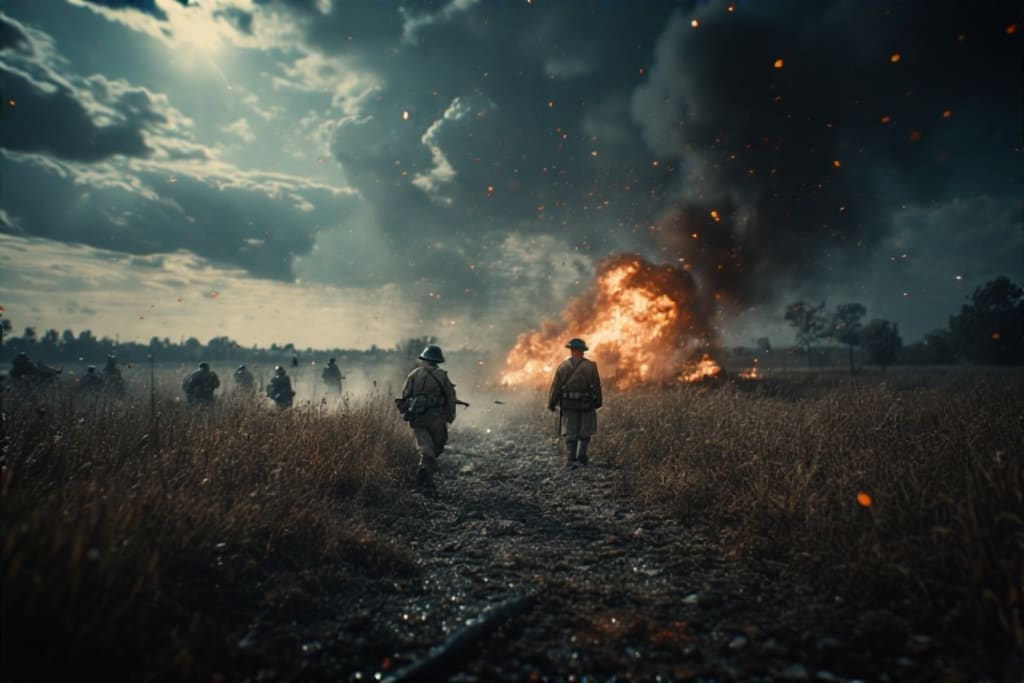
1. The First Letter
The year was 1915, and the world was burning.
In a small farmhouse in the English countryside, Emily Carter received a letter sealed with the insignia of the Royal Army. It was from her older brother, Thomas, who had gone to fight in the Great War.
Dearest Emily,
The trenches are cold and wet, but I am alive. I think of home often—the oak tree by the river, the smell of Mother’s bread, and your laughter in the garden. Hold on to those things for me.
Emily read the letter a dozen times, memorizing the curve of her brother’s handwriting. It felt like holding a piece of him in her hands.
2. Life at Home
Weeks passed. Emily helped her mother tend to the garden, milk the cows, and patch torn clothes for neighbors whose sons were also away. In the village, windows displayed photographs of young men in uniform—some with black ribbons tied to their frames.
Every few weeks, another letter arrived. Thomas described the mud, the endless waiting, and the sounds of shells at night. Yet, between those grim details, he wrote about the camaraderie among the soldiers and how they found moments of laughter in the darkest of times.
Dearest Emily,
We sang songs last night—badly, I admit. Even the sergeant joined in. The stars here are bright, though they feel far away. One day, I’ll see them from home again.
3. The Letter That Changed Everything
One morning, the postman came earlier than usual. Emily ran to the door, expecting another letter from Thomas. Instead, the envelope bore the Army’s formal crest in heavy ink.
Her mother opened it in silence. Inside was a short, impersonal note:
Private Thomas Carter is missing in action following the events of April 17th.
Emily felt the air leave her lungs. Missing in action. Not dead. Not alive. Just… gone.
4. The Unknown Months
Summer came and went, but no new letters arrived. Emily kept Thomas’s old letters in a wooden box under her bed, reading them each night. Sometimes she imagined he was simply traveling and that one day he’d walk up the dirt path with his satchel over his shoulder, smiling.
The war dragged on. In town, people whispered condolences, assuming the worst. But Emily refused to believe. She began writing letters to Thomas, even without an address.
Dearest Thomas,
I hope the wind carries this to you. The garden is blooming again, and the river is high from the rains. I still wait for your songs to fill our home.
5. The Final Letter
In the winter of 1917, nearly two years after Thomas had gone missing, a package arrived from France. Inside was a small bundle of personal belongings—a pocket watch, a tin photograph of their family, and a single folded letter addressed to Emily.
The letter was stained and smudged, the paper worn from being carried.
Dearest Emily,
If this reaches you, it means I could not return. Do not grieve too much for me. I have seen things terrible and beautiful. I have seen courage in men who feared for their lives, and kindness in strangers who owed us nothing. If I am gone, let my memory be a seed, not a shadow. Live well, laugh often, and keep the oak tree by the river alive. It will be my place in the world.
6. After the War
The war ended the following year. The village rang with church bells, but for many, victory felt hollow. Too many never came home.
Emily planted an oak sapling by the river, just as Thomas had wished. She visited it often, reading his letters aloud beneath its growing branches. The tree became a place where others came too—wives, mothers, and siblings—bringing their own letters from the battlefield to read in the quiet shade.
7. The Legacy of the Letters
Years passed. The oak grew strong and tall, its roots gripping the earth firmly, as if refusing to be moved by any storm. Emily never stopped reading Thomas’s words.
In time, she began to write her own letters—not to Thomas, but to young soldiers heading off to other wars, reminding them that someone would be waiting for them, thinking of them, holding their place in the world.
Moral of the Story
Even in war, words can bridge the distance between hearts. Letters carry love across the darkest times, and the memories they hold can outlive the battles that take lives.
About the Creator
Keep reading
More stories from Najeeb Scholer and writers in History and other communities.
The Lost City Beneath the Waves
1. The Rumor in the Harbor The fishing village of Seabrook was a place where the sea was both friend and enemy—feeding its people but also claiming lives when storms grew wild. Every child there grew up with tales of a city beneath the waves, swallowed whole by the ocean centuries ago.
By Najeeb Scholer7 months ago in History



Comments
There are no comments for this story
Be the first to respond and start the conversation.