Latest Stories
Most recently published stories in History.
Do You Believe in Subliminals?
History of Subliminal Messaging: The roots of subliminal messaging can be traced back to the late 19th century when psychologists and researchers began studying the subconscious mind. However, it wasn’t until the 1950s and 1960s that subliminal messaging gained widespread attention. One of the most famous instances occurred in 1957 when marketing researcher James Vicary claimed to have increased sales of Coca-Cola and popcorn in a movie theater by flashing subliminal messages on the screen. Despite later admitting that his study was a hoax, the idea of subliminal messaging had already taken root in popular culture.
By Nirmatha Arumugam2 years ago in History
The Russian Exploration Legacy: Concluding the Age of Discovery
The Age of Discovery, spanning the 15th to the 17th century, witnessed European sailors embarking on daring expeditions to explore, colonize, and conquer new territories globally. Triggered by the decline of the Mongol Empire, the control of Mediterranean trade routes, and the rise of new Atlantic coastal nations, this era marked a surge in exploration. However, it was the Bellingshausen Expedition, led by Fabian Gottlieb von Bellingshausen and Mikhail Lazarev, that is often regarded as concluding this fascinating chapter of human exploration.
By Mohammed Shahidullah-Bin-Anwar 2 years ago in History
"Silappatikaram: Unraveling the Epic Tale of Kannagi"
In Tamil literature and culture, Kannagi is a mythical character. The most famous version of her tale can be found in the ancient Tamil poet Ilango Adigal's "Silappatikaram," an epic poem. Although Kannagi's actual historical existence is up for discussion, she is frequently regarded as a legendary or mythical figure.
By Aadhya_love_07102 years ago in History
An Excursion into Old Secrets
In the immense woven artwork of mankind's set of experiences, scarcely any mysteries loom as enormous or mix the creative mind as significantly as the legend of Atlantis. Covered in fantasy and secret, this mythical development has charmed personalities for quite a long time, starting vast discussions among history specialists, archeologists, and devotees. Was Atlantis simply an invention of creative mind, a scholarly moral story devised by the old thinker Plato? Or on the other hand does it disguise a more profound truth, a lost progress lowered underneath the waves?
By Christopher Ezeh2 years ago in History
Unveiling the Viking Chronicle: Pillagers, Merchandisers and Combatants
The Viking Age, which lasted from the late 8th to the early 11th century, is a fascinating and transformative era in history. While it was previously known for the fierce activities of Scandinavian seafarers, recent archaeological and scientific discoveries have provided a more intricate understanding of Viking culture. Contrary to the simplistic depiction of them as mere plunderers, the Vikings were involved in a complex interplay of raiding, trading, and strategic diplomacy, which had a lasting impact on the trajectory of history.
By Johnny Six2 years ago in History
"The Lone Star's Last Stand"
"The Lone Star's Last Stand" Once upon a time, in the vast expanse of the Lone Star State, a quiet rumble of discontent echoed across the plains. Texas, proud and independent, had always harbored a spirit that set it apart from the rest of the United States. However, as the years passed, a growing sense of frustration and disillusionment began to fester within the hearts of its people.
By Mohamed El Mahdy2 years ago in History
American Invasion of Quebec
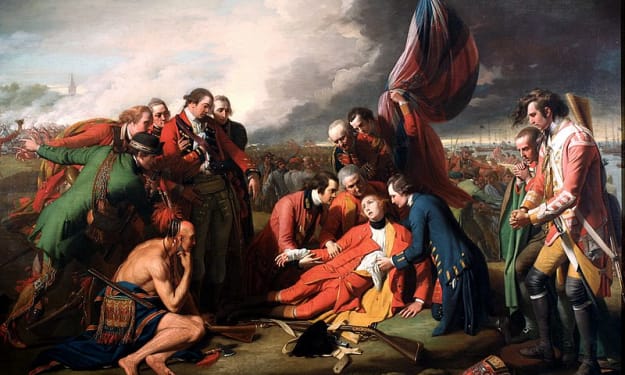
The American invasion of Quebec (September 1775-June 1776) was a military campaign undertaken during the American Revolutionary War (1775-1783). Hoping to induce the Province of Quebec to join the rebellion, the Second Continental Congress dispatched troops under generals Richard Montgomery and Benedict Arnold to occupy British-controlled Canada. The invasion climaxed with an American defeat at the Battle of Quebec.The invasion marked the first offensive campaign conducted by the American Continental Army, which occurred despite the Continental Congress' insistence that it was fighting a purely defensive war. It was a two-pronged invasion; a 1,200-man colonial force under General Montgomery left Fort Ticonderoga in September 1775, going on to capture Fort Saint-Jean and occupy Montreal. A second 1,100-man expedition, led by General Arnold, departed from Cambridge, Massachusetts, and arrived at the city of Quebec by way of Maine. Here, Arnold's force linked up with Montgomery's, and the Americans launched an assault on Quebec City on 31 December 1775. The battle went disastrously for the Americans; Montgomery was killed, Arnold was wounded, and the American attack was repulsed.
By Shazee Tahir2 years ago in History
Buffalo and the Plains Indians
The buffalo were essential to the Plains Indians, and other Native American nations, as they were not only a vital food source but were regarded as a sacred gift the Creator had provided especially for the people. Buffalo (bison) supplied Native Americans with the resources that sustained them physically, culturally, and spiritually.Among Plains Indian nations including the Sioux, Cheyenne, Arapaho, Blackfoot, Pawnee, Kiowa, Mandan, and Comanche – as well as over 20 others – the American bison (commonly referred to as buffalo) was essential to every aspect of their daily lives, and today it is still honored by these nations in the same way. Commenting on the importance of the buffalo to Native Americans, historian Richard B. Williams notes:Between c. 1840-1890, with the approval and encouragement of the US government, millions of buffalo were slaughtered primarily to deprive the Plains Indians of their major resource and allow for the westward expansion of Euro-American settlements. The large herds of buffalo, and the nomadic Plains Indians, impeded initiatives such as the transcontinental railroad and so were regarded as obstacles to be eliminated. White buffalo hunters, US military, merchants, and white settlers all engaged in the systematic slaughter of the buffalo to deprive the Plains Indian nations of their livelihood and drive them, along with the buffalo, to extinction.
By Shazee Tahir2 years ago in History