
Kulthum bint Muhammad (RA): The Noble Daughter of the Prophet ﷺ
A Glimpse into the Life, Character, and Legacy of the Blessed Daughter of the Final Messenger ﷺ

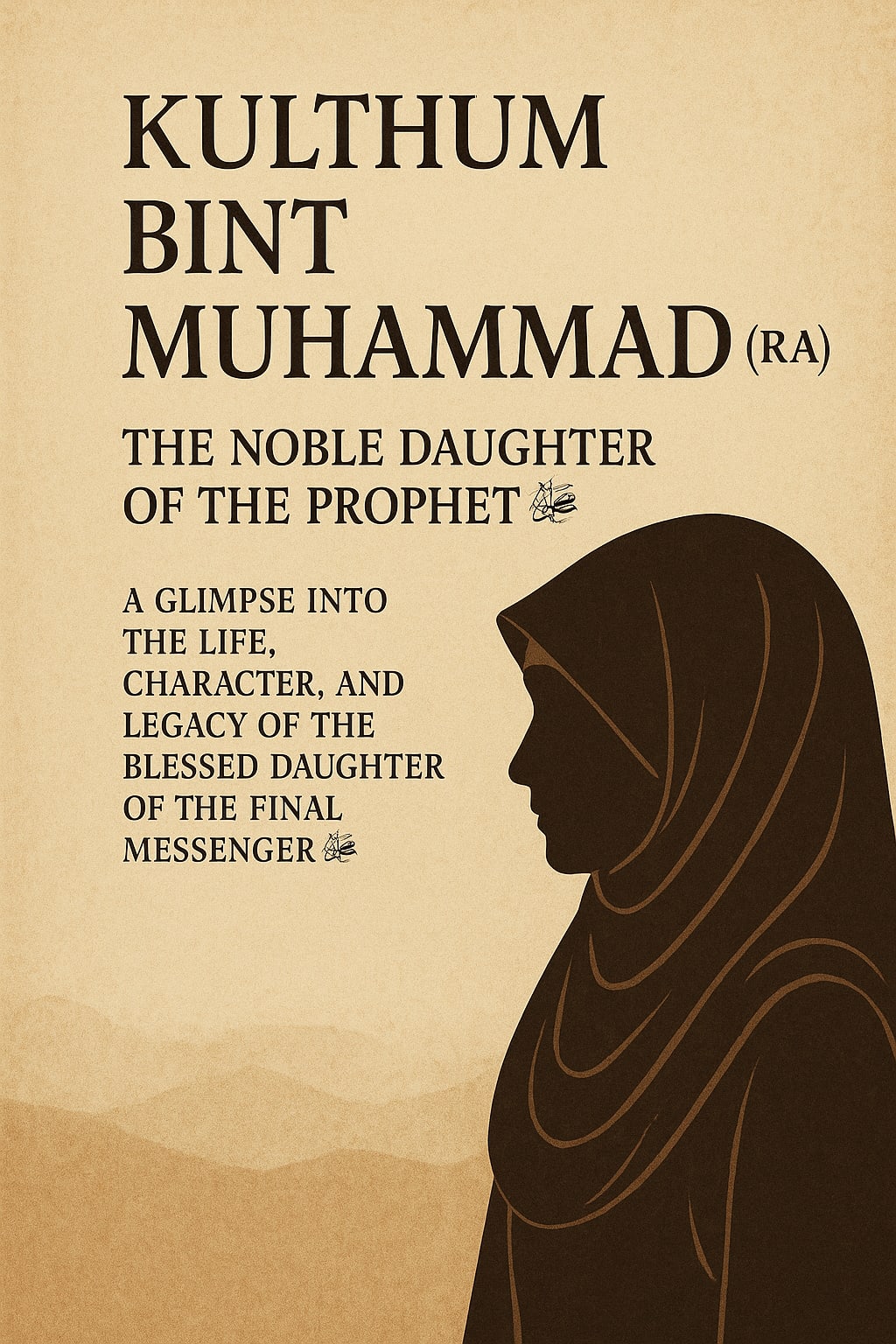
Kulthum bint Muhammad (RA) was one of the noble daughters of the Prophet Muhammad ﷺ and his beloved wife Khadijah (RA). Though not as widely known as her sisters Fatimah, Zainab, and Ruqayyah, Kulthum (RA) lived a life of piety, patience, and quiet strength that reflected the noble teachings of Islam. Her life, though less documented, is an inspiring example of modesty, devotion, and grace in the early Islamic era.
⸻
Early Life and Family Background
Kulthum bint Muhammad (RA) was born in Makkah before her father received the first divine revelation. She was the third daughter of Prophet Muhammad ﷺ and Khadijah bint Khuwaylid (RA), following her elder sisters Zainab (RA) and Ruqayyah (RA). Like her siblings, she was raised in a household known for its truthfulness, kindness, and concern for the well-being of others.
Her childhood was spent under the loving care of her mother Khadijah (RA), a strong, wise, and generous woman, and her father Muhammad ﷺ, who was already known among the Quraysh as “Al-Amin” (The Trustworthy). This upbringing shaped Kulthum’s character, instilling in her a deep sense of faith, honesty, and humility.
⸻
Life During the Early Days of Islam
When Prophet Muhammad ﷺ received the first revelation at the age of 40, Kulthum (RA) was still a young girl. She witnessed the intense opposition her father faced from the Quraysh and the early struggles of the Muslim community. Despite her young age, Kulthum remained steadfast in her support of Islam and the mission of her father. Like other members of the Prophet’s household, she endured social boycott, hardship, and verbal abuse from those who opposed the new faith.
Kulthum lived through the difficult years of persecution in Makkah, including the boycott of the Banu Hashim clan, during which the Prophet’s family suffered from extreme hunger and isolation. Her patience and strength during this time demonstrated her unwavering faith and commitment to her father’s cause.
⸻
Marriage to Uthman ibn Affan (RA)
One of the most significant chapters of Kulthum’s life was her marriage to Uthman ibn Affan (RA), one of the closest companions of the Prophet ﷺ and the third Caliph of Islam. Initially, Uthman (RA) was married to Kulthum’s elder sister Ruqayyah (RA), who passed away during the time of the Battle of Badr. After a period of mourning, the Prophet ﷺ offered his daughter Kulthum in marriage to Uthman (RA), and he accepted.
This marriage was so special and blessed that Uthman (RA) came to be known as “Dhul-Nurayn”, meaning “The Possessor of Two Lights”—because he was married to two daughters of the Prophet ﷺ at different times. No other man in history has had the honor of marrying two daughters of a Prophet, especially the Seal of the Prophets ﷺ.
The marriage between Kulthum (RA) and Uthman (RA) was marked by harmony, mutual respect, and spiritual devotion. Though they did not have children together, their bond was rooted in love and commitment to the message of Islam.
⸻
Her Character and Legacy
Kulthum (RA) was known for her modesty, piety, and gentleness. While history has not preserved many detailed accounts of her actions or sayings, the mere fact that she lived so close to the Prophet ﷺ and was chosen as a wife by Uthman (RA) speaks volumes about her character and virtue.
As a member of the Prophet’s household and a wife of one of the Rightly Guided Caliphs, she upheld high standards of Islamic ethics, supported her husband in his religious and political responsibilities, and remained firm in her faith even during times of great trials.
Her life was one of quiet excellence—lived without seeking fame or recognition, yet filled with the light of iman (faith) and devotion.
⸻
Her Death and the Prophet’s Grief
Kulthum (RA) passed away in the 9th year after Hijrah (630 CE) during the lifetime of the Prophet ﷺ. Her death was a moment of great sorrow for the Prophet, who personally attended her funeral and led the Janazah prayer.
According to narrations, he ﷺ sat by her grave, expressing grief for the loss of yet another beloved daughter. She was buried in the sacred ground of Jannat al-Baqi in Madinah, a resting place for many of the Prophet’s family and companions.
Her death, like that of her sisters Ruqayyah and Zainab, occurred before the Prophet ﷺ left this world. Of all the Prophet’s children, only Fatimah (RA) outlived him—and even she passed away just six months later.
⸻
Lessons from Her Life
The life of Kulthum bint Muhammad (RA) teaches us many valuable lessons:
1. The Power of Quiet Strength: Though she did not make public speeches or lead battles, her role as a faithful daughter and devoted wife is a testament to the quiet but profound strength women possess.
2. Family Loyalty and Support: Kulthum (RA) stood by her father and his mission even in the most challenging of times, reflecting the importance of family unity and spiritual dedication.
3. Modesty and Dignity: Her life was marked by modesty and dignity—traits highly cherished in Islam and exemplified in her dealings with her family and community.
4. True Honor Comes from Piety: Despite the lack of fame or worldly achievements, Kulthum’s (RA) closeness to the Prophet ﷺ and her noble character earned her eternal respect in Islamic history.
⸻
Conclusion
Kulthum bint Muhammad (RA) may not be as widely discussed as some of the other figures in Islamic history, but her legacy endures through the love and honor the Ummah holds for the family of the Prophet ﷺ. Her quiet life of faith, devotion, and loyalty is a shining example for all Muslims—especially for women seeking to follow the footsteps of those closest to the Prophet ﷺ.
Through her story, we are reminded that greatness in Islam is not measured by worldly power or fame, but by sincerity, steadfastness, and service to the path of Allah. May Allah be pleased with Kulthum bint Muhammad (RA) and grant her the highest place in Jannah.
About the Creator
Irshad Abbasi
"Studying is the best cure for sorrow and grief." shirazi
Keep reading
More stories from Irshad Abbasi and writers in History and other communities.
Ruqayyah bint Muhammad: The Devoted Daughter of the Prophet
Ruqayyah bint Muhammad (RA) was one of the beloved daughters of the Prophet Muhammad ﷺ and his first wife, Khadijah bint Khuwaylid (RA). Born into a noble and respected family in Makkah, Ruqayyah’s life was marked by deep faith, patience, and sacrifice during a critical time in the early history of Islam. Her story, though often overshadowed by more prominent historical figures, provides a profound insight into the trials faced by the family of the Prophet ﷺ and the steadfastness of Muslim women during Islam’s formative years.
By Irshad Abbasi 6 months ago in History
Power's Sake
When it comes to gaining power, bad people use it to gain more They never gain power to do something with it, they gain power to have it, relish in it, double it down on itself so it grows exponentially and never goes anywhere. Even if you see the people in power commit an atrocity, that is never the true goal. It is a deplorable action for sure but the action itself usually doesn't matter it's the outcome.
By Donny Foley5 days ago in History



Comments
There are no comments for this story
Be the first to respond and start the conversation.