
Ku Klux Klan (KKK): A History of Racism and Terror
1. Introduction 2. First Era (1865 - 1871): Formation and Early Terror 3. Second Era (1915 - 1944): Revival and Peak Influence 4. Third Era (1950 - Present): Civil Rights Resistance and Modern KKK 5. Conclusion

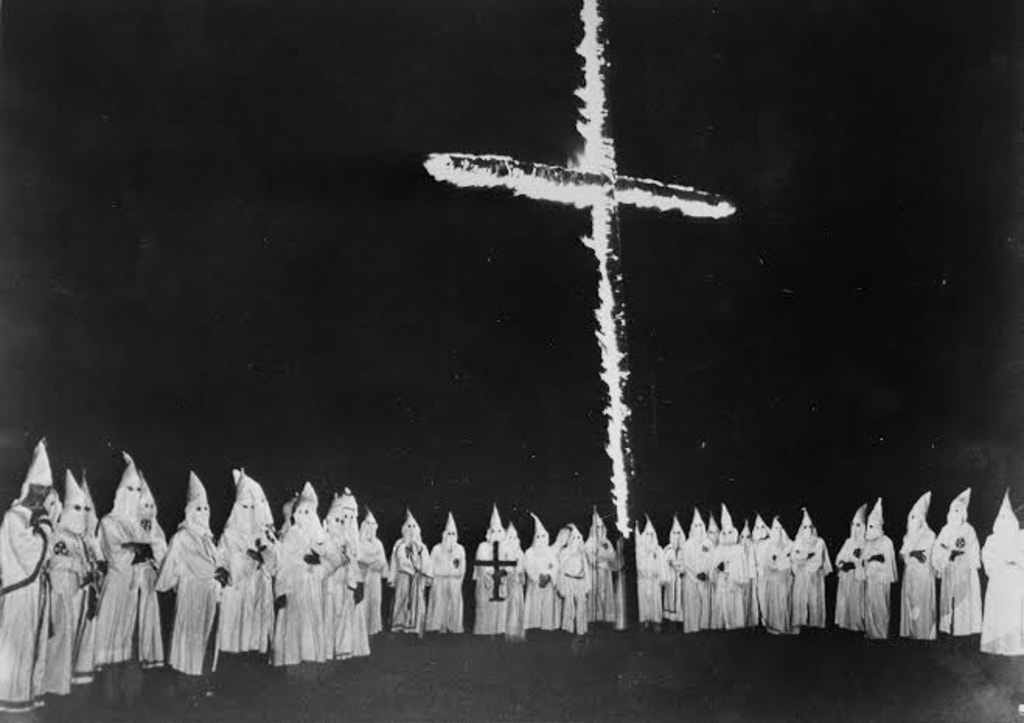
Ku Klux Klan (KKK): A History of Racism and Terror
1. Introduction
Overview of the Ku Klux Klan and its impact on American history.
2:First Era (1865 - 1871): Formation and Early Terror
Founding of the KKK after the Civil War.
Initial goals and activities.
Government crackdown and decline.
3. Second Era (1915 - 1944): Revival and Peak Influence
The role of "The Birth of a Nation" in KKK’s resurgence.
Expansion of targets beyond African Americans.
Political influence and widespread violence.
Internal corruption and decline.
4. Third Era (1950 - Present): Civil Rights Resistance and Modern KKK
KKK’s opposition to the Civil Rights Movement.
Modern hate groups and far-right extremism.
Government actions to suppress the Klan.
5. Conclusion
The lasting impact of the KKK.
How the U.S. continues to combat racism and hate groups today.
Ku Klux Klan (KKK): History, Formation, and Activities
The Ku Klux Klan (KKK) is one of the most infamous secret and racist organizations in U.S. history. It was founded on white supremacy, racism, xenophobia, and communal violence. The Klan has formed and reformed multiple times, with each era marked by acts of terrorism and violence against minorities and perceived opponents.
First Era: 1865 - 1871 (Formation and Initial Rise)
Establishment:
The Ku Klux Klan was founded in December 1865, shortly after the American Civil War (1861-1865), in Pulaski, Tennessee by six former Confederate soldiers.
Founders:
John B. Kennedy
Calvin Jones
Frank O. McCord
Richard R. Reed
John C. Lester
James R. Crow
Naming and Symbols:
The name comes from the Greek word "κύκλος" (Kyklos) meaning "circle" or "group."
"Ku Klux" is a distortion of "Kyklos," and "Klan" was later added.
Purpose:
Initially, it started as a secret social club, but it soon became a terrorist organization.
Its main goal was to suppress newly freed African Americans politically and socially.
Activities:
Preventing Black people from voting
Using violence against Republicans and Northerners who came South
Killing, torturing, and burning homes of Black people and their supporters
Wearing white robes and masks to attack at night
Burning crosses to spread fear
Government Response:
In 1871, the U.S. government passed the Ku Klux Klan Act, giving President Ulysses S. Grant the power to suppress the Klan.
By 1871, the Klan was largely dismantled.
Second Era: 1915 - 1944 (Revival and Peak Influence)
Resurgence and Expansion:
The KKK was revived in 1915 by William Joseph Simmons in Georgia.
It expanded its targets beyond Black Americans to include Catholics, Jews, immigrants, labor unions, and communists.
Propaganda and Recruitment:
The 1915 film "The Birth of a Nation" (directed by D.W. Griffith) portrayed the KKK as heroes, boosting its popularity.
The tradition of cross-burning as a symbol of terror started during this period.
Membership Growth:
By the 1920s, KKK membership reached 4-5 million people.
The Klan influenced politics, and many politicians were secretly affiliated with it.
Violence:
Thousands of African Americans were lynched during this period.
Schools,churches,and , businesses were set on fire.
Public lynchings were used as a tool of racial terror.
Decline:
Corruption, financial scandals, and internal conflicts weakened the Klan.
By 1944, it had significantly lost power.
Third Era: 1950 - Present (Civil Rights Movement and Modern KKK)
Reactivation:
In the 1950s and 1960s, the Civil Rights Movement led to the KKK becoming active again.
It targeted civil rights leaders such as Martin Luther King Jr. and Malcolm X.
Modern-Day Activities:
Spreading hate against Black people, immigrants, Muslims, and LGBTQ+ communities.
Using social media and far-right politics to recruit members.
Government Response:
The FBI and U.S. law enforcement closely monitor KKK activities.
Today, the KKK is much weaker and exists as fragmented hate groups.
Conclusion
The Ku Klux Klan is one of the most notorious organizations in U.S. history, aiming to uphold white supremacy through violence and racism. Although it has significantly lost power, its ideology still influences some extremist groups today. However, American society and the government have continuously worked to reject and dismantle such racist organizations.
About the Creator
SHAKIB
Shakib – Storyteller & Creative Writer
Passionate about storytelling, I bring unique and engaging narratives to life. Whether it’s historical mysteries, horror thrillers, or heartfelt dramas, riv
If America Walks Away from NATO, the World Will Feel the Shock
If America Walks Away from NATO, the World Will Feel the Shock For more than seventy years, NATO has stood as a symbol of collective security and shared responsibility. It was never a perfect alliance, but it worked because it was built on a simple idea: when nations stand together, wars are less likely to happen. Today, however, that foundation is being shaken—not by foreign enemies, but by growing voices inside the United States questioning whether NATO is still worth it.
By Wings of Time 7 days ago in History
3 Harmless Habits That Once Caused Absolute Chaos
Most habits are comfortingly dull. You chew gum. You clap at events. You check your phone. You assume—reasonably—that these actions will not destabilize governments, bankrupt industries, or end lives. Society depends on this assumption. If every small habit carried catastrophic potential, we would never leave the house.
By Enoch Sagini2 days ago in History

Comments
There are no comments for this story
Be the first to respond and start the conversation.