
Knock on a Historic Door
Historically significant doors


I’ve always found doors fascinating, especially when they differ from others and are decorative. Often passing by, I wonder what is behind the door.

The artistic door on the Baptistery of San Giovanni in Florence, Italy, was created by Italian artist Lorenzo Ghiberti. The decoration is known as Porta del Paradiso, or Gates of Paradise.
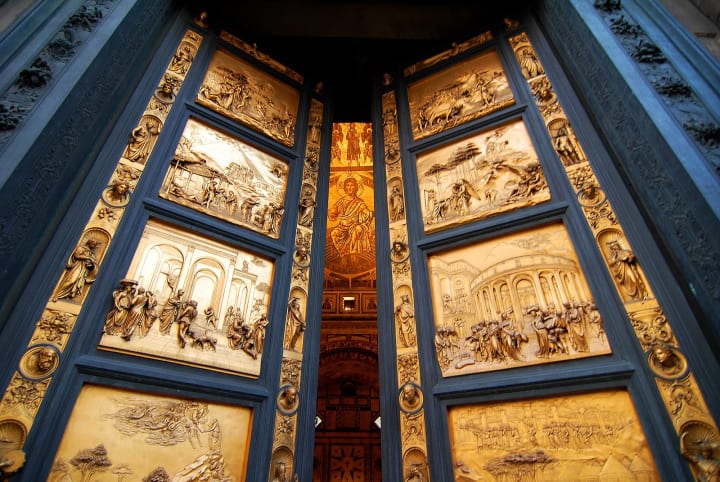
The door is constructed of bronze with gold overlay, and the Renaissance artworks feature ten sculpted panels with scenes from the Old Testament.

The Chepstow Castle gate was installed by the Earl of Pembroke, William Marshal, who was a dedicated knight serving five kings over the course of his life.
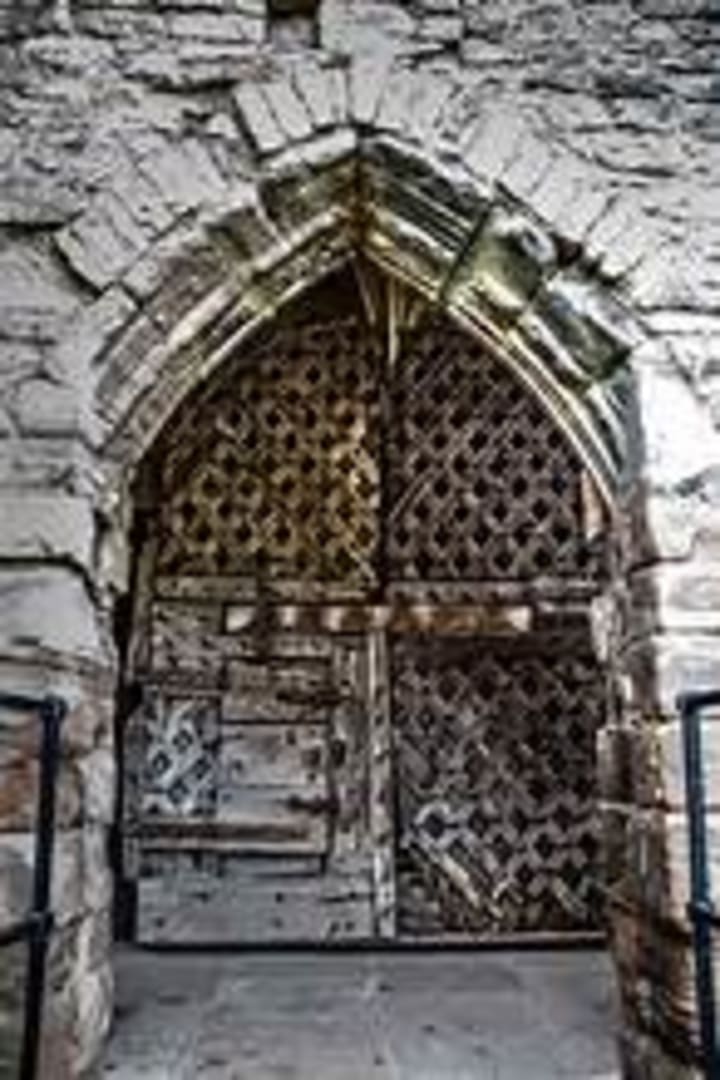
The doors are lattice-patterned and have protected this historic stone fortification in Monmouthshire, Wales, since 1190. They are the oldest castle doors in Europe.
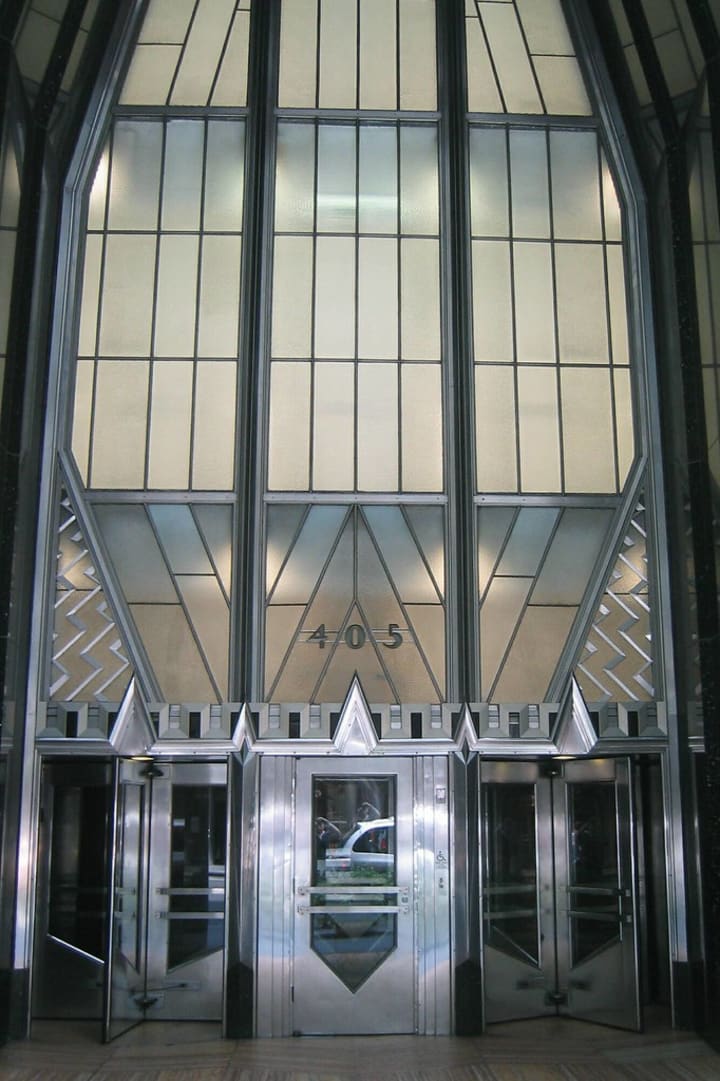
The iconic entrance leading into the Chrysler Building in New York City features three revolving doors. These doors are covered by decorative glass-and-steel screens in the Art Deco style. The doors of the Chrysler Building in NYC were designed by sculptor and artist William Van Alen. He was the architect of the building itself, which was completed in 1930.
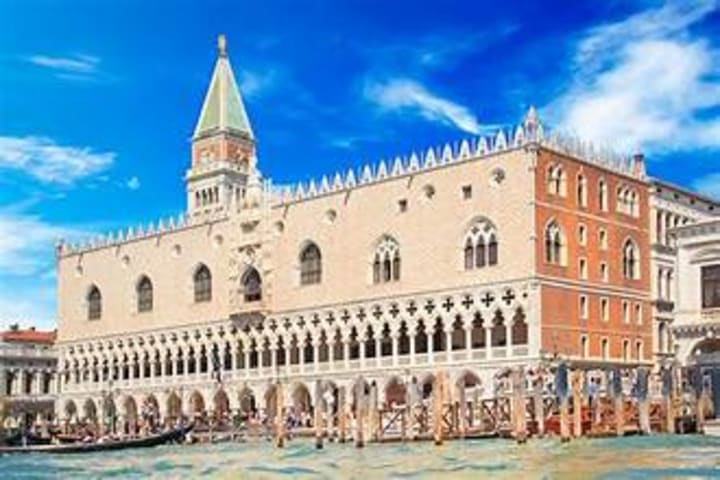
At the Doge’s Palace in Venice, Italy, the door is like a work of art. The Porta della Carta, or Door of Paper, was created by Italian artists Giovanni and Bartolomeo Bon. The entrance features marble statues dedicated to Justice (center) as well as Charity, Fortitude, Prudence, and Temperance.
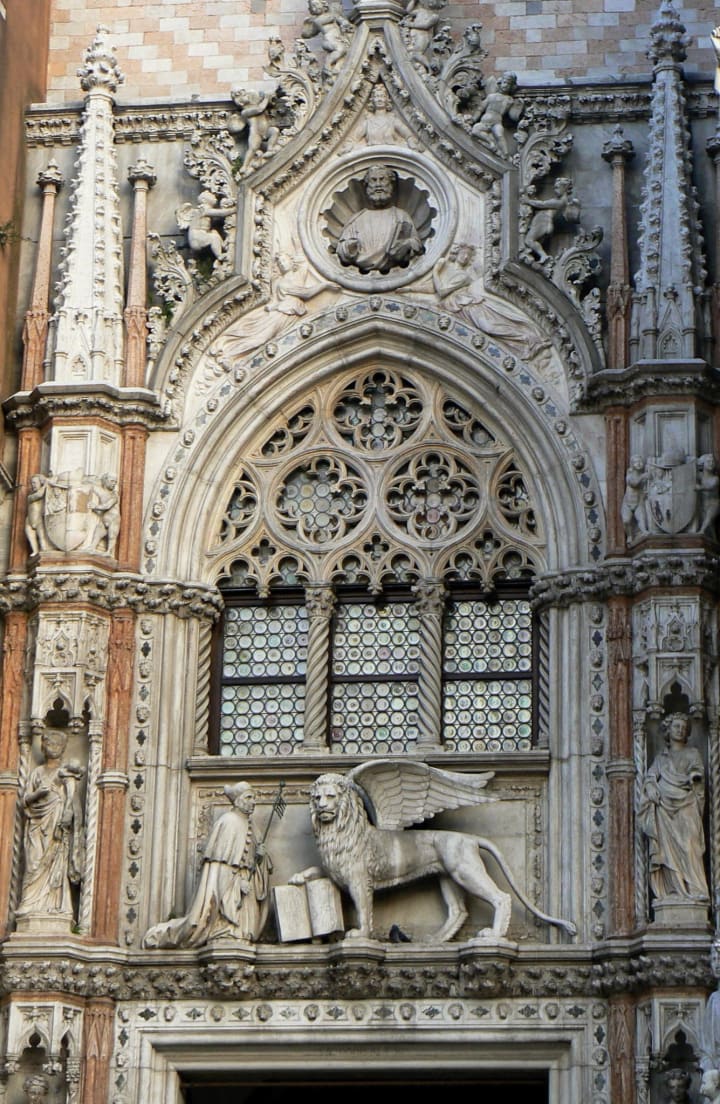
The portals date back to the 15th century. The Porta della Carta is an impressive architectural example of Venetian Renaissance built of white Istrian marble. It is surrounded by two pilasters decorated with sculptures, bas-reliefs, niches, and pinnacles. Many sculptors at that time worked on the bas-reliefs on the door depicting mythological and allegorical images.

Living in London, England, everyone knows that the door upon which is written "Number 10 on Downing Street" is the residence of the Prime Minister. It is an impressive Georgian-style glossed-black door with a shiny lion’s head knocker. It is a secure entrance and, since the IRA’s Downing Street attack in 1991, is made from steel.
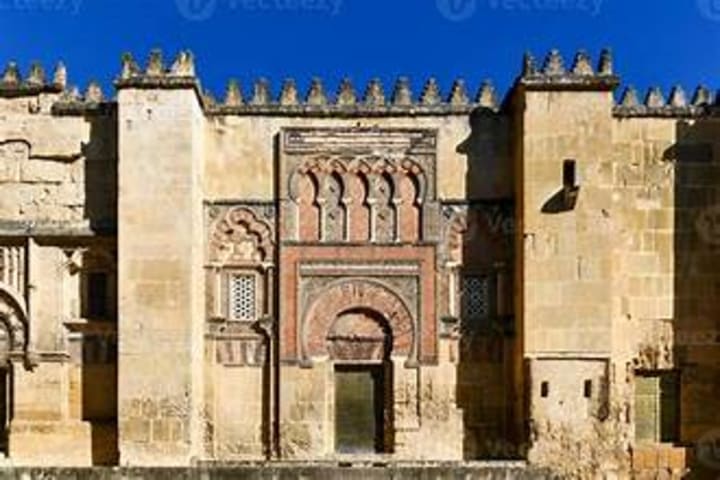
The Mosque-Cathedral in Cordoba, Spain, features Gothic and Moorish reflections. The Puerta del Perdon, or Doors of Forgiveness, are enhanced with mosaics, the artwork of Spanish artist Antonio del Castillo. This architectural feature is notable for its intricate design and historical importance, serving as a symbol of the cultural fusion between Islamic and Christian influences in the region. The name "Puerta del Perdón" translates to "Gate of Forgiveness," indicating its role in religious ceremonies and pilgrimages.

The doors of the Palais Royal, the home of the King of Morocco in Fez, Morocco, are star-patterned with cedar and zellige details. Doors in Morocco, like these ones, are famous for being the one decorative element to grace a home’s humble and plain exteriors.

These famous, beautiful brass doors with matching knockers are covered with intricate patterns and grace the covers of many Morocco travel books.
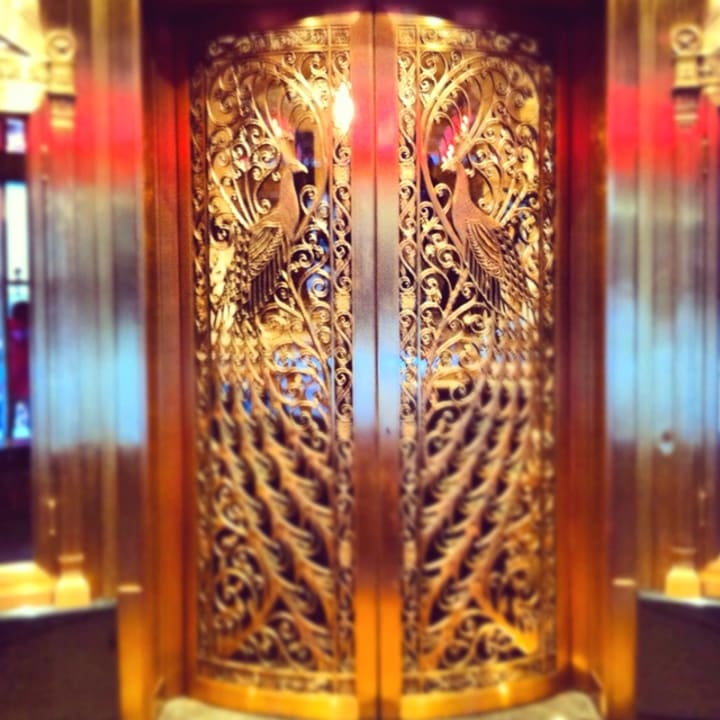
The historic Palmer House in Chicago, Illinois, has impressive bronze peacock doors. Tiffany & Co.’s Louis Comfort Tiffany, an American stained glass and jewelry designer, created these characterized enhancements for the C.D. Peacock store that was once located on the hotel’s first floor.

The Frederick C. Robie House in Chicago, Illinois, was built in 1910. It was designed by American architect Frank Lloyd Wright. Today it is a UNESCO World Heritage Site.

The entrance is an example of the Prairie style with art-glass embellishments and eaves.
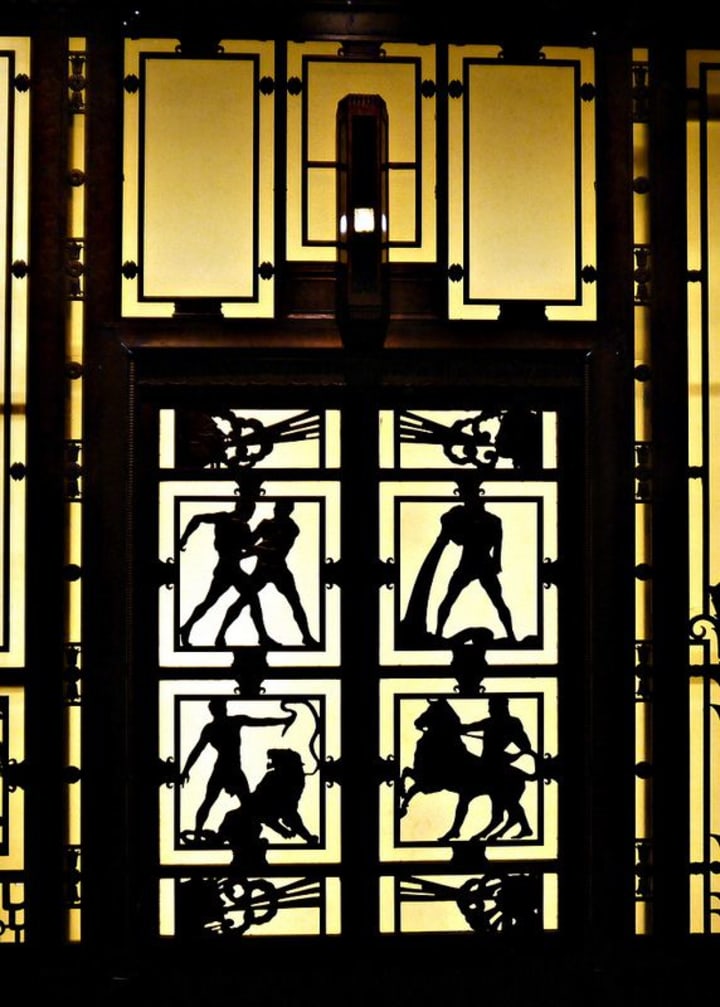
Selfridge’s elevator doors in the Museum of London can be seen as part of the People’s City collection. The bronze and iron screens that once decorated Selfridge’s elevators were installed in 1928 and were created in the Art Deco style with silhouetted figures representing the 12 zodiac signs.
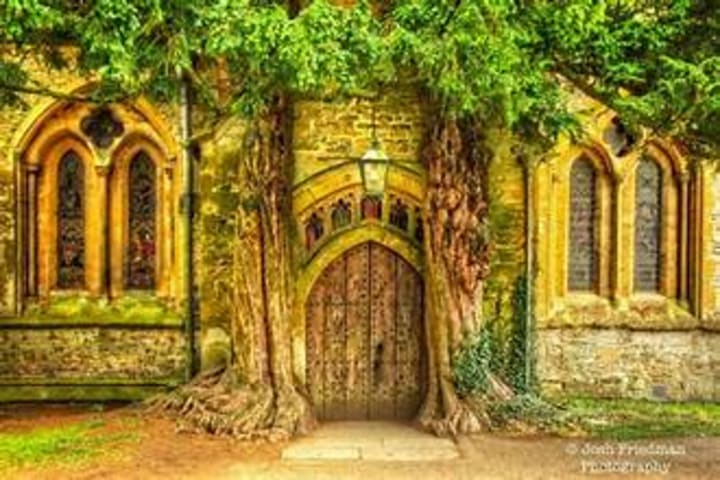
St. Edward’s Church in Gloucestershire, England, dates back to the 1200s. The church has a fairy-tale-like entrance framed between two trees. It is rumored to have inspired the doors of Durin in J.R.R. Tolkien’s The Fellowship of the Ring, which is similarly framed between two trees. It is a medieval-built Church of England parish church that serves Stow-on-the-Wold, Gloucestershire.

St. Peter’s Basilica in Vatican City has a very decorative door, Porta Santa, created by Italian artist Vico Consorti. (pictured above) This door is unlocked by the Pope only once every 25 years to celebrate the holy years of the Catholic Church. The portals are made of bronze. The door symbolizes the passage to spiritual renewal and forgiveness and is made of solid wood, adorned with intricate carvings.

The door of the Stavkirke, or Stave Church, in Borgund, Norway, was created by the same builders who built boats for Vikings.
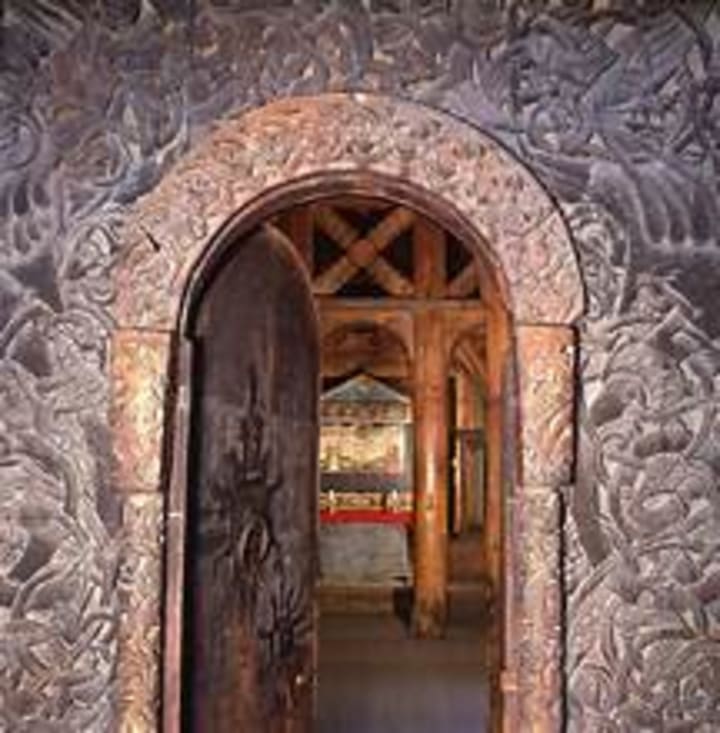
It was constructed in 1180 of fir wood and covered with carvings. The carvings are those of dragons and other Christian and Viking symbols.
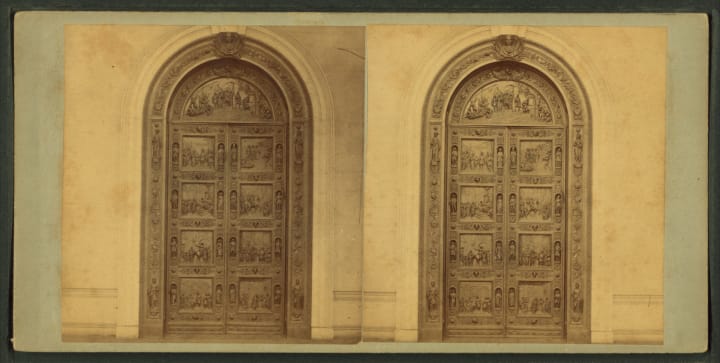
The doors on the U.S. Capitol Building were created by American artist Randolph Rogers. They front the U.S. Capitol Building’s rotunda in Washington, D.C. The decorative pictures chronicle the life of Christopher Columbus. This bronze commission dates from 1910 and weighs in at 20,000 pounds. The Columbus Doors are also referred to as the Rogers Doors. They are a pair of monumental bronze doors designed by sculptor Rogers and cast by Ferdinand von Miller.
About the Creator
Rasma Raisters
My passions are writing and creating poetry. I write for several sites online and have four themed blogs on Wordpress. Please follow me on Twitter.
Keep reading
More stories from Rasma Raisters and writers in History and other communities.
Take a Trip to Ancient Mesopotamia
Mesopotamian architecture is part of the structures that were once in the historic region of the Tigris and Euphrates Rivers. Mesopotamia lasted from around the 10th millennium BC to the 6th century BC. It was called the Cradle of Civilization, and the first permanent structures on Earth were built here around 12,000 years ago. Among the structures built here were temples, forts, tombs, and palaces. The most popular city was Babylon.
By Rasma Raisters2 months ago in History
Why Early Aircraft Designers Had No Second Chances
When I read about the earliest days of aviation, I’m always struck by how unforgiving that era truly was. Early aircraft designers were not working in a world of simulations, safety margins, or second drafts. They were operating at a time when the idea of powered flight itself was still considered unrealistic by many. Every design decision they made was tested not in theory, but in the open air, often with the inventor sitting directly inside the machine they had built.
By Beckett Dowhana day ago in History
Dr. Martin Luther King, Jr.
Dr. Martin Luther King, Jr. was born on January 15, 1929. Martin Luther King, Jr. Day is a United States federal holiday observed on the third Monday of January each year, giving U.S. residents a three-day weekend. It is the first federal holiday of 2026.
By Margaret Minnicksabout 3 hours ago in History


Comments
There are no comments for this story
Be the first to respond and start the conversation.