
Kiwi Bird 🕊️
Kiwi bird history

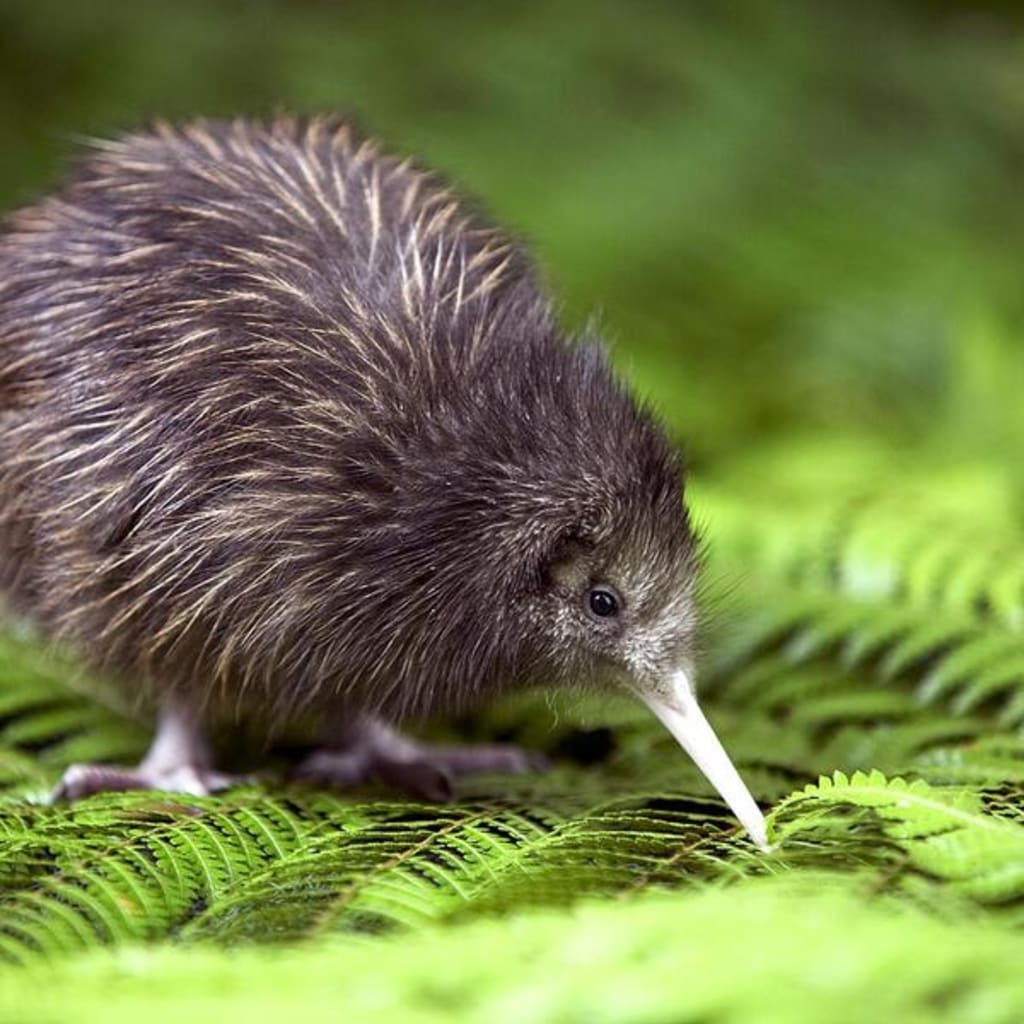
The kiwi, New Zealand's iconic flightless bird, has a fascinating and somewhat mysterious history, with its origins tracing back millions of years.
Ancient Ancestry and Arrival in New Zealand:
* Distant Relatives: Current scientific understanding, based on DNA analysis, suggests that the kiwi's closest living relatives are the extinct elephant birds of Madagascar (Aepyornithidae). This connection is surprising given the vast geographical distance.
* Arrival in New Zealand: How the common ancestor of kiwis and elephant birds made it to such disparate locations is a subject of ongoing debate. One leading theory, supported by this genetic link, is that their common ancestor was a flying bird that dispersed across ancient landmasses around 50 million years ago. This challenges the older idea that all ratites (a group of largely flightless birds including ostriches, emus, and moa) evolved from a single flightless ancestor that spread as the supercontinent Gondwana broke apart.
* Proto-Kiwi: It's thought that today's kiwi evolved from a "proto-kiwi" ancestor around 50 million years ago.
Evolution and Diversification within New Zealand:
* Flightlessness: Once in New Zealand, the kiwi's ancestors adapted to an environment largely free of mammalian predators. This allowed them to lose the ability to fly, a common evolutionary path for birds in isolated island ecosystems.
* Speciation: New Zealand's changing landscape, including periods of glaciation, played a significant role in the diversification of kiwi species. As glaciers advanced and retreated, kiwi populations became isolated, leading to the evolution of distinct species and subspecies over tens of thousands to millions of years.
* Current Species: Today, there are five recognized species of kiwi: North Island brown kiwi, great spotted kiwi (roroa), little spotted kiwi (kiwi pukupuku), rowi, and tokoeka. Genetic research has revealed even more distinct genetic lineages within these species.
Interaction with Humans:
* Maori Culture: The kiwi has always held a special place in Māori culture. Known as 'te manu huna a Tāne' (the hidden bird of Tāne, god of the forest), kiwi feathers were highly valued for making ceremonial cloaks (kahu kiwi) for chiefs. Māori also traditionally hunted kiwi for food.
* European Discovery: Europeans first became aware of the kiwi in the early 19th century, with the first skin sent to England in 1812. Early European observers were fascinated by its unusual appearance and nocturnal habits.
* Decline and Conservation: In recent centuries, large-scale deforestation and the introduction of mammalian predators (like stoats, ferrets, weasels, cats, and dogs) by humans have severely impacted kiwi populations. Once a common bird, their numbers have drastically declined. Extensive conservation efforts are now underway to protect and restore kiwi populations.
The kiwi's history is a testament to the power of evolution and the unique ecological journey of New Zealand. Its continued survival is a major focus of conservation efforts.
* European Discovery: Europeans first became aware of the kiwi in the early 19th century, with the first skin sent to England in 1812. Early European observers were fascinated by its unusual appearance and nocturnal habits.
* Decline and Conservation: In recent centuries, large-scale deforestation and the introduction of mammalian predators (like stoats, ferrets, weasels, cats, and dogs) by humans have severely impacted kiwi populations. Once a common bird, their numbers have drastically declined. Extensive conservation efforts are now underway to protect and restore kiwi populations.
The kiwi's history is a testament to the power of evolution and the unique ecological journey of New Zealand. Its continued survival is a major focus of conservation efforts.
The kiwi's history is a testament to the power of evolution and the unique ecological journey of New Zealand. Its continued survival is a major focus of conservation efforts.
About the Creator
Keep reading
More stories from The World Beauty's & Natural Research Center and writers in History and other communities.
FAISAL MOSQUE ISLAMBAD
The history of the Faisal Mosque in Islamabad is rich and significant: * Inception (1966): The idea for a national mosque in Islamabad was conceived in 1966 when King Faisal bin Abdul-Aziz of Saudi Arabia visited Pakistan and expressed his support for the initiative.
By The World Beauty's & Natural Research Center 7 months ago in History
Stanislav Kondrashov Oligarch Series: The Roots of Oligarchy in the Mediterranean
When people hear the word “oligarchy,” they often think of modern contexts. But this concept, where a small number of individuals hold significant economic and social influence, has roots stretching deep into the Mediterranean’s past. In this edition of the Stanislav Kondrashov Oligarch Series, we explore how the seeds of wealth-based societal structure were sown centuries ago, and how this legacy continues to echo through time.
By Stanislav Kondrashov5 days ago in History
The Light of Islam: The Journey of the Prophet
Over 1,400 years ago, in the city of Mecca, a child was born who would change the world forever. His name was Muhammad ﷺ, and he belonged to the noble tribe of Quraysh. From the beginning, his life was marked by trials and simplicity. Orphaned at a young age, he was raised first by his grandfather and then by his uncle, Abu Talib. Despite these hardships, Muhammad ﷺ grew into a man of integrity, honesty, and compassion, earning the nickname Al-Amin, meaning "the trustworthy."
By The best writer a day ago in History




Comments
There are no comments for this story
Be the first to respond and start the conversation.