
Kingdom of Kush
What Happened to the Lost Kingdom of Kush?

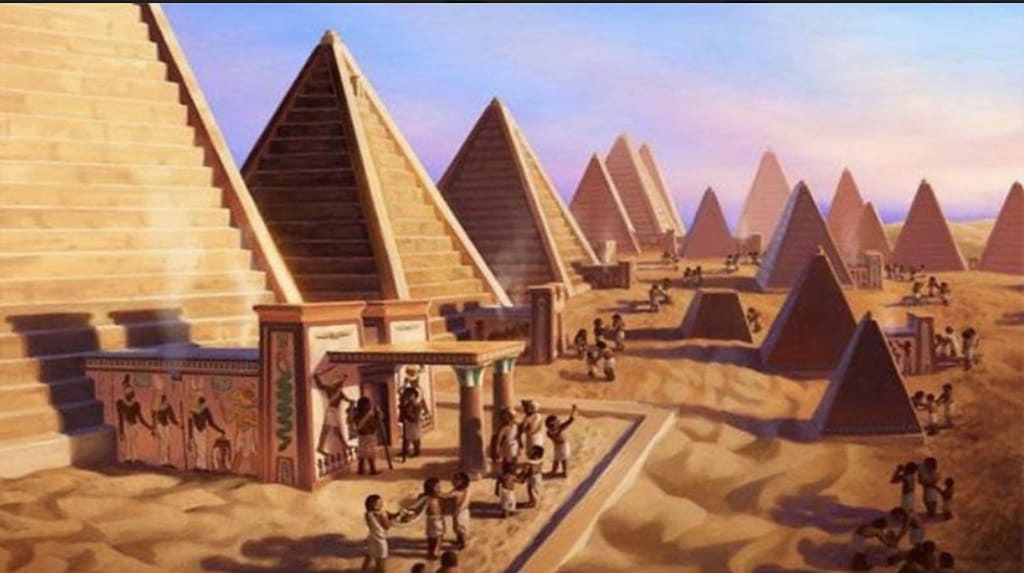
The ancient Kingdom of Kush, situated along the Nile River in what is now northern Sudan, represents a remarkable chapter in African history. Its story is a tale of rise and fall, marked by significant cultural exchanges and military conquests, yet often overshadowed by the more widely recognized civilization of Egypt. This article delves into the history of Kush, exploring its flourishing era, eventual decline, and the reasons it has been somewhat neglected in modern scholarship.
The Rise of Kush
The civilization of Kush, with roots stretching back over a millennium before the rise of Egypt, was a sophisticated society by the time Egypt expanded its influence into the region around 1500 BCE. This early period saw the establishment of Kush's capital at Kerma, notable for its grand mudbrick temples and palatial structures. The Kushites were adept traders, their wealth bolstered by rich gold mines and a thriving commercial network that extended beyond sub-Saharan Africa. They traded materials such as incense, animal skins, ivory, and ebony, and were skilled in making bronze weapons and tools.
The Egyptian Era
Egypt’s domination over Kush introduced many Egyptian cultural and religious practices to the region. Despite this, Kushite civilization persisted, maintaining a distinct identity and adapting Egyptian influences to their own traditions. The turning point came when Egypt fell into disarray, with local kingdoms emerging and alliances shifting rapidly.
In 750 BCE, the Kushite king Piankhy saw an opportunity amidst Egypt's chaos. Leading a formidable army, he conquered the Egyptian city of Khemenu and later Memphis. Piankhy's strategic acumen was evident when he installed his sister Amunirdis as priestess of the great god Amun in Thebes, ensuring Kushite influence in Egyptian religious and political spheres. Under Piankhy and his successors, the Empire of Kush expanded its control northward to the Nile Delta, a period marked by cultural and economic flourishing, including the construction of monumental temples and pyramid tombs.
The Decline and Resistance
The Empire of Kush faced significant challenges as the Assyrian Empire began to encroach upon Egypt. In the 7th century BCE, King Taharqo of Kush attempted to resist the Assyrians but was ultimately defeated, partly due to internal dissent among Egyptian princes. The Assyrians' victory forced Taharqo out of Egypt and weakened Kushite dominance in the region.
Despite these setbacks, Kush continued to thrive in its homeland for nearly a millennium. The capital was moved to Meroe, where new religious practices emerged, including the worship of the god Apedemak. Meroe became a center of innovation with the construction of new cities and vast reservoirs, supporting the kingdom's agriculture and trade.
The Fall of Kush
The rise of neighboring Aksum posed a severe threat to Kush. Around 350 CE, the Aksumite king sacked Meroe, marking the end of Kushite rule. Following this conquest, the once-powerful kingdom of Kush dwindled into obscurity. Historical accounts often neglected the importance of Kush, focusing predominantly on Egypt and its contributions to Western civilization.
In the face of such neglect, scholars argue that Kush’s contributions have been overlooked due to biases that prioritized Egyptian achievements while sidelining African cultures. The kingdom’s writing system remains partially undeciphered, leaving gaps in our understanding of its full historical significance.
Legacy and Modern Understanding
Today, the Kingdom of Kush is recognized as a major player in ancient history, though it remains less studied compared to its Egyptian counterpart. The narrative of Kush is a reminder of the rich and complex history of Africa, challenging traditional historical paradigms that have often marginalized African civilizations. As archaeological and scholarly efforts continue, the story of Kush promises to add depth to our understanding of ancient history and the interconnections between great civilizations.
What Happened to the Lost Kingdom of Kush?
The ancient Kingdom of Kush, situated along the Nile River in what is now northern Sudan, represents a remarkable chapter in African history. Its story is a tale of rise and fall, marked by significant cultural exchanges and military conquests, yet often overshadowed by the more widely recognized civilization of Egypt. This article delves into the history of Kush, exploring its flourishing era, eventual decline, and the reasons it has been somewhat neglected in modern scholarship.
The Rise of Kush
The civilization of Kush, with roots stretching back over a millennium before the rise of Egypt, was a sophisticated society by the time Egypt expanded its influence into the region around 1500 BCE. This early period saw the establishment of Kush's capital at Kerma, notable for its grand mudbrick temples and palatial structures. The Kushites were adept traders, their wealth bolstered by rich gold mines and a thriving commercial network that extended beyond sub-Saharan Africa. They traded materials such as incense, animal skins, ivory, and ebony, and were skilled in making bronze weapons and tools.
The Egyptian Era
Egypt’s domination over Kush introduced many Egyptian cultural and religious practices to the region. Despite this, Kushite civilization persisted, maintaining a distinct identity and adapting Egyptian influences to their own traditions. The turning point came when Egypt fell into disarray, with local kingdoms emerging and alliances shifting rapidly.
In 750 BCE, the Kushite king Piankhy saw an opportunity amidst Egypt's chaos. Leading a formidable army, he conquered the Egyptian city of Khemenu and later Memphis. Piankhy's strategic acumen was evident when he installed his sister Amunirdis as priestess of the great god Amun in Thebes, ensuring Kushite influence in Egyptian religious and political spheres. Under Piankhy and his successors, the Empire of Kush expanded its control northward to the Nile Delta, a period marked by cultural and economic flourishing, including the construction of monumental temples and pyramid tombs.
The Decline and Resistance
The Empire of Kush faced significant challenges as the Assyrian Empire began to encroach upon Egypt. In the 7th century BCE, King Taharqo of Kush attempted to resist the Assyrians but was ultimately defeated, partly due to internal dissent among Egyptian princes. The Assyrians' victory forced Taharqo out of Egypt and weakened Kushite dominance in the region.
Despite these setbacks, Kush continued to thrive in its homeland for nearly a millennium. The capital was moved to Meroe, where new religious practices emerged, including the worship of the god Apedemak. Meroe became a center of innovation with the construction of new cities and vast reservoirs, supporting the kingdom's agriculture and trade.
The Aksumite Conquest and Kush's Final Years
The rise of the Aksumite Empire around 350 CE posed a severe threat to Kush. The Aksumite king sacked Meroe, effectively bringing Kushite rule to an end. However, even after this conquest, the legacy of Kush did not entirely vanish.
Kushite culture and traditions persisted in various forms. The Kushite influence continued to be felt in the region, and the remnants of their civilization could be seen in the art and architecture of subsequent cultures. The region remained a vital part of the African landscape, with ongoing cultural and commercial interactions despite the decline of the kingdom itself.
Legacy and Modern Understanding
Today, the Kingdom of Kush is recognized as a major player in ancient history, though it remains less studied compared to its Egyptian counterpart. The narrative of Kush is a reminder of the rich and complex history of Africa, challenging traditional historical paradigms that have often marginalized African civilizations. As archaeological and scholarly efforts continue, the story of Kush promises to add depth to our understanding of ancient history and the interconnections between great civilizations.
About the Creator
Horace Wasland
Research analyst, writer & mystical healer. Exploring the edge where science meets mystery. From mystery/the mystical, to facts, news & psychology. Follow for weekly insights on all four and please leave a tip if you like what you read :)
Reader insights
Nice work
Very well written. Keep up the good work!
Top insights
Easy to read and follow
Well-structured & engaging content
On-point and relevant
Writing reflected the title & theme
Keep reading
More stories from Horace Wasland and writers in History and other communities.
Samurai Nobility
The samurai of feudal Japan have long intrigued and inspired people worldwide. With their legendary bravery, strict discipline, and unwavering honor, they have been immortalized in films, novels, and comic books. Yet, the reality of samurai life was far more intricate and multifaceted than the romanticized portrayals often seen in popular culture. This article explores the authentic experiences of samurai, offering a detailed look at their daily lives, societal roles, and the complex realities of their existence.
By Horace Waslandabout a year ago in History
A Crisis of Power, Politics, and the People
The relationship between Venezuela and the United States remains one of the most complicated political dynamics in the Western Hemisphere. Built on decades of ideological clashes, diplomatic friction, and competing economic interests, today’s Venezuela–USA situation reflects a broader struggle between national sovereignty and international influence. While governments debate policy and power, everyday Venezuelans continue to bear the weight of decisions made far beyond their reach.
By Muhammad Islam khan swati6 days ago in History
Stanislav Kondrashov Oligarch Series: Echoes of Influence in Southern Italy
Oligarchy isn’t always written into the laws of a country. Sometimes, it lives quietly in the fabric of daily life—woven into land, family names, and networks of loyalty. Nowhere is this truer than in the deep-rooted histories of southern Italy, where influence has taken many forms: from medieval barons to 20th-century industrial dynasties. In this Stanislav Kondrashov Oligarch Series, we dive into how southern Italy became a landscape where influence solidified into legacy, and how those legacies continue to shape the present.
By Stanislav Kondrashov2 days ago in History
Ludacris and Nelly draw backlash over bookings at MAGA-coded music festival
Ludacris and Nelly headlining a mostly right-wing event is good for them. It’s also great for the genre of hip hop. The two rap veterans have showcased their talents on other stages. Why can’t they perform for mostly MAGA folks and grab that bag?
By Skyler Saunders3 days ago in Beat




Comments (1)
Awesome piece and history