
Julian Assange: The Man Behind WikiLeaks
Truth, Power, and the Global Battle for Transparency

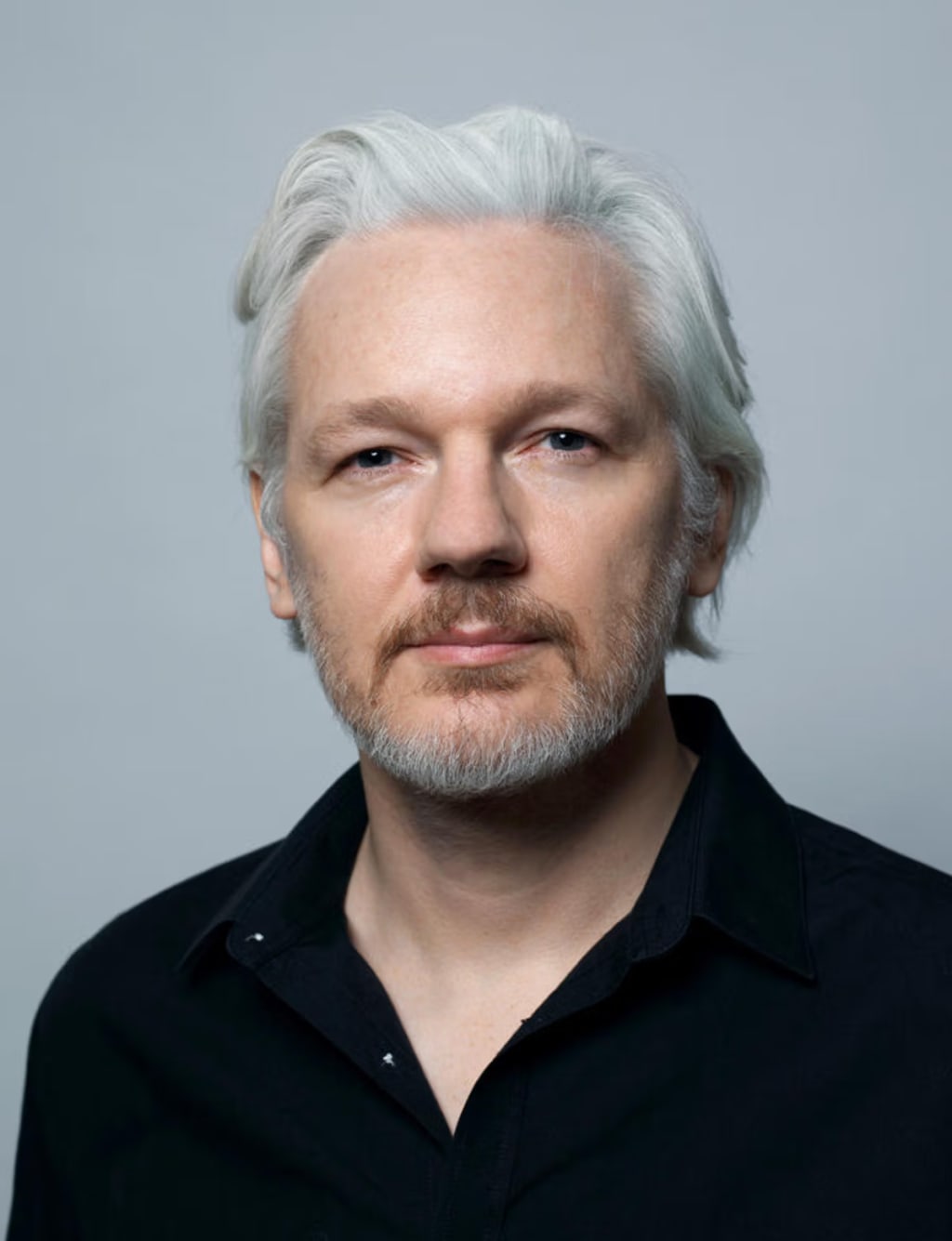
Introduction
Julian Assange is one of the most polarizing figures of the 21st century—a digital age revolutionary who created WikiLeaks, the controversial platform that exposed some of the deepest secrets of governments and powerful institutions. To some, he is a hero of transparency, a fearless defender of the public’s right to know. To others, he is a reckless criminal, a manipulative hacker who endangered lives. His life story is one of intellect, idealism, controversy, and global political drama.
Early Life and Background
Julian Paul Assange was born on July 3, 1971, in Townsville, Queensland, Australia. His early life was anything but stable. Raised by his mother, Christine Ann Hawkins, and stepfather Brett Assange, Julian spent his childhood moving from town to town. His mother was deeply anti-authoritarian, which greatly influenced his worldview.
Assange was largely self-educated. He developed a strong interest in science, technology, and especially computers. By the time he was a teenager, he was already hacking into secure networks under the alias "Mendax", along with a group called the International Subversives. In 1991, he was arrested by Australian federal police for hacking, but avoided jail time and was instead fined.
He later studied programming, mathematics, and physics at various Australian universities, though he never completed a degree.
The Birth of WikiLeaks
In 2006, Assange founded WikiLeaks, a non-profit organization with the mission of publishing classified documents and whistleblower information. The idea was simple but radical: allow anonymous sources to submit sensitive information, and publish it in full, uncensored, for the public to see.
The platform's first major release included documents about Guantanamo Bay and corruption in Kenya. But it was the 2010 leaks that turned WikiLeaks—and Assange—into global household names.
The 2010 Mega Leaks
Working with Chelsea Manning, a U.S. Army intelligence analyst, WikiLeaks released:
The Collateral Murder video: Footage showing a U.S. Apache helicopter killing 11 people in Baghdad, including two Reuters journalists.
The Afghan War Logs: Over 75,000 documents about the war in Afghanistan.
The Iraq War Logs: Nearly 400,000 classified documents revealing abuses and deaths.
Cablegate: Over 250,000 U.S. diplomatic cables from embassies around the world.
These releases revealed human rights abuses, war crimes, and government misconduct. They were praised by transparency advocates and media organizations, but condemned by the U.S. government and military.
Controversies and Legal Trouble
Shortly after the 2010 leaks, Assange faced sexual misconduct allegations in Sweden. Two women accused him of rape and sexual assault, though Assange denied the allegations and claimed they were part of a plot to extradite him to the U.S. via Sweden.
A European arrest warrant was issued. Fearing extradition, Assange sought asylum in the Ecuadorian Embassy in London in 2012, where he remained for nearly seven years.
While in the embassy, Assange continued his work and remained a public figure through media appearances. But the prolonged isolation took a toll on his mental and physical health.
Arrest and Imprisonment
In April 2019, Ecuador withdrew its asylum protection. British police entered the embassy and arrested Assange for skipping bail in 2012. Soon after, the U.S. unsealed an 18-count indictment against him under the Espionage Act and for computer intrusion, with potential prison time of up to 175 years.
He was sent to Belmarsh Prison, a high-security facility in London, where he has remained while fighting extradition to the U.S.
Health and Human Rights Concerns
Numerous reports and investigations, including one by the UN Special Rapporteur on Torture, claimed Assange showed signs of psychological torture. His physical health deteriorated due to years of confinement, limited sunlight, and stress.
His supporters argue that extraditing him to the U.S. would be a violation of human rights, and many fear he would not receive a fair trial.
Supporters and Critics
Assange has gained support from:
Journalist organizations (e.g., Reporters Without Borders)
Human rights groups (e.g., Amnesty International)
High-profile individuals like Noam Chomsky, Edward Snowden, and Daniel Ellsberg
Numerous political figures, including some heads of state
On the other hand, critics accuse him of:
Failing to redact sensitive data
Assisting Russian interference (especially in the 2016 U.S. elections)
Damaging national security and diplomatic relations
Legacy and Impact
Julian Assange is a symbol of the tension between power and transparency in the digital age. His work sparked a new era of investigative journalism, inspired countless whistleblowers, and changed how governments handle information security.
Whether viewed as a pioneer or a criminal, his actions have undeniably reshaped global journalism, cybersecurity, and debates around freedom of speech, privacy, and government accountability.
Personal Life
Assange has been a deeply private person. While in the Ecuadorian Embassy, he fathered two children with Stella Morris, his lawyer, whom he married in 2022 inside the prison. She has been one of his most vocal advocates during his imprisonment.
Conclusion
Julian Assange’s story is not yet finished. His fate lies in the hands of British courts, international diplomacy, and public opinion. Whatever happens next, he has already made history—as a rebel with a keyboard, a challenger of empires, and a controversial voice in the fight for truth.
Tools
About the Creator
Keep reading
More stories from Zain Ul Abedin Khan and writers in History and other communities.
The Collapse of Azmir
In an age long past, nestled between towering mountains and the endless blue of the sea, lay the kingdom of Azmir. It was a land blessed by nature and guided by wisdom, where the air was fragrant with the scent of blooming jasmine, and the streets of its cities echoed with the laughter of children and the calls of merchants. The people of Azmir were known far and wide for their generosity, courage, and devotion to justice.
By Zain Ul Abedin Khan9 months ago in History
Dust Bowl Trauma in West Texas
In the early 1930s, the High Plains of Texas experienced a series of environmental conditions that would permanently reshape the region’s communities. Drought intensified across the southern plains. Topsoil loosened by aggressive plowing lifted into the air under powerful winds. Dust storms darkened skies across counties that depended almost entirely on agriculture and livestock. What followed became known as the Dust Bowl.
By Dr. Mozelle Martin6 days ago in History


Comments
There are no comments for this story
Be the first to respond and start the conversation.