
Journey of the Modern Archaeologist
Uncovering the Past with the Tools of Tomorrow

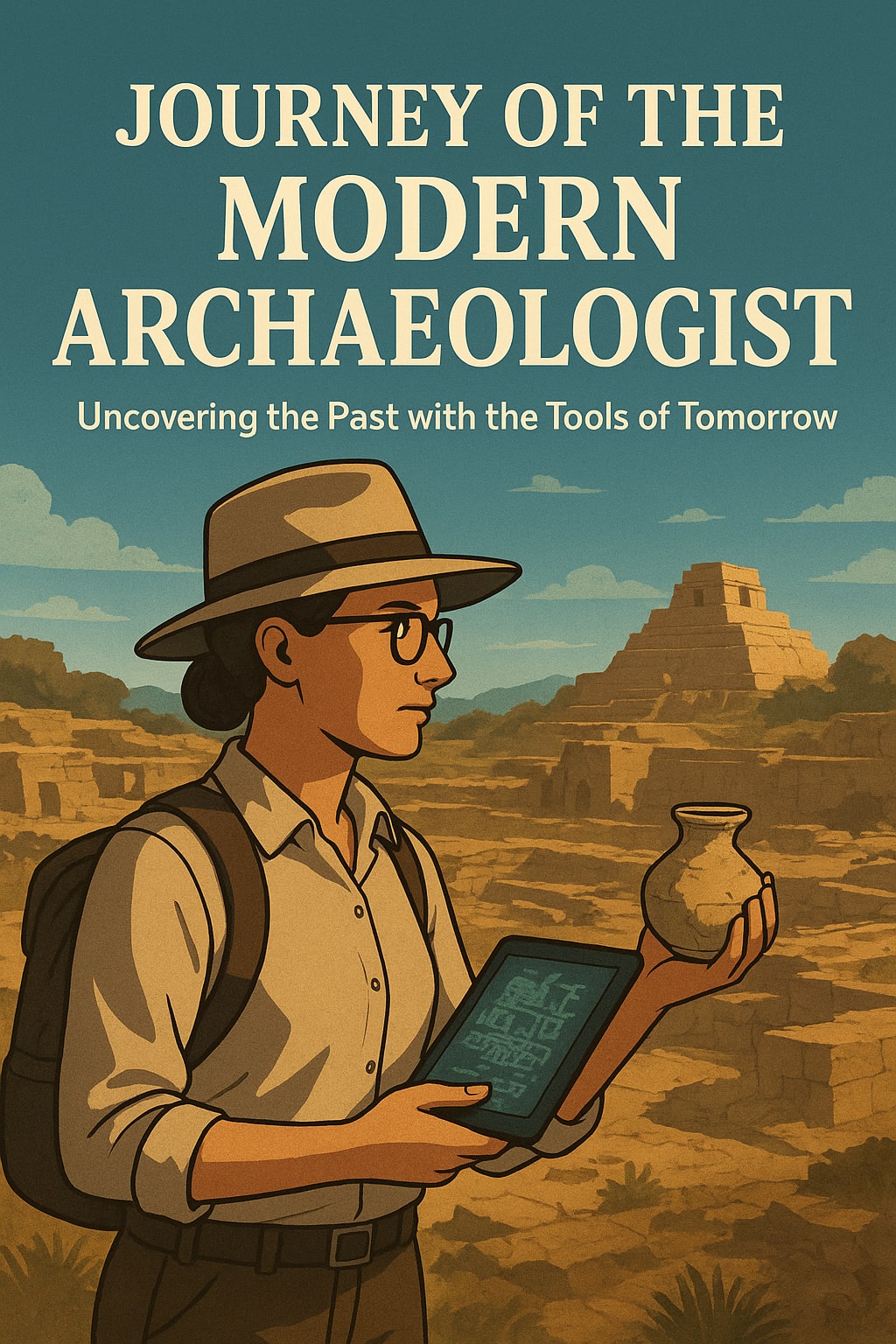
Archaeology has long been romanticized as a profession of dusty excavation sites, ancient ruins, and explorers trekking through uncharted lands. While this image still holds some truth, the path of the modern archaeologist looks vastly different from the traditional adventurer we imagine. Today’s archaeologists blend scientific precision with cutting-edge technology, merging old-world curiosity with new-age innovation. Their role is not just to discover artifacts but to reconstruct human history, analyze cultural patterns, and interpret the stories of people who lived thousands of years ago. The journey of the modern archaeologist is a journey between worlds — between past and present, mystery and evidence, mythology and science.
A New Kind of Explorer
The earliest archaeologists relied heavily on intuition, physical exploration, and basic tools. They often conducted digs with minimal documentation or scientific control. But today’s archaeologist must be part scientist, part detective, and part historian. Their exploration begins not with a shovel but with research, satellite imagery, digital maps, and sometimes even drones.
Before stepping onto a dig site, modern archaeologists analyze environmental data, geological reports, historical texts, old maps, and cultural records. A single excavation involves complex planning: surveying the land, assessing the soil, considering environmental impact, and understanding the cultural context. Every step requires precision. Every find must be recorded carefully. Every artifact must be treated as a piece of a larger puzzle.
Technology: Transforming the Field
One of the biggest shifts in modern archaeology is the role of technology. Tools like Ground-Penetrating Radar (GPR) allow archaeologists to “see” what lies beneath the ground before digging. LiDAR scanning, which uses laser technology from aircraft or drones, can reveal ancient structures hidden under dense forests. It was LiDAR that uncovered vast Mayan cities beneath the jungles of Guatemala — cities far larger than archaeologists had previously imagined.
3D modeling allows archaeologists to recreate ancient buildings, tools, and landscapes digitally. Artifacts can be scanned, replicated, and compared across the world, allowing experts from different countries to collaborate in real time. Unlike earlier decades, where artifacts were shipped from museum to museum, today’s archaeologists exchange digital copies instantly.
In the lab, radiocarbon dating, DNA analysis, and isotope testing allow them to determine the age, origin, diet, migration patterns, and even family relationships of ancient people. A single bone fragment can reveal an entire chapter of human history.
Fieldwork: The Heart of Archaeology
Despite technological advancements, nothing replaces fieldwork — the physical process of excavation, which remains the soul of archaeology. Modern archaeologists spend long hours in challenging conditions: scorching deserts, dense jungles, mountain ranges, or coastal sites.
Excavation demands patience and attention to detail. Every layer of soil represents a different moment in history. A piece of pottery, a small coin, or a fragment of bone can change everything we know about a civilization. Archaeologists must work slowly, carefully brushing away earth, documenting their findings meticulously.
Fieldwork is also collaborative. It often includes:
Environmental experts
Anthropologists
Geologists
Biologists
Engineers
Digital mapping teams This teamwork ensures that discoveries are accurate, contextual, and scientifically reliable.
Cultural Sensitivity and Ethics
Modern archaeologists are not just diggers; they are guardians of heritage. The profession today places strong emphasis on ethics, respect for local communities, and cultural preservation. Archaeologists work closely with Indigenous groups Local governmentsCultural heritage organizations
Museums and educational institutions
They must ensure that excavation does not harm sacred sites or disrespect cultural beliefs. Many artifacts now remain in their country of origin, and digital technology allows global study without physical removal.
This ethical dimension is one of the defining features of the modern archaeological journey.
Challenges in the Modern Era
The archaeologist’s journey is not without obstacles. Climate change threatens archaeological sites through rising sea levels, erosion, storms, and drought. Looting and illegal artifact trading destroy valuable historical context. Political conflict can prevent access to important sites or place archaeologists in danger.
Furthermore, limited funding and long research timelines mean that many archaeologists spend years working on a single project. Yet passion for discovery keeps them motivated. For most archaeologists, uncovering one meaningful artifact or rewriting one chapter of human history is worth years of effort.
Reconstructing Human Stories
Perhaps the most important role of the modern archaeologist is storytelling. Archaeology transforms broken objects, forgotten bones, and buried ruins into living narratives of ancient people. The modern archaeologist interprets.
What shaped their world
These discoveries help us understand not only ancient civilizations but also ourselves.
For example, studies on ancient climate shifts reveal how societies adapted lessons relevant today. Analysis of trade networks shows how interconnected ancient cultures were — reminding us that globalization is not new but thousands of years old. Every discovery contributes to a broader understanding of human identity.
Future of Archaeology
As technology evolves, so will archaeology. Artificial intelligence may soon assist in identifying patterns, sorting artifacts, and reconstructing ancient environments. Virtual reality might allow anyone to “visit” ancient cities. Robots could explore dangerous or inaccessible areas, such as underwater ruins or caves.
But despite technological advances, the core spirit of archaeology will remain unchanged: curiosity, patience, and the desire to understand humanity’s past.
Conclusion:
The journey of the modern archaeologist is a blend of ancient mysteries and futuristic tools. It is a profession driven by passion, scientific discipline, and cultural respect. As guardians of the world’s heritage, modern archaeologists preserve the memories of civilizations long gone — ensuring that their stories continue to inspire future generations.
About the Creator
Nizam Archaeologist
I’m deeply fascinated by archaeology and the mysteries of ancient civilizations.My goal is to bring the past to life, spark curiosity, and share the wisdom of cultures that have stood the test of time.
Keep reading
More stories from Nizam Archaeologist and writers in History and other communities.
Underwater Archaeology and the Civilizations Lost to the Sea
For centuries, the sea has been both a giver and a taker—supporting human life with food and trade, yet swallowing entire cities, ships, and cultures as if erasing chapters from history. Only in recent decades has underwater archaeology matured enough to reclaim these lost stories. Beneath the waves lie temples, ports, palaces, entire neighborhoods, and shipwrecks that serve as time capsules, perfectly preserved in the ocean’s cold embrace.
By Nizam Archaeologist2 months ago in History
The Crown of Ash and Gold
In the final era of the ancient kingdom of Aurelion, the world seemed to change its tone. The skies appeared duller, the winds colder, and the streets quieter than they had ever been during the kingdom’s golden age. Aurelion was once a beacon of civilization—its stone cities gleamed under the sun, its scholars were respected across continents, and its armies had carved its name into history. Yet no empire, no matter how mighty, can escape the slow test of time.
By The best writer 3 days ago in History


Comments
There are no comments for this story
Be the first to respond and start the conversation.