
Jarlshof: A Viking Age Gateway to the Shetland Islands Uncovered by a Storm
Ancient Scotland

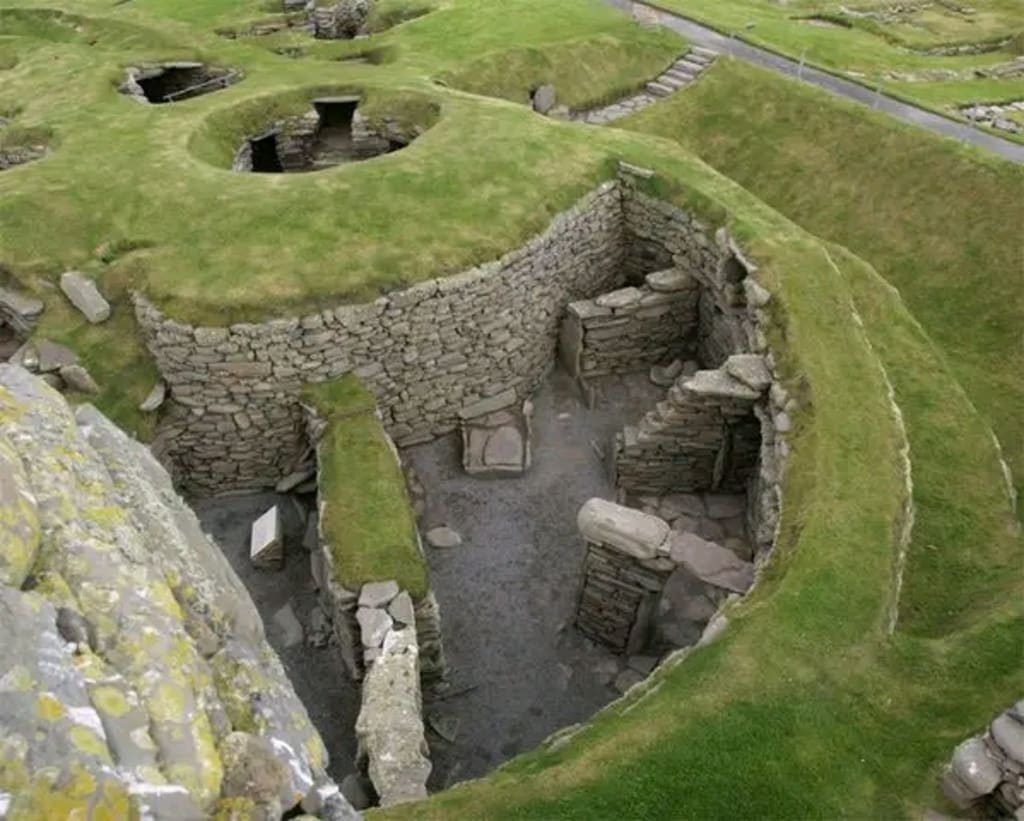
Perched on the edge of the Shetland Islands, where the North Sea meets the Atlantic, the Jarlshof site in the village of Sumburgh is one of Scotland’s most remarkable archaeological treasures. This site, covering nearly three acres, holds a timeline of human occupation spanning thousands of years, from the Bronze Age to the 16th century. The site’s story begins with a chance rediscovery during a fierce 19th-century storm, revealing an ancient world buried beneath layers of earth, hidden until nature’s forces brought it back to light.
The Discovery of Jarlshof
In the 1890s, a severe storm battered the Shetland Islands, exposing the remnants of ancient walls. This discovery set off a wave of amateur excavations between 1897 and 1905, revealing a variety of structures. But it wasn’t until 1925 that formal archaeological research began, led by renowned archaeologists like A.E. Curle, V.G. Childe, J.S. Richardson, and J.R.C. Hamilton. Their research uncovered an astonishing array of buildings and artifacts, making Jarlshof one of the most historically significant sites in the United Kingdom.
The name "Jarlshof" itself is a nod to its Norse roots, meaning "Earl's House," a name inspired by the Old Norse sagas. The site’s layers hold a series of settlements from distinct historical periods, each offering a snapshot of life on the Shetland Islands from as early as 2700 BC to the 1600s. Today, the Jarlshof site offers visitors a rare glimpse into the continuity and evolution of human life in one place over millennia.
Bronze Age Beginnings: A Village of Huts and Tools
Jarlshof’s earliest origins can be traced to the Bronze Age. Archaeologists uncovered a village with well-preserved huts, some dating back nearly 4,500 years. These structures, built with local stone, were likely occupied by early agricultural communities. Within these Bronze Age huts, archaeologists found a variety of tools and household items, including axes, knives, and swords—each piece a testament to the daily lives of the site’s first inhabitants.
The Bronze Age villagers would have relied on fishing, farming, and perhaps some early forms of animal husbandry. Their tools, fashioned from materials like stone and bone, show the ingenuity of early human craftsmanship. Though much about these early people remains unknown, the tools they left behind offer insight into a life lived in harmony with nature, where survival depended on close interaction with the land and sea.
The Iron Age: Evolution and Expansion
Around 200 BC, Jarlshof saw the construction of a new village in the Iron Age. The architecture at this stage evolved, with roundhouses emerging as a dominant feature. These houses, with their thicker walls and more complex layouts, suggest a period of growth and adaptation to the island's harsh environment. Stone was still the primary building material, but the structures of this period show a more sophisticated understanding of design and construction.
The Iron Age village provides evidence of Jarlshof’s growing role as a community hub. The circular design of the roundhouses, which allowed inhabitants to shelter from the island’s punishing winds, is a testament to the ingenuity of its builders. Daily life during this period revolved around farming and fishing, with tools and household items reflecting a well-adapted community.
Viking Age Transformation: A New Era and the First Longhouse in the UK
One of Jarlshof’s most celebrated periods is the Viking Age, which began in the 9th century. Norse settlers left their mark on the Shetland Islands, and at Jarlshof, their legacy is especially vivid. Archaeologists discovered seven Norse-style houses, including the first longhouse ever found in the United Kingdom. This type of structure, unique to Viking settlements, represents a new chapter in the island’s history, where Scandinavian culture began to influence daily life and architecture.
Viking life at Jarlshof would have been vibrant and dynamic. The longhouses were designed to house both people and livestock, a practice common in Norse culture. The Vikings who lived here brought their traditions, craftsmanship, and maritime knowledge to the island, shaping a unique culture that blended Norse and local influences. Many artifacts from this era, including pottery, tools, and even jewelry, have been found at Jarlshof, adding to the site’s rich archaeological record. These items suggest that Jarlshof was not just a remote settlement but part of a thriving network linked to other Norse communities across the North Sea.
The Medieval Farm and Jarlshof House
As time progressed, Jarlshof evolved into a medieval farm. This farmstead, constructed during the Middle Ages, shows how the site adapted to meet the changing demands of the population. Stone buildings with more defined spaces for living, working, and storing food and supplies indicate that Jarlshof had become a more complex, self-sustaining community.
The site’s last significant building is the Jarlshof House, thought to have been built by Robert Stewart, the first Earl of Orkney, around the 16th century. The house was later expanded by Patrick Stewart, Robert’s son, who reconstructed it in 1604. Known as "The Old House of Sumburgh," this structure marks the final chapter in Jarlshof’s long history of continuous occupation. The house reflects the Renaissance influence, with a more refined architectural style than the previous settlements, signaling a shift in social structure and lifestyle.
The Legacy of Jarlshof: A Window into Scotland’s Past
Jarlshof is a powerful reminder of the resilience and adaptability of human societies. Over thousands of years, people built, rebuilt, and adapted to new challenges, creating a layered narrative that tells the story of the Shetland Islands. The site’s discovery, preservation, and continued study offer invaluable insights into Scotland’s ancient past, shedding light on how communities thrived in a challenging environment.
Today, Jarlshof is open to the public as a managed historic site, providing visitors with an immersive journey through time. Standing among the ruins, one can trace the outlines of ancient huts, longhouses, and grander medieval buildings, each an echo of the lives once lived within these walls. The Shetland Islands’ unique history, from Bronze Age settlers to Viking voyagers and medieval farmers, is preserved here, creating a vivid tapestry that spans centuries.
A Site of Global Significance
Jarlshof’s inclusion on the UNESCO World Heritage list underscores its global importance as an archaeological site. The collection of structures, ranging from simple Bronze Age huts to elaborate Renaissance buildings, offers a rare glimpse into human resilience, cultural exchange, and adaptation across thousands of years. Each layer of Jarlshof tells a story of survival and ingenuity, a testament to the enduring spirit of the people who called this remote edge of Scotland home.
For those who visit, Jarlshof is more than an archaeological site; it is a journey into the heart of human history, where stories of ancient communities emerge from stone walls, reminding us of the continuity of life, even in the most rugged and isolated of places. The Jarlshof site stands as a living museum, preserving Scotland’s heritage and inspiring awe in all who stand before it.
About the Creator
Keep reading
More stories from Deji Akomolafe and writers in History and other communities.
Old Leanach Cottage: A Surviving Relic of the Battle of Culloden
Standing on the windswept Culloden Battlefield in Scotland, Old Leanach Cottage is more than just a structure; it’s a poignant survivor of a turbulent past. Thought to be the only remaining building from the infamous Battle of Culloden in 1746, this humble cottage has borne witness to one of the bloodiest chapters in Scottish history. Today, it stands as a testament to resilience, a quiet guardian of memory that invites us to reflect on the events that unfolded around it centuries ago.
By Deji Akomolafeabout a year ago in History
Iran–Israel War 2026
Escalating Conflict in the Middle East. The conflict between Iran and Israel has been one of the most serious tensions in the Middle East for many years. In 2026, the situation became more dangerous as military actions and political disagreements increased. The growing conflict between the two countries has raised concerns not only in the region but also around the world. Many governments and international organizations are worried that this conflict could lead to a larger regional crisis.
By aadam khan21 minutes ago in History
A System That Isn’t Working Challenge Winners
Systems promise order. They organize behavior, distribute opportunity, and suggest that if everyone follows the rules, things will work. The entries in A System That Isn’t Working look closely at what happens when that promise begins to slip.
By Vocal Curation Team5 days ago in Resources



Comments
There are no comments for this story
Be the first to respond and start the conversation.