
Iran vs. Israel: The 2025 Conflict That Shook the Middle East
In June 2025, a decades-long shadow war between Iran and Israel erupted into open conflict, with airstrikes, missile attacks, and geopolitical fallout across the region. This article explores the roots of the confrontation, the key events of the current war, and what it means for the Middle East and the world

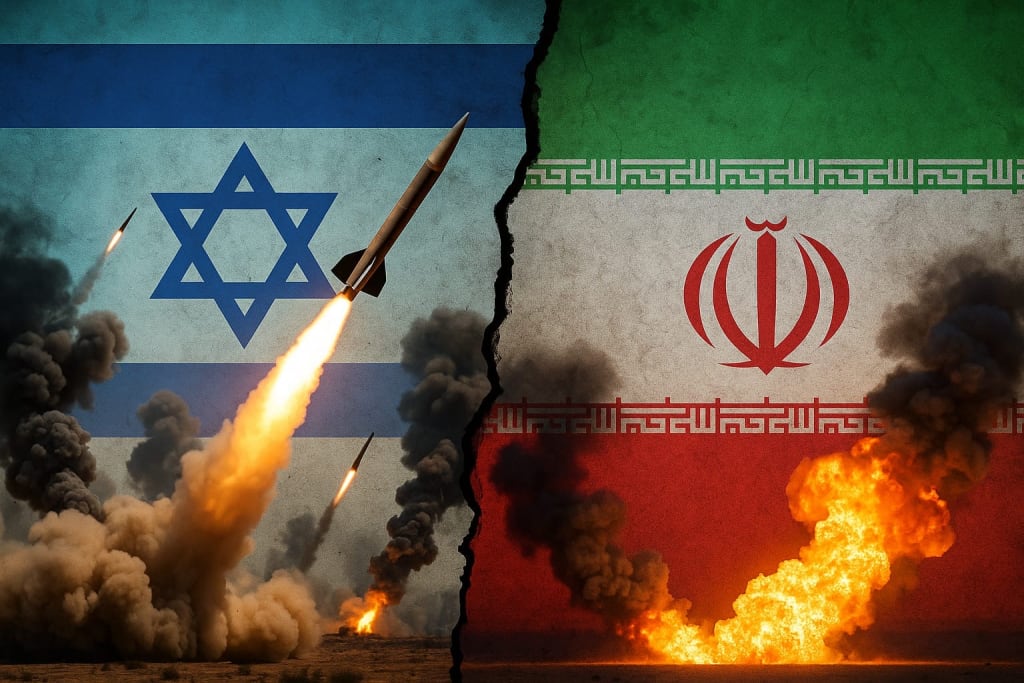
Iran vs. Israel: From Shadow War to Open Conflict
The long-standing conflict between Iran and Israel has escalated into a direct military clash in June 2025, transitioning from covert proxy engagements to open warfare. Here's everything you need to know:
🔥 Recent Escalation: Direct Attacks on Tehran and Israel
Initiation of "Operation Rising Lion"
On June 13, 2025, Israel launched a massive airstrike involving over 200 aircraft targeting Iran’s nuclear and military sites in Natanz, Tabriz, and Tehran. Israel claimed to have destroyed key nodes in Iran’s nuclear infrastructure and eliminated top IRGC commanders
theaustralian.com.au
timesofindia.indiatimes.com
.
Iranian Retaliation
Iran shot dozens of missiles and drones at Israel, striking near Tel Aviv and Haifa. Though many were intercepted, several exploded in urban areas, killing at least 8–24 people across Israel
aljazeera.com
+2
ft.com
+2
nypost.com
+2
.
Civilian Toll and Infrastructure Damage
Israel’s strikes reportedly killed over 200 Iranian civilians, including high-ranking IRGC officers, and damaged nuclear, energy, and military facilities
insidepen.com
. Iran’s strikes caused casualties in Israel and minor damage to the U.S. embassy in Tel Aviv
thesun.co.uk
+1
nypost.com
+1
.
Fourth Day of Conflict
By day four, the region was engulfed in missile salvoes, drone engagements, and fierce air defense activity—marking a dangerous new chapter in Middle Eastern hostilities
apnews.com
+7
leedsjournal.co.uk
+7
timesofindia.indiatimes.com
+7
timesofindia.indiatimes.com
.
⚔️ Historical Context: From 1979 to Today's Firestorm
Roots Since the 1979 Islamic Revolution
Iran’s post-revolution leadership condemned Israel and supported militant proxies like Hezbollah and Hamas. Israel responded with covert operations—cyberattacks, assassinations of nuclear scientists, and strategic strikes on proxy networks
theaustralian.com.au
ndtv.com
+5
apnews.com
+5
theaustralian.com.au
+5
.
Proxy Theatre in Syria, Lebanon, Gaza
Israel frequently targeted Iranian assets and proxies across Syria and Lebanon to curb Tehran’s influence. Iran retaliated via Hezbollah, Hamas, and Houthi militants—creating a shadow war across the region
nypost.com
+15
allisrael.com
+15
time.com
+15
.
Escalation to Direct Strikes
In April 2024, Iran conducted its first direct missile-and-drone attack on Israel—over 300 projectiles launched—signifying a major shift from proxy to direct engagement
researchgate.net
allisrael.com
+1
researchgate.net
+1
.
🧩 What’s Unique About 2025?
Scale & Intent
Israel’s June offensive represents the most extensive strike on Iranian territory, including Tehran itself. The targeting of nuclear facilities marks a clear evolution from past proxy targeting .
Strategic Fallout
Iranian air defenses were reportedly crippled, and its command structure deeply shaken, leaving Tehran primarily exposed
ft.com
.
Global Attention & U.S. Involvement
The U.S. vetoed an Israeli plan to assassinate Iran’s Supreme Leader, yet continues bolstering Israel’s air defenses and signaling restraint to prevent full regional war
timesofindia.indiatimes.com
.
🌍 Regional & Global Risks
Possible Wider Conflict
Iran has so far restrained from striking U.S. bases or disrupting Gulf oil facilities, mindful of U.S. intervention and overextension
ft.com
+1
time.com
+1
.
Proxy Fallout
Other players—Hezbollah, the Houthis—remain poised to retaliate, threatening instability in Lebanon and shipping disruptions in the Red Sea
insidepen.com
+9
criticalthreats.org
+9
ft.com
+9
.
Economic Upshot
Oil markets have spiked on supply concerns, and stock indices are jittery amid fears of broader Middle East upheaval .
🕊️ What Comes Next?
Diplomatic Tunings
Iran has signaled openness to diplomacy—provided it can secure terms that protect its survival. Meanwhile, global bodies like the U.N., EU, and G7 are urging de-escalation
ft.com
.
Military Posture
Iran might continue measured strikes, but aims to avoid direct engagement with U.S. forces or Gulf neighbors. Israel professes readiness for extended operations .
The Return of Talks?
Efforts in Oman for nuclear negotiations have stalled. The military confrontation could either derail diplomatic avenues—or push stakeholders back to the negotiating table if a stalemate emerges
criticalthreats.org
time.com
.
🔍 Bottom Line
The June 2025 confrontation marks a dramatic shift: what was once a low-intensity, shadow conflict has escalated to overt warfare. With significant damage on both sides, rapid internationalization, and global economic ramifications, the path ahead hinges on whether diplomacy can catch up with the firepower.
This is not merely another military escalation—it’s a watershed moment in regional geopolitics that could reshape alliances and the future of Middle Eastern security.
About the Creator
Sohel diaries 📖
My stories are not just for reading, they are meant to gain and learn something.📖
Keep reading
More stories from Sohel diaries 📖 and writers in History and other communities.
CBSE Results 2025: What Students Need to Know About This Year’s Milestone Moment
CBSE Results 2025: A Defining Moment for Millions of Students Every year, the release of the CBSE results marks a major milestone in the lives of students across India. For the 2024–2025 academic session, this moment carries immense anticipation, anxiety, and hope, as more than 30 lakh students from Class 10 and Class 12 await the outcome of their efforts.
By Sohel diaries 📖8 months ago in Education
The Rise and Fall of Nicolae Ceaușescu
Nicolae Ceaușescu’s rise to power was initially marked by promise, even optimism. Born in 1918 into a poor peasant family, he entered politics early, shaped by the ideological rigidity of interwar and wartime communism. When he became General Secretary of the Romanian Communist Party in 1965, following the death of Gheorghe Gheorghiu-Dej, many Romanians saw in him a younger leader, one who might soften the harsh Stalinist legacy that had defined the previous decades. For a society weary of repression and deprivation, Ceaușescu appeared to embody the possibility of cautious change.
By Pure child2 days ago in History
A woman from a vanished female dynasty was discovered buried with 270,000 beads.
In a Copper Age tomb close to Seville, Spain, the Montelirio bead assemblage contains over 270,000 beads that identify the ladies buried there as elites. The discovery is the biggest collection of beads ever
By Francis Dami4 days ago in History



Comments
There are no comments for this story
Be the first to respond and start the conversation.