
Iran and israel,what is happend before and what will’be happen now? And current situation .
Iran and israel

The history between Iran and Israel is complex and has gone through major shifts, especially over the past century. Here’s a brief overview of their relationship:
⸻
1. Early Relations (1948–1979)
• 1948–1979 (Pre-Iranian Revolution):
Iran was one of the first Muslim-majority countries to recognize Israel de facto (not de jure) in the early 1950s.
• Under the Shah (Mohammad Reza Pahlavi), Iran and Israel had covert diplomatic, economic, and military ties.
• Both countries shared strategic concerns, especially over Arab nationalism and the rise of Soviet influence.
• Israel imported Iranian oil, and Mossad (Israel’s intelligence agency) cooperated with SAVAK (Iran’s secret police).
⸻
2. Post-1979 Iranian Revolution
• The Islamic Revolution brought Ayatollah Khomeini to power, and everything changed:
• Iran cut all ties with Israel and branded it the “Zionist regime”.
• Iran began supporting anti-Israel groups, especially Hezbollah in Lebanon and later Hamas in Gaza.
• Israel became one of Iran’s most hated enemies, often called “the Little Satan” (with the U.S. being the “Great Satan”).
⸻
3. Iran-Israel Conflict (1980s–Present)
• 1980s–90s: Despite hostile rhetoric, there were some backchannel interactions during the Iran-Contra Affair, where Israel helped facilitate arms sales to Iran in exchange for U.S. hostages.
• 2000s–Present: The tension has grown significantly:
• Iran’s nuclear program is seen as a major threat by Israel.
• Israel has allegedly carried out covert operations (including cyberattacks like Stuxnet, and assassinations of Iranian nuclear scientists).
• Iran funds and arms groups like Hezbollah, Hamas, and Islamic Jihad — all hostile to Israel.
• The two countries have clashed via proxy conflicts, especially in Syria and Lebanon.
⸻
Recent Developments
• Iran continues to oppose normalization between Israel and Arab states (like the Abraham Accords).
• Israel sees Iran as its top strategic threat and has pushed for international sanctions and military preparedness.
• There’s growing concern about a direct confrontation, especially amid regional tensions.
As of April 11, 2025, tensions between Iran and Israel remain high, influenced by recent military actions, diplomatic efforts, and regional developments.
Recent Military Engagements:
• October 2024: Iran launched Operation True Promise II, firing approximately 200 ballistic missiles at Israeli military targets, including airbases and intelligence facilities. The strikes caused minor damage, with reports of one Israeli civilian death indirectly related to the attack. 
• January 2025: Iranian Foreign Minister Abbas Araghchi warned that any further Israeli military actions could lead to a large-scale war, emphasizing Iran’s readiness to respond to aggression while still pursuing diplomatic solutions. 
• October 2024: In retaliation, Israel conducted airstrikes targeting Iranian military sites, including air-defense systems and missile production facilities. The operation involved over 100 aircraft and aimed to degrade Iran’s military capabilities. 
Diplomatic Developments:
• April 2025: The United States initiated direct nuclear negotiations with Iran, excluding European allies Britain, France, and Germany. This approach raised concerns among European nations, who still hold the authority to trigger “snapback” sanctions. Analysts stress the importance of coordinated efforts to ensure a successful diplomatic resolution. 
• April 2025: French President Emmanuel Macron announced that France may officially recognize a Palestinian state at a June UN conference, marking a significant policy shift. This move has drawn criticism from Israeli officials, who argue that such recognition could reward terrorism. 
Regional Dynamics:
• April 2025: India’s navy conducted joint naval drills with Iran in the Persian Gulf, aiming to strengthen maritime cooperation. This exercise occurred amid heightened tensions between Iran and Israel, highlighting the complex web of regional alliances. 
Outlook:
The situation between Iran and Israel is highly volatile, with the potential for further military confrontations. Diplomatic initiatives are ongoing, but challenges persist due to regional complexities and differing international interests. The coming months will be critical in determining whether tensions escalate or give way to more stable relations.
About the Creator
Keep reading
More stories from Toufik Morshed and writers in History and other communities.
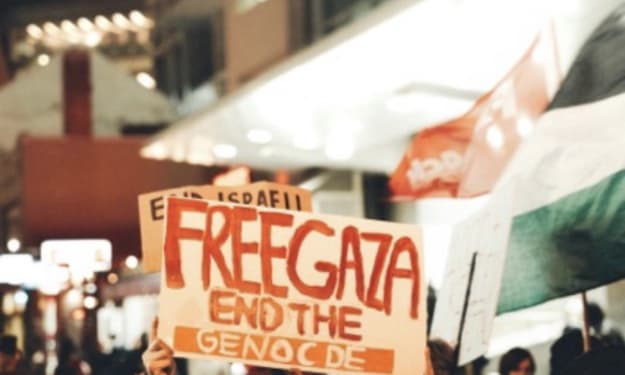
Israeil and gaza war whole story and imagining what will’be the end??
Historical Context: The origins of the conflict trace back to the early 20th century, with tensions between Jewish and Arab populations in the region escalating under British Mandate rule. The establishment of Israel in 1948 led to the displacement of many Palestinians, a tragedy known as the Nakba (“catastrophe”). Subsequent wars, particularly in 1967, resulted in Israel occupying the Gaza Strip, the West Bank, and East Jerusalem. This occupation has been a central point of contention, with Palestinians seeking self-determination and statehood.
By Toufik Morshed10 months ago in History
Between Rich Dad and Real Life
I was twenty-two when the book found me, or when I found it—depending on how destiny prefers to be credited. It was wedged between used exam guides at a railway bookstall, its purple cover creased like it had already survived disappointment. Rich Dad Poor Dad. I bought it with my last spare cash before rent was due, convinced that if a book could change my thinking, it could change my life.
By Maavia tahir6 days ago in History



Comments
There are no comments for this story
Be the first to respond and start the conversation.