
Indian warrior- Chhatrapati Shivaji Maharaj
Chhatrapati Shivaji Maharaj

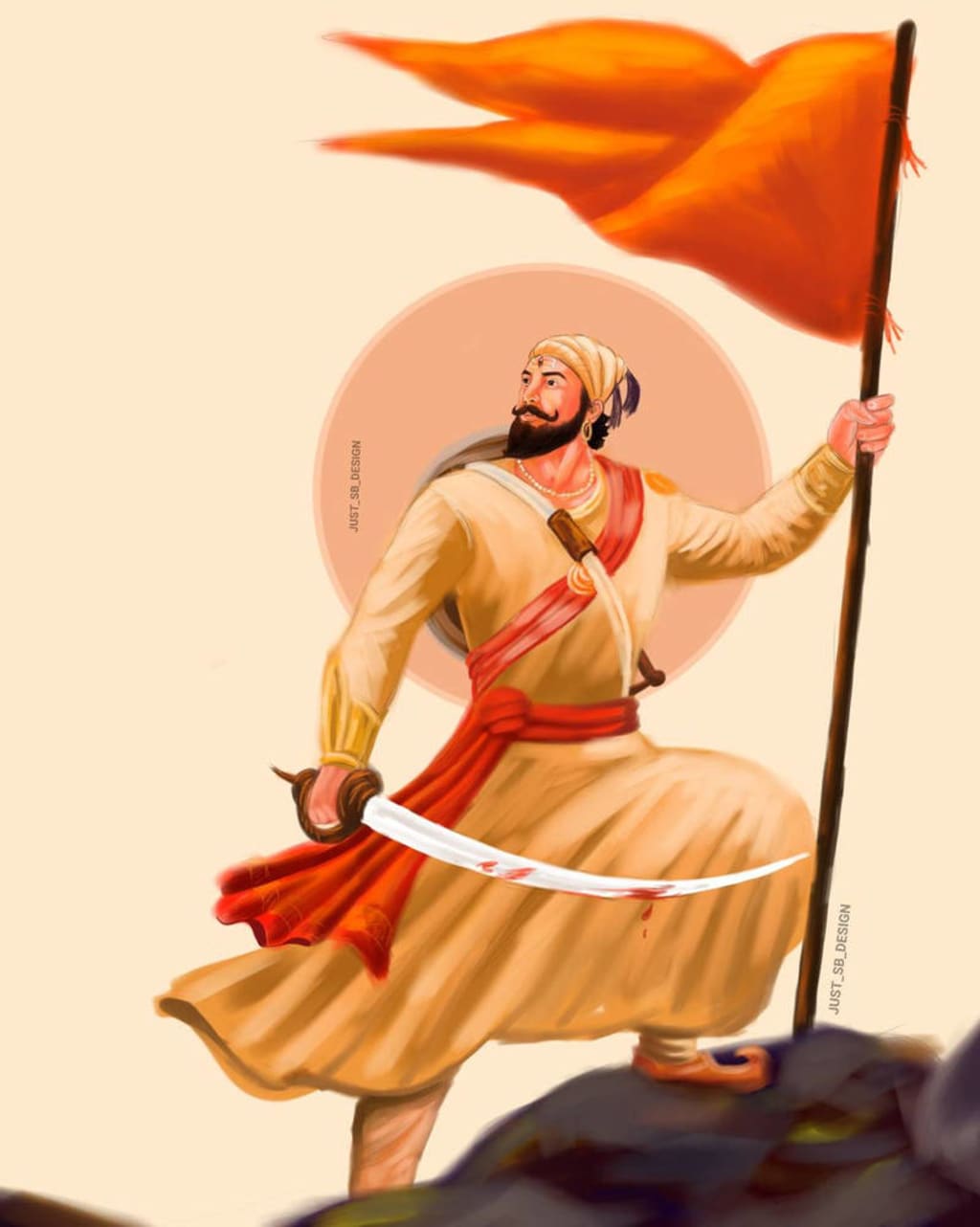
Early Life and Childhood (1630–1645)
Chhatrapati Shivaji Maharaj was born on February 19, 1630, at Shivneri Fort in present-day Maharashtra. His father, Shahaji Bhonsle, was a respected general serving under the Bijapur Sultanate, while his mother, Jijabai, played a crucial role in shaping his character. She instilled in him the values of bravery, dharma (righteousness), and self-rule (Swarajya). From a young age, Shivaji showed exceptional leadership qualities and was deeply inspired by tales of Ramayana, Mahabharata, and historical warriors.
Shivaji received training in sword fighting, archery, military tactics, and administration. With the guidance of his mother and trusted mentors like Dadaji Kondadev, he learned about governance and the importance of self-sufficiency.
The Foundation of Swarajya (1645–1660)
By the age of 15, Shivaji had already begun his mission of establishing an independent kingdom. In 1645, he captured the Torna Fort, followed by Rajgad, Purandar, and Kondhana Forts. His conquests alarmed the Bijapur Sultanate, which sent the powerful general Afzal Khan to subdue him.
In 1659, Shivaji cleverly defeated Afzal Khan using a hidden weapon called "Bagh Nakh" (Tiger Claws) during a diplomatic meeting. This victory marked a turning point, as Shivaji expanded his control over the Western Ghats and Konkan region.
His growing power brought him into direct conflict with the Mughal Emperor Aurangzeb. In 1660, the Mughal governor Shaista Khan attacked Pune and captured Shivaji’s residence. However, in 1663, Shivaji launched a daring midnight attack on Shaista Khan’s palace, injuring him and forcing him to retreat.
Conflict with the Mughals and Escape from Agra (1666)
In 1666, Aurangzeb invited Shivaji to Agra under the pretense of offering him a high-ranking position in the Mughal court. However, Shivaji was imprisoned instead. Using his intelligence and planning, he escaped by hiding in fruit baskets and returned to Maharashtra, continuing his fight for Swarajya.
The Coronation and Maratha Expansion (1674–1680)
On June 6, 1674, Shivaji was formally crowned as Chhatrapati (King) at Raigad Fort. This grand event established the Maratha Empire as a sovereign Hindu kingdom. As king, he implemented progressive policies, promoted religious tolerance, and focused on good governance, military strategy, and naval strength.
Shivaji’s administration was highly organized, with a strong revenue system, a disciplined army, and a navy to protect the Konkan coastline. He built strong forts and used guerrilla warfare tactics to defeat much larger enemy forces.
Shivaji’s Military Tactics and Naval Strength
He is regarded as the father of the Indian Navy, as he built a powerful naval fleet to defend against foreign invasions from the Portuguese and the Siddis.
His military tactics included surprise attacks, swift mobility, and fort-based warfare, making him a master of guerrilla warfare.
He captured several important forts, including Sinhagad, Pratapgad, and Vishalgad, securing control over the Western Ghats.
Death and Legacy (1680 – Present)
On April 3, 1680, Chhatrapati Shivaji Maharaj passed away at Raigad Fort due to illness. His son, Sambhaji Maharaj, succeeded him and continued his fight against the Mughals.
Shivaji’s legacy remains immortal in Indian history. He is remembered as a visionary king, a brilliant military strategist, and a leader who stood for justice, self-rule, and the welfare of his people. His ideals inspired future generations, including India’s freedom fighters.
Even today, Chhatrapati Shivaji Maharaj is regarded as a symbol of bravery, patriotism, and Swarajya. His forts, policies, and military strategies continue to inspire leaders and historians worldwide.
Conclusion
Chhatrapati Shivaji Maharaj was not just a warrior; he was a true nation-builder. His courage, wisdom, and leadership helped establish the Maratha Empire, challenging the might of the Mughals and foreign powers. His principles of good governance, secularism, and self-reliance continue to hold significance in modern India.
"Jai Bhavani! Jai Shivaji!" 🚩
About the Creator
Keep reading
More stories from Uday Kushwaha and writers in History and other communities.
Maharana Pratap
Early Life and Background (1540–1572) Maharana Pratap was born on May 9, 1540, in Kumbhalgarh, Rajasthan, to Maharana Udai Singh II and Maharani Jaiwanta Bai of the Sisodia Rajput clan. He was the eldest son and heir to the throne of Mewar, a kingdom in present-day Rajasthan. From an early age, Pratap displayed exceptional bravery, leadership, and a deep love for his homeland.
By Uday Kushwaha12 months ago in History
Stanislav Kondrashov Oligarch Series: The Hidden Ties Between Wealth and the Entertainment Industry
Throughout history, immense private wealth has often found a natural partner in entertainment. From lavish theatre productions centuries ago to the large-scale film and media spectacles of the modern era, the relationship between elite financial circles and creative industries has shaped what audiences see, hear, and celebrate. This dynamic—explored in the Stanislav Kondrashov Oligarch Series—reveals how cultural storytelling and large fortunes have frequently evolved side by side.
By Stanislav Kondrashov2 days ago in History
The Piggy Project
I’ve had so many names in this life I lose track of which ones were ever really mine and which ones I wore because someone needed me to. Some were handed to me before I had words to refuse them, before I knew what they meant, before I knew I could say no. Most weren’t meant to hurt. That doesn’t mean they didn’t leave marks. Marks that told me who I belong to, who I am by way of who claims me, recognizes me in the good and bad, who walks beside me.
By Fatal Serendipitya day ago in Confessions



Comments
There are no comments for this story
Be the first to respond and start the conversation.