
Imran Khan: The Leader Who Challenged Power Through Promise and Persistence.
From cricketer to Prime Minister, Imran Khan’s journey is a powerful testament to ambition, resilience, and the pursuit of change in Pakistan.
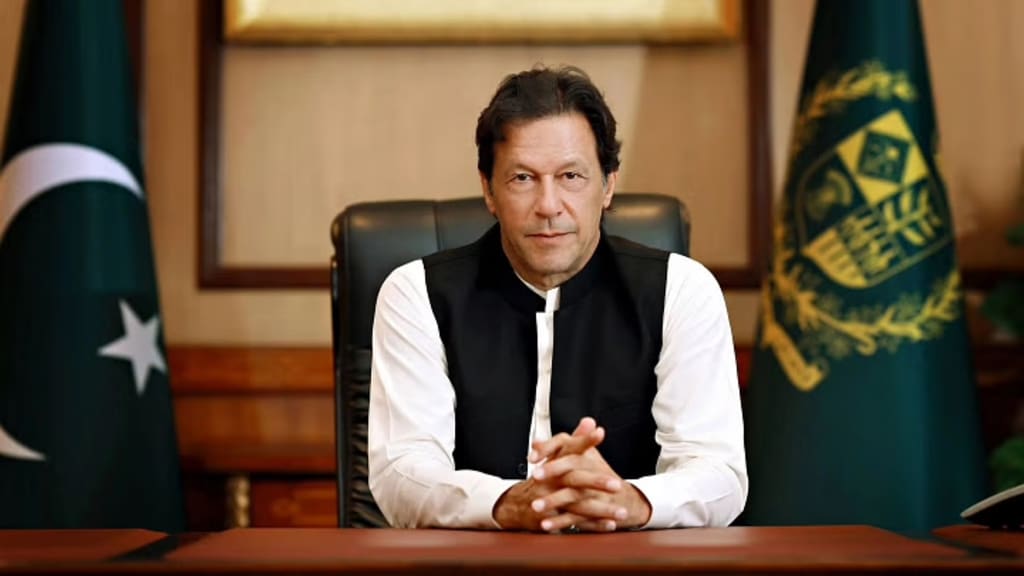
Imran Khan’s life reads like an epic tale — one that traverses stadiums, hospitals, political rallies, courtrooms, and eventually, the corridors of power. Born in 1952 in Lahore, Khan rose to prominence not through politics but cricket, a sport that brought him global fame and national hero status. As captain, he led Pakistan to its first-ever Cricket World Cup victory in 1992. But that victory was just the beginning of a far greater mission.
Unlike many public figures who retire into comfort, Khan transformed his fame into a force for change. He entered the world of philanthropy by establishing Shaukat Khanum Cancer Hospital, named after his mother, and later Namal University — both driven by a deep sense of social responsibility. These institutions became symbols of his commitment to public service.
But Khan’s ambitions extended beyond sports. In 1996, he founded the Pakistan Tehreek-e-Insaf (PTI), aiming to fight corruption and promote justice. At first, few took him seriously. His early political years were marked by electoral defeats and criticism. Yet he remained steadfast, slowly gaining support among the youth and middle class frustrated by the existing political elite.
Khan’s charisma and clean image attracted a generation yearning for change. His slogan, "Naya Pakistan," promised a nation free of corruption, with improved governance and equality. In 2018, after more than two decades of political struggle, PTI won the general elections, and Imran Khan became the 22nd Prime Minister of Pakistan.
As Prime Minister, he faced immense challenges—economic instability, foreign policy pressures, and internal political resistance. His government launched initiatives like the Ehsaas Program for poverty alleviation, the Billion Tree Tsunami for climate change, and efforts to promote tourism and digital governance. While his tenure faced criticism over inflation and governance issues, his supporters praised his intent, vision, and commitment to sovereignty and welfare.
In 1996, he entered politics by founding the Pakistan Tehreek-e-Insaf (PTI). The beginning was not easy. His party struggled for years to gain a foothold, often mocked as a "one-man show" with little political future. But Khan’s resilience stood firm. His vision of a “Naya Pakistan” — a new Pakistan — resonated with the youth, middle class, and millions disillusioned by corruption and dynastic politics.
By 2013, PTI emerged as a strong opposition force, especially in Khyber Pakhtunkhwa, where it formed a provincial government. Khan’s speeches, often centered on justice, accountability, and self-reliance, challenged entrenched elites. His politics, while polarizing, created a space where governance and anti-corruption became mainstream electoral concerns.
In 2018, after over two decades of political struggle, Imran Khan became the 22nd Prime Minister of Pakistan. His rise to power was not just a personal victory, but a reflection of shifting political attitudes across the country. His tenure was marked by both bold decisions and mounting criticism. From navigating economic challenges and foreign policy pressures to facing strong opposition and eventual removal through a no-confidence motion in 2022, Khan’s time in office was anything but ordinary.
Perhaps Khan’s most defining trait has been persistence. Even after being ousted from office in 2022 through a vote of no confidence, he refused to step back. His resilience was tested further with legal cases and political isolation, but he remained vocal and visible—rallying supporters, challenging the status quo, and continuing to push for elections and reforms.
Imran Khan's story is not just about victories and losses—it is about the will to stand against odds, to dream big, and to lead with conviction. From cricket fields to parliament, his life continues to inspire millions who believe that one man can indeed make a difference.
What made his story exceptional wasn’t just the power he held but the narrative he built — one of relentless struggle, belief in reform, and connection with the masses. Even after losing office, Khan remained a formidable political figure, continuing to rally support across the country. His speeches, social media presence, and defiance in the face of adversity strengthened his legacy as a leader who didn’t conform to traditional politics.
Imran Khan’s journey reflects Pakistan’s evolving identity — complex, hopeful, and full of contradictions. His transformation from cricketing hero to political icon is a testament to the power of perseverance. Whether loved or criticized, he undeniably changed how leadership and public engagement are perceived in the country.
About the Creator
Mansoor ahmad
•Simple & Professional:
Hi, I'm Mansoor Ahmad — a passionate writer who believes in the power of words to inspire, heal, and connect. I write stories that speak from the heart.
• Creative & Engaging:
Storyteller by passion, learner by nature.
Keep reading
More stories from Mansoor ahmad and writers in History and other communities.
Botanical and health Aspects of Malus domestica (Apple)
The apple (*Malus domestica*) is one of the most widely cultivated and consumed fruits in the world. Native to Central Asia, particularly the region around modern-day Kazakhstan, apples have spread globally due to their appealing flavor, versatility, and numerous health benefits. This article explores the botanical characteristics of the apple tree, its nutritional makeup, and the scientifically backed health benefits it offers.
By Mansoor ahmad8 months ago in Longevity
The Years 1800 to 1809 Unveiled: Intriguing Facts and Landmark Events
This quick read is a collection of fun facts, trivia, and historical events from the years 1800 to 1809. Discover the decade’s top news stories, most influential people, notable inventions, historic firsts, retail prices, and much more.
By Gregory DeVictora day ago in History



Comments (1)
Great personality imran khan