
Imran Khan: From Cricket Legend to Political Powerhouse
The Journey of Pakistan’s Most Influential and Controversial Leader

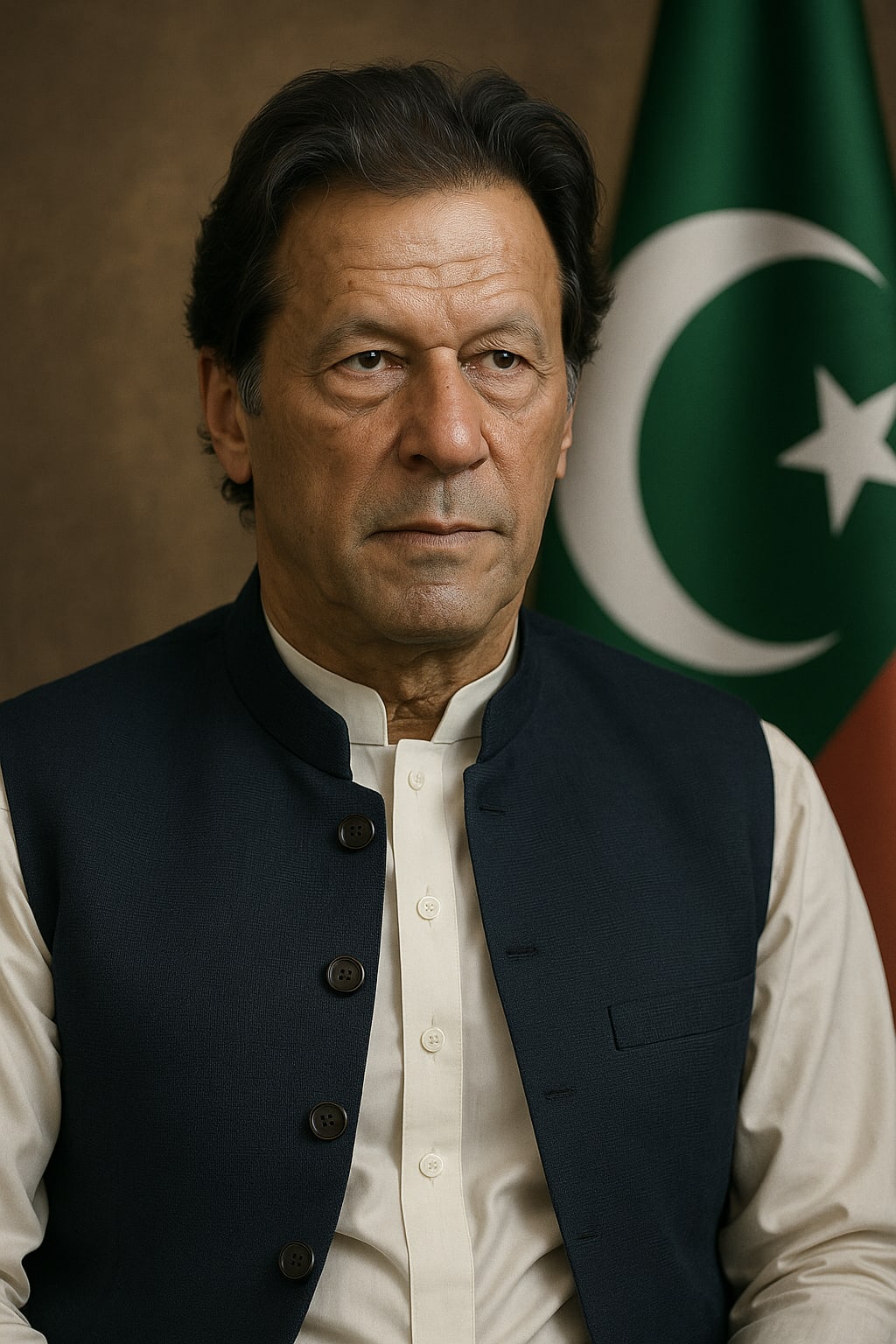
Imran Khan, a name once synonymous with cricketing excellence, later became one of the most influential political figures in Pakistan’s modern history. His transformation from a world-class sportsman to the 22nd Prime Minister of Pakistan is a tale of ambition, resilience, and a deep-rooted desire to bring change to his country.
Early Life and Cricket Stardom
Imran Ahmad Khan Niazi was born on October 5, 1952, in Lahore, Pakistan, into a well-educated and prominent Pashtun family. He was educated at Aitchison College in Lahore, and later at the Royal Grammar School in Worcester, United Kingdom. His higher education took him to Keble College, Oxford, where he studied Philosophy, Politics, and Economics.
However, it was his cricketing talent that brought him international fame. Imran made his debut for Pakistan in 1971 and quickly rose through the ranks due to his fierce bowling, charismatic leadership, and determination on the field. Over the course of two decades, he became one of the finest all-rounders in the history of the sport.
The pinnacle of his cricket career came in 1992 when he led Pakistan to its first and only Cricket World Cup victory. That win not only solidified his place in sports history but also ignited the idea in his mind that he could lead Pakistan in a different arena — politics.
Philanthropy and the Birth of a New Mission
After retiring from cricket, Khan turned his attention to philanthropy. Deeply moved by the death of his mother from cancer, he built Pakistan’s first free cancer hospital — Shaukat Khanum Memorial Cancer Hospital — in her memory. The hospital opened in 1994 and became a symbol of what dedication and vision could achieve even in a country plagued by corruption and inefficiency.
He also founded Namal University in Mianwali, aimed at providing quality higher education to underprivileged students in remote areas. These contributions gave him a platform beyond sports and laid the groundwork for his political journey.
Entry into Politics: The Rise of PTI
In 1996, Imran Khan founded his political party, Pakistan Tehreek-e-Insaf (PTI), with the vision of creating a “New Pakistan” — one free of corruption, injustice, and inequality. The early years of PTI were marked by political struggle and minimal electoral success. Critics dismissed Khan as a political novice, while his party failed to gain traction against the well-established parties like the Pakistan Muslim League (PML-N) and Pakistan Peoples Party (PPP).
Despite setbacks in the 1997 and 2002 elections, Khan remained committed to his cause. His message of anti-corruption, Islamic welfare, and justice began to resonate with the youth and middle class, especially in urban centers.
2010s: Momentum and Electoral Victory
The 2010s were a turning point for Imran Khan and PTI. Large public rallies, a strong social media presence, and increased public frustration with traditional political elites helped PTI gain momentum. In the 2013 general elections, PTI emerged as the second-largest party by popular vote, forming a provincial government in Khyber Pakhtunkhwa.
Khan’s persistent campaigning and promises to eradicate corruption, improve governance, and deliver justice struck a chord with a broader segment of the population. His opposition to U.S. drone strikes and his emphasis on national sovereignty also earned him support.
In the 2018 general elections, PTI achieved a historic victory, and Imran Khan became the 22nd Prime Minister of Pakistan. His win was seen by supporters as the dawn of a new era, while critics raised concerns over alleged military backing and electoral manipulation.
Prime Ministership: Achievements and Challenges
As Prime Minister, Imran Khan faced numerous domestic and international challenges. His government launched initiatives like the Ehsaas Program (a comprehensive poverty alleviation plan), the Billion Tree Tsunami (to combat climate change), and housing projects for low-income families. He also pushed for digital transformation and reforms in taxation.
However, his tenure was also marked by economic difficulties, inflation, political instability, and tensions with opposition parties. Relations with neighboring India deteriorated, especially after the revocation of Kashmir’s special status in 2019.
Despite his promise to eradicate corruption, his government struggled to deliver on many key reforms, leading to growing dissatisfaction. In April 2022, Khan was ousted from office through a no-confidence vote in the National Assembly, marking the end of his official tenure.
Controversy, Resilience, and Legacy
Even after his removal, Imran Khan remained a central figure in Pakistani politics. His supporters viewed him as a victim of a politically motivated campaign, while his critics saw his leadership style as confrontational and divisive.
In 2023 and 2024, Khan faced legal battles and arrests, leading to nationwide protests and political unrest. Yet, his popularity among the youth and urban middle class remained strong. He continued to position himself as the only leader who could bring real change to Pakistan.
Imran Khan’s journey from cricket fields to the highest political office in Pakistan is a remarkable story of transformation. Whether praised for his integrity and bold vision or criticized for his governance and political tactics, there is no denying that Imran Khan has left an indelible mark on Pakistan’s political and social landscape.
His legacy — both as a cricketing legend and as a reformist leader — continues to inspire millions. Whether he returns to power or not, Imran Khan’s name will remain etched in the annals of Pakistan’s history as one of its most charismatic and controversial figures.
About the Creator
NIAZ Muhammad
Storyteller at heart, explorer by mind. I write about life, history, mystery, and moments that spark thought. Join me on a journey through words!
Keep reading
More stories from NIAZ Muhammad and writers in History and other communities.
The Sands of Time
Saudi Arabia, a land of vast deserts and sacred cities, holds a history that spans millennia — from ancient civilizations and tribal confederacies to the rise of Islam and the formation of a powerful modern nation. The Kingdom, as it is known today, stands at the heart of the Arab and Islamic worlds. Its story is one of resilience, transformation, and religious significance that has influenced not only the Middle East but also the entire globe.
By NIAZ Muhammad9 months ago in History
The Year 1972 in Review: Fun Facts, Trivia, and Historic Highlights
This quick read is a collection of fun facts, trivia, and historic events from the year 1972. Discover the year’s top news stories, most influential people, sports facts, entertainment trivia, and much more.
By Gregory DeVictor6 days ago in History


Comments
There are no comments for this story
Be the first to respond and start the conversation.