
Imran Khan: From Cricket Icon to Political Powerhouse"
Imran Khan The x Prime minister of Pakistan
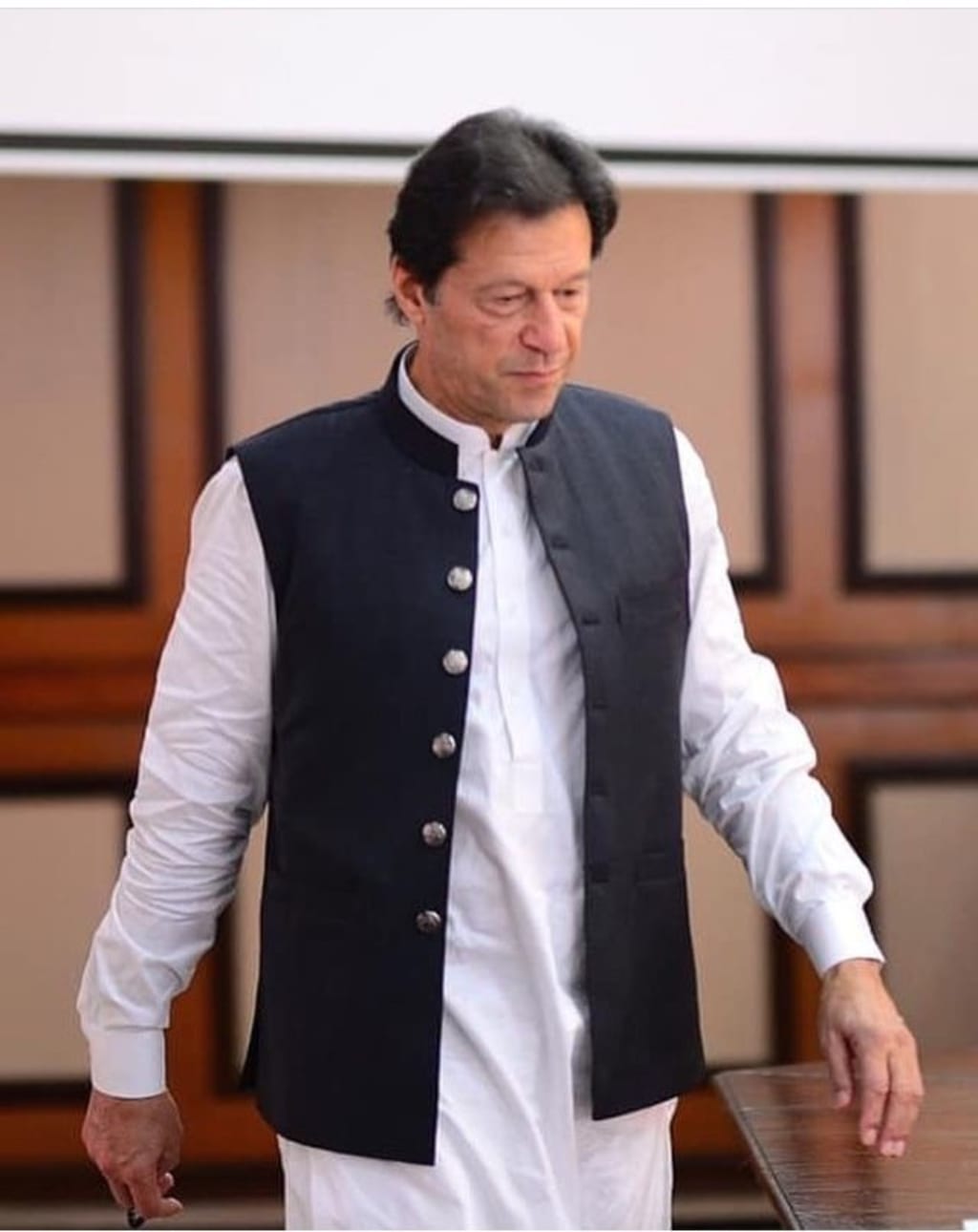
History Of Imran Khan
# **Imran Khan: A Multifaceted Journey from Cricket Legend to Political Leader**
**Full Name**: Imran Ahmed Khan Niazi
**Date of Birth**: October 5, 1952
**Place of Birth**: Lahore, Punjab, Pakistan
**Nationality**: Pakistani
**Professions**: Cricketer, Politician, Philanthropist
---
### **Early Life and Education**
Imran Khan was born into a well-off Pashtun family with a history of civil service. His father, Ikramullah Khan Niazi, was an engineer, and his mother, Shaukat Khanum, came from a distinguished family. Imran grew up in an environment that combined modern values with traditional cultural norms.
Khan received his early education from Aitchison College in Lahore, one of the most elite schools in Pakistan. Later, he moved to the UK to attend the Royal Grammar School in Worcester and then went on to Keble College, Oxford, where he studied Philosophy, Politics, and Economics (PPE), graduating in 1975.
---
### **Cricket Career**
Imran Khan is best known globally for his outstanding career as a cricketer. He made his test debut for Pakistan in 1971 against England and soon became known for his fast bowling, athleticism, and leadership on the field.
#### **Rise to Captaincy**
In 1982, he was appointed captain of the Pakistan national cricket team. Under his leadership, Pakistan experienced one of its golden eras in cricket. He transformed a previously inconsistent team into a formidable side known for its competitiveness and unity.
#### **1992 World Cup Victory**
The pinnacle of his cricketing career came in 1992, when he led Pakistan to its first-ever Cricket World Cup victory. His charisma and leadership inspired the team to bounce back from near elimination and win the tournament. Imran’s role as captain and all-rounder was crucial. His speech before the final, urging the team to fight "like cornered tigers," has become iconic.
He retired from cricket after the World Cup win, cementing his legacy as one of the greatest all-rounders and captains in the game’s history. He ended his career with over 3,800 Test runs and 362 wickets.
---
### **Philanthropic Work**
After retiring from cricket, Imran Khan turned his focus to philanthropy. One of his most significant achievements in this field is the **Shaukat Khanum Memorial Cancer Hospital & Research Centre** in Lahore, named after his mother who died of cancer. The hospital, opened in 1994, was Pakistan's first charity cancer hospital and remains one of the most advanced in the region. Funded largely through public donations, it set a new benchmark for healthcare in Pakistan.
He also established **Namal University** in Mianwali in 2008, aiming to provide quality education to underprivileged youth in rural areas.
---
### **Political Career**
#### **Formation of PTI**
In 1996, Imran Khan founded the **Pakistan Tehreek-e-Insaf (PTI)**, or Pakistan Movement for Justice. Initially, the party struggled to gain traction, and Khan was often criticized for his lack of political experience. Despite these challenges, he remained steadfast in his belief in justice, anti-corruption, and Islamic welfare.
#### **Struggles and Persistence**
For more than a decade, PTI remained a minor political force. Khan lost multiple elections and was frequently mocked by political rivals and the media. However, he gained significant support among the youth and urban middle class, primarily through his anti-corruption narrative.
#### **Rise to Power**
PTI gradually gained momentum, especially after the 2011 Lahore rally, which drew a massive crowd and marked a turning point for the party. By the 2013 general elections, PTI emerged as the second-largest party in terms of votes, forming a provincial government in Khyber Pakhtunkhwa.
In the **2018 general elections**, Imran Khan’s PTI won a clear majority, and he was sworn in as the **22nd Prime Minister of Pakistan** on August 18, 2018. His victory was hailed as the beginning of a "New Pakistan."
#### **Tenure as Prime Minister**
During his tenure, Khan focused on:
- Anti-corruption efforts
- Welfare programs like **Ehsaas Program** for poverty alleviation
- Environmental initiatives like the **Billion Tree Tsunami**
- Foreign policy balancing between China, the U.S., and Muslim countries
- Managing Pakistan's response to the COVID-19 pandemic
However, he also faced criticism for economic instability, rising inflation, and growing political polarization.
#### **Ouster from Office**
In April 2022, Imran Khan was ousted from office through a **no-confidence motion** in the National Assembly. He accused foreign powers, particularly the United States, of conspiring against him, a claim that became central to his narrative post-premiership.
---
### **Legal Battles and Controversies**
Following his ouster, Imran Khan’s confrontational stance toward the military and judiciary led to multiple legal challenges. He was implicated in several cases ranging from corruption to terrorism-related charges. In 2023, he was briefly arrested, triggering widespread protests. His legal troubles intensified in 2024, and he faced disqualification from elections, raising questions about democratic freedoms in Pakistan.
---
### **Personal Life**
Imran Khan’s personal life has been the subject of significant media attention. He was known for his playboy image during his cricketing days in London but later adopted a more conservative and spiritual lifestyle.
- **First Marriage**: Jemima Goldsmith (1995–2004), with whom he has two sons.
- **Second Marriage**: Reham Khan (2015), which ended in a brief, controversial divorce.
- **Third Marriage**: Bushra Bibi (2018–present), a spiritual guide and deeply religious woman.
His shift toward Islamic values and emphasis on "Riyasat-e-Madina" (a welfare state modelled on early Islamic governance) reflects his personal evolution.
### **Legacy and Impact**
Imran Khan remains a polarizing but highly influential figure in Pakistan and internationally. To his supporters, he is a reformist hero and a voice against corruption and elitism. To his critics, he's an inexperienced populist whose governance did not deliver on many promises.
His achievements in cricket, philanthropy, and politics make him one of the most significant Pakistani figures of the 20th and 21st centuries.
Don't Forget To Give Me A Like For Motivation 😉😉
thank You 👍 👍...
About the Creator
The Battle ofArmageddon: What the Bible says
Did Donald Trump begin Armageddon? Armageddon is the war that will usher in the second comingof Jesus Christ, according to scripture. People are saying that Donald Trump was anointed by Jesus to start the Battle of Armageddon, but is this true? This is a subject where there is not much agreement and is left to interpretation. The following is a compilation of information from AI gathered from the Internet and scripture.
By Cheryl E Prestona day ago in History


Comments
There are no comments for this story
Be the first to respond and start the conversation.