
Imran Ahmad Khan Niazi
Past Primeminster of Pakistan

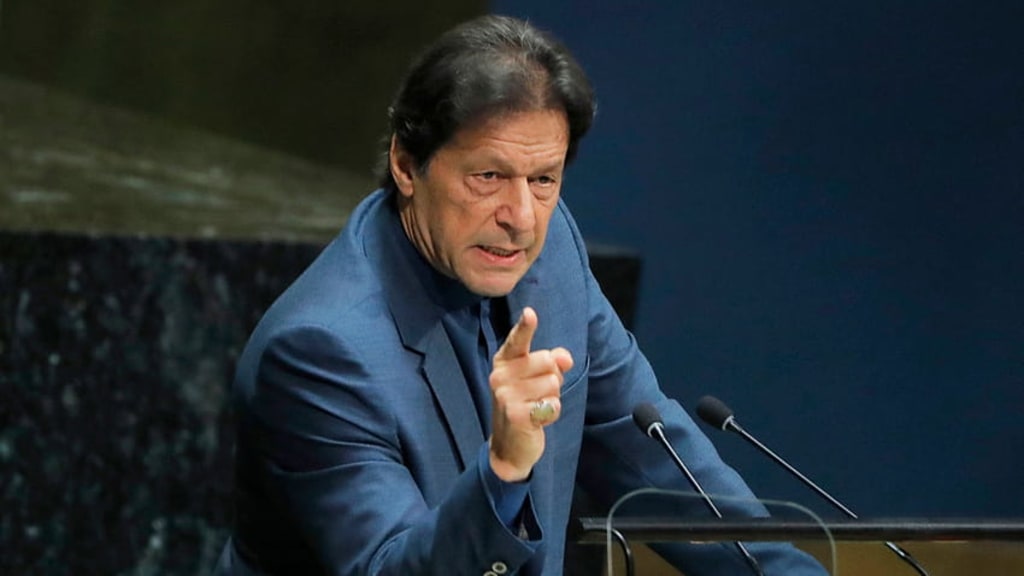
Imran Khan Niazi, commonly known as Imran Khan, is a Pakistani politician, former cricketer, and philanthropist. He was born on October 5, 1952, in Lahore, Pakistan, to a Pashtun family. Imran Khan is the founder and leader of the political party Pakistan Tehreek-e-Insaf (PTI) and served as the 22nd Prime Minister of Pakistan from August 18, 2018, to July 5, 2023.
Imran Khan gained international recognition as a cricketer and is considered one of the greatest all-rounders in the history of the sport. He played cricket for the Pakistani national team from 1971 to 1992 and captained the team to victory in the 1992 Cricket World Cup. After retiring from cricket, he transitioned into a career in politics.
In 1996, Imran Khan founded the Pakistan Tehreek-e-Insaf (PTI) with the aim of creating a political party based on justice and equality. Initially, the party struggled to gain significant support, but it gained momentum over time and emerged as a major political force in Pakistan. Imran Khan campaigned on an anti-corruption platform, promising to eradicate corruption and improve governance in the country.
Imran Khan's political journey faced numerous challenges, including allegations of being supported by the military and criticisms of his handling of governance issues. However, his party made significant gains in the 2013 general elections, becoming the third-largest party in the National Assembly. In the 2018 elections, PTI emerged as the single largest party and formed a coalition government, with Imran Khan becoming the Prime Minister of Pakistan.
During his tenure as Prime Minister, Imran Khan focused on addressing corruption, improving economic conditions, and implementing social welfare programs. He initiated various reforms, including the construction of affordable housing, improvements in the healthcare system, and the establishment of a welfare state. His government also launched initiatives to tackle environmental issues, such as the Billion Tree Tsunami project.
Apart from his political career, Imran Khan is known for his philanthropic work. He founded the Shaukat Khanum Memorial Cancer Hospital & Research Centre and Namal University, which provides education opportunities to underprivileged students. Imran Khan has been recognized globally for his efforts in promoting education, healthcare, and human rights.
Overall, Imran Khan Niazi's biography is that of a legendary cricketer-turned-politician who led Pakistan's political landscape and became the Prime Minister. He is admired by many for his charisma, leadership skills, and determination to bring positive change to the country
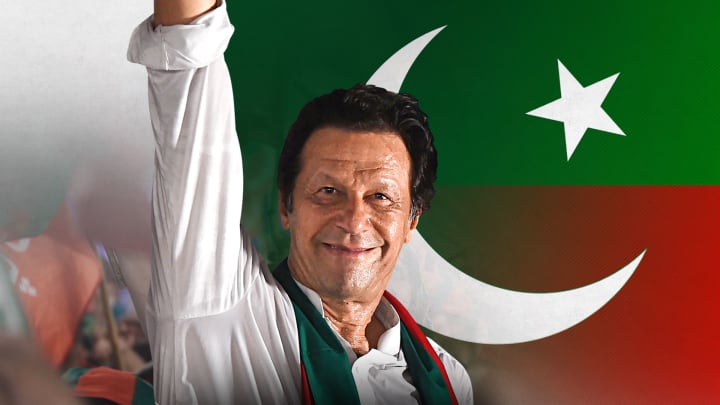
As of my last update in September 2021, Imran Khan Niazi is a well-known Pakistani politician, former cricketer, and the current Prime Minister of Pakistan. Here is a brief biography of Imran Khan:
Full Name: Imran Khan Niazi
Date of Birth: October 5, 1952
Place of Birth: Lahore, Punjab, Pakistan
Early Life and Education:
Imran Khan was born into a well-to-do Pashtun family in Lahore. His father, Ikramullah Khan Niazi, was a civil engineer and a prominent figure in Mianwali district. Imran Khan attended Aitchison College in Lahore, a prestigious institution, before moving to England for higher studies.
In England, he enrolled at the University of Oxford, where he studied politics, philosophy, and economics (PPE) at Keble College. During his time at Oxford, Imran Khan played cricket and gained fame as a talented fast bowler.
Cricket Career:
Imran Khan's cricketing career took off during the 1970s and 1980s. He represented Pakistan in international cricket and was known for his pace and athleticism. In 1992, under his captaincy, Pakistan won its first-ever Cricket World Cup. After achieving this significant feat, Imran Khan retired from international cricket.
Political Career:
Following his cricketing career, Imran Khan entered politics and founded the Pakistan Tehreek-e-Insaf (PTI) party in 1996. The party aimed to address issues such as corruption, inequality, and lack of governance in Pakistan. Initially, PTI faced challenges in gaining significant support, but Imran Khan's perseverance and charismatic leadership gradually led to its growth in popularity.
Imran Khan's political journey was marked by several ups and downs. He led numerous protests and campaigns against corruption and bad governance in Pakistan. However, it was not until the 2018 general elections that PTI emerged as the single largest party in the National Assembly. Imran Khan was elected as the Prime Minister of Pakistan and took office on August 18, 2018.
Prime Ministerial Tenure:
As the Prime Minister of Pakistan, Imran Khan faced various challenges, including an economic crisis, a mounting foreign debt, and regional tensions. He advocated for social welfare programs, educational reforms, and environmental initiatives. His government also focused on improving governance, accountability, and transparency in the country.
Please note that political situations and events are subject to change, and it's recommended to check for the most up-to-date information on Imran Khan Niazi and his career beyond September 2021.
About the Creator
Abdullah Ayaz
interesting biographies
Keep reading
More stories from Abdullah Ayaz and writers in History and other communities.
Hazrat Muhammad(S.A.W)
Hazrat Muhammad (peace be upon him) is considered the final prophet in Islam. He was born in Mecca, in present-day Saudi Arabia, in the year 570 CE. Muslims regard him as the last and most significant prophet sent by Allah (God) to guide humanity. He is also referred to as the Messenger of Allah.
By Abdullah Ayaz3 years ago in History
The Rise and Fall of Nicolae Ceaușescu
Nicolae Ceaușescu’s rise to power was initially marked by promise, even optimism. Born in 1918 into a poor peasant family, he entered politics early, shaped by the ideological rigidity of interwar and wartime communism. When he became General Secretary of the Romanian Communist Party in 1965, following the death of Gheorghe Gheorghiu-Dej, many Romanians saw in him a younger leader, one who might soften the harsh Stalinist legacy that had defined the previous decades. For a society weary of repression and deprivation, Ceaușescu appeared to embody the possibility of cautious change.
By Pure childabout 16 hours ago in History
A woman from a vanished female dynasty was discovered buried with 270,000 beads.
In a Copper Age tomb close to Seville, Spain, the Montelirio bead assemblage contains over 270,000 beads that identify the ladies buried there as elites. The discovery is the biggest collection of beads ever
By Francis Dami3 days ago in History


Comments
There are no comments for this story
Be the first to respond and start the conversation.