
Imam Abu Hanifa: The Man Who Said No to Power and Yes to Truth
He could’ve ruled with kings — but chose prison over compromising his integrity. This is the story of the scholar who built a school of thought and a legacy of courage


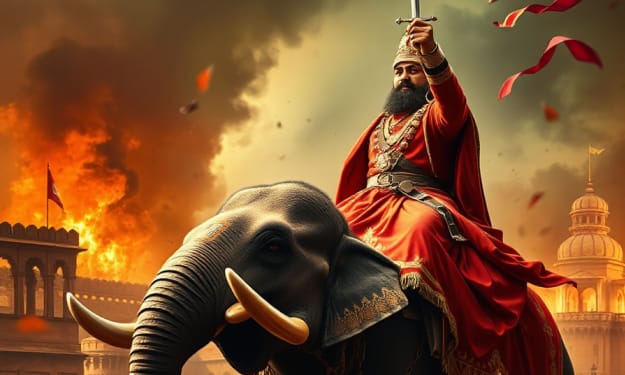
In the golden age of Islamic civilization, when empires stretched wide and rulers wielded immense power, there emerged a man who stood taller not by his sword, but by his principles. His name was **Nu'man ibn Thabit**, but the world remembers him as **Imam Abu Hanifa** — the founder of the Hanafi school of thought, and a beacon of justice, knowledge, and resistance against tyranny.
Born in **Kufa, Iraq**, in the year **699 CE (80 AH)**, Abu Hanifa grew up in a city that was a melting pot of Islamic scholarship, political unrest, and theological debates. His father, a merchant of Persian origin, instilled in him the ethics of honesty and diligence. As a young man, Abu Hanifa initially followed in his father's footsteps, trading in silk. But the pull of knowledge was too strong.
One day, while walking in the streets of Kufa, a renowned scholar spotted him and said, "This boy has intelligence in his eyes. He should not be among traders; he should sit with scholars." That moment changed his life.
---
### The Scholar's Path
Abu Hanifa studied under **Hammad ibn Abi Sulayman** for nearly two decades. He was a meticulous student, known for his sharp reasoning and profound memory. Over time, he mastered **fiqh (Islamic jurisprudence)**, **hadith**, **logic**, and **theology**. He would eventually become a teacher to some of the greatest minds of the time, including **Imam Abu Yusuf** and **Imam Muhammad al-Shaybani**, who played crucial roles in spreading the Hanafi madhhab across the Islamic world.
But Abu Hanifa wasn’t just a scholar behind books; he was a man of the people. He held open classes where questions were welcomed, and discussions were encouraged. He developed a systematic method of reasoning, prioritizing the Qur'an, authentic hadith, consensus of the scholars, analogical reasoning (qiyas), and public interest (istihsan). His jurisprudence was accessible, practical, and deeply rooted in both scripture and compassion.
---
### When Truth Met Power
Abu Hanifa lived during a politically volatile time. The **Umayyad** and later the **Abbasid** dynasties ruled the Islamic world. Both were known for consolidating power, and they often sought religious scholars to legitimize their rule.
But Imam Abu Hanifa would not play their game.
When the Umayyad governor offered him the position of **Chief Judge (Qadi)**, he **refused**. Not once, but multiple times. He knew accepting the position would tie him to the state’s politics — and he refused to compromise his integrity.
His refusal was seen as defiance. He was **imprisoned and beaten**. While in prison, he continued to teach, to advise, and to remain steadfast. Later, when the Abbasids came to power, **Caliph al-Mansur** once again offered him the position of judge, and again he refused. The Caliph, angered by his resistance, had him **imprisoned again**.
While other scholars may have used the opportunity to gain favor or influence, Abu Hanifa remained unshakable. When asked why he refused such a prestigious role, he simply said:
> "If I am truthful, then I am not fit for the job. If I am lying, then a liar should not be a judge."
---
### The Legacy of Integrity
Imam Abu Hanifa died in **767 CE (150 AH)** while still in prison. Some say he was poisoned. Before his death, he is reported to have prayed and bowed to his Lord one last time. He was buried in **Baghdad**, and thousands attended his funeral, even though it was heavily guarded by soldiers.
But death did not silence him.
Today, **over half of the Muslim world** follows the Hanafi school of thought. From the Middle East to South Asia, from Turkey to Central Asia, his legal reasoning guides millions in their daily lives. His methodology shaped Islamic law, his principles influenced Islamic ethics, and his courage continues to inspire.
He taught that knowledge must never serve power, and that a scholar's loyalty belongs to truth — even when it costs them their comfort, their status, or their freedom.
---
### A Final Reflection
In an age where scholars are sometimes co-opted by politics, and truth is often diluted for convenience, the story of Imam Abu Hanifa shines like a lighthouse. It is a reminder that the greatest power lies not in a ruler's palace, but in a heart that refuses to bow to falsehood.
He left behind no kingdom, no army, no treasure.
But he built a school of thought that has outlived empires.
And he gave us a lesson that still echoes across time:
> "A single act of integrity can be more powerful than a thousand sermons."
That was Abu Hanifa — the man who said no to power, and yes to truth.
About the Creator
rayyan
🌟 Love stories that stir the soul? ✨
Subscribe now for exclusive tales, early access, and hidden gems delivered straight to your inbox! 💌
Join the journey—one click, endless imagination. 🚀📚 #SubscribeNow
Reader insights
Outstanding
Excellent work. Looking forward to reading more!
Top insight
Heartfelt and relatable
The story invoked strong personal emotions
How Case Documents Are Maintained in Philadelphia County
Case documentation forms the backbone of judicial accountability in Philadelphia County. Every filing, order, transcript, and judgment plays a defined role in preserving procedural accuracy and historical reference. The methods used to preserve these materials reflect long-standing legal standards combined with structured administrative practice. This article explains how case documents are created, organized, stored, reviewed, and preserved within Philadelphia County, with a clear focus on factual processes rather than commentary or promotion.
By Owen Perryabout 18 hours ago in History
The Quiet Collapse of Global Arms Control
The Quiet Collapse of Global Arms Control For decades, arms control agreements helped prevent the world’s most powerful weapons from spiraling out of control. Treaties limited nuclear stockpiles, increased transparency, and built fragile trust between rival states. Today, that system is quietly unraveling—and its collapse may define the next era of global insecurity.
By Wings of Time about 10 hours ago in History


Comments (1)
This article about Imam Abu Hanifa is really interesting. It's amazing how one chance encounter changed his life from trading silk to becoming a great scholar. I wonder how his teachings would've evolved if he hadn't studied under Hammad ibn Abi Sulayman. Also, his systematic method of reasoning seems well thought out. How do you think his approach to jurisprudence compares to other schools of thought in terms of practicality in today's complex world?