
I Know What the Hell I’m Doing,’ Trump Says as World Braces for Trade War
Trump declared, *“I know what the hell I’m doing
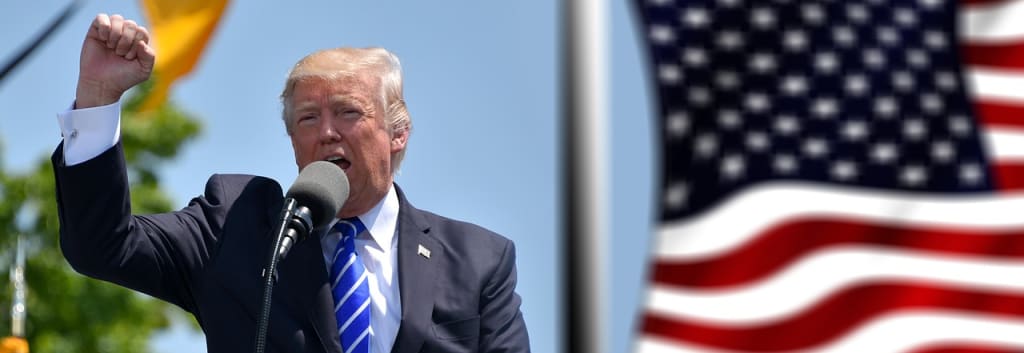
In a bold and defiant statement amid growing global concerns over escalating tariffs and economic tensions, former President Donald Trump declared, *“I know what the hell I’m doing,”* during a rally in Ohio, addressing criticisms over his aggressive trade stance.
The comment comes as financial markets fluctuate and world leaders brace for what many fear could erupt into a full-blown trade war. Trump, who is once again the most influential political figure in the United States, has repeatedly called for strict protectionist policies like imposing high tariffs on goods imported from countries like China, the European Union, and Mexico. Trump reaffirmed his strategy at the rally, arguing that decades of unfair trade practices have harmed American industries and workers. * "They have been defrauding us for decades. But not anymore,”* he told a cheering crowd. * "We are restoring employment. We’re putting America first, and I don’t care what the globalists or the fake media say — I know what the hell I’m doing.” *
However, economists remain divided. Some argue that tariffs could help revive certain domestic industries, while others warn that such policies could backfire, driving up consumer prices and triggering retaliatory measures from international partners.
Leaders in Beijing and Brussels have already hinted at countermeasures. China’s Ministry of Commerce called the latest U.S. tariffs “a dangerous provocation” and vowed to defend its interests. In response to "unilateral and unjustified actions," the European Commission stated that it was prepared to act in the same manner. Markets reacted cautiously. Early trading saw a slight decline in the Dow Jones Industrial Average and signs of volatility on Asian markets. U.S. business groups also expressed concern. A spokesperson for the National Association of Manufacturers stated, "We support fair trade, but escalating tariffs only add uncertainty." Despite the mounting criticism, Trump remains unfazed. He touted past economic gains under his administration and framed the trade battle as part of a larger struggle for national sovereignty. He stated, "This isn't just about money; it's also about respect, strength, and winning again." One thing is abundantly clear as the international community closely watches: the stakes are high, and Trump is moving ahead on his own terms, still as self-assured as ever.
WASHINGTON, D.C. — In classic defiant style, former President Donald Trump declared, “I know what the hell I’m doing,” as he reignited a global economic storm by pushing forward with sweeping tariff proposals that have governments, economists, and investors around the world bracing for what could be a new era of trade conflict.
At a packed rally in Dayton, Ohio, Trump slammed critics from both parties and reaffirmed a protectionist trade agenda that echoes his first-term policies, albeit with sharper language and broader objectives this time. Trump told the crowd, "They said I couldn't do it last time, but I did." “I renegotiated bad deals. I stood up to China. And now they’re crying because I’m doing it again — only tougher. We’re going to win this trade war. We have complete control.
A Return to Tariff-First Thinking
A proposal to impose a universal tariff of 10% on all imported goods and a tariff of 60% on Chinese goods is at the heart of Trump's new economic push. This is a dramatic move that dwarfs even his previous administration's combative trade actions. The Biden administration had relaxed some tariffs in an effort to stabilize relations with key trading partners and curb inflation, but Trump, now a leading contender for the Republican nomination in 2024, appears eager to reverse course.
Trump’s latest pitch is centered on bringing back American manufacturing and punishing what he calls “cheaters” in the global economy. He blames countries like China and Mexico for hollowing out the U.S. industrial base and accuses American political elites of enabling it.
“They’re not sending their best deals, folks. They’re sending garbage. We get ripped off, and then they lecture us on global cooperation,” Trump said, pointing to steel, automotive, and electronics sectors as key victims of bad trade policy.
Global Leaders Push Back
Trump's remarks have not gone over well with world leaders. China’s Foreign Ministry issued a stern warning on Tuesday, calling Trump’s rhetoric “reckless, destabilizing, and economically irrational.” Beijing has already begun drawing up retaliatory tariffs on American soybeans, aircraft, and semiconductors, sources say.
European leaders are also alarmed. French President Emmanuel Macron called for “European unity in the face of economic aggression,” while German Chancellor Anke Schäfer labeled the proposed tariffs “a direct threat to global economic stability.”
The European Commission confirmed it is reviewing countermeasures that could include tariffs on American tech companies and agricultural products.
U.S. Companies and partners caught in the crossfire
The business community is raising concerns at home. The U.S. Chamber of Commerce warned the new tariffs could cost American households thousands annually in higher prices. A coalition of auto manufacturers issued a joint statement arguing that the industry would be severely disrupted by increased costs on foreign parts.
Even key Republican allies have voiced concerns. "We need to be tough, but we also need to be smart," stated Republican senator Mitch Harmon. A blanket tariff risks hurting our own people more than it helps.”
However, Trump portrays these warnings as the anxieties of the "weak and corrupt establishment," and he remains unmoved by them. His base seems enthusiastic, chanting "USA! USA!” as he promised economic dominance would be restored.
Economic Experts Weigh In
Economists are still divided. The global trade system needs to be changed, according to some, especially in light of China's subsidies and intellectual property policies. But many fear a repeat of 2018–2019, when tit-for-tat tariffs roiled markets, delayed supply chains, and led to billions in losses — much of which was ultimately subsidized by U.S. taxpayer funds.
Dr. said, "Trump's strategy is high-stakes poker." Brookings Institution trade policy expert Karen Patel "The consequences could be felt across every sector of the economy, from agriculture to technology, if other nations retaliate and we spiral into another trade war."
Looking Ahead
The international community is preparing for a possible return to turbulent trade relations and the subsequent economic uncertainty as Trump surges in the polls and reshapes the Republican primary conversation. But the message to Trump is clear: he won't back down. “They laughed at me in 2016. Then I won. They said I was reckless. Then I brought jobs back. They are now again in a state of panic because I am not afraid to fight. I know what the hell I’m doing — believe me.”
Whether that confidence is warranted or not, the world is watching — and bracing.
About the Creator
Mahenur Dola
I like to tell stories, think differently, and be creative. Writing about the world as I see it — from politics and pop culture to personal growth and everything in between.
Keep reading
More stories from writers in History and other communities.
The Epic of 1917
Before discussing the cannons of Mărăști, one must understand the deplorable state of the country at the beginning of 1917. Following the disastrous campaign of 1916, two-thirds of Romanian territory, including Bucharest, was under German and Austro-Hungarian occupation. The Government, the Royal Family, and the remnants of the army had retreated to Moldavia.Moldavia had become a vast refugee camp. Famine, the biting cold, and typhus were ravaging the population, killing more people than the enemy's bullets. However, amidst this apocalyptic landscape, a miracle occurred: the reorganization of the army. Under the guidance of the French Military Mission led by General Henri Berthelot, the Romanian soldier was rearmed, trained in modern warfare tactics, and, most importantly, restored to his dignity. King Ferdinand’s promises regarding land reform and universal suffrage transformed peasants into soldiers ready for the ultimate sacrifice.
By alin butuc6 days ago in History
The Amber Room: History, Glory, and the Greatest Lost Treasure of Europe
Origins of the Amber Room The story of the Amber Room begins in Prussia (modern-day Germany) in the early 1700s. The room was commissioned in 1701 by King Frederick I of Prussia as part of a grand plan to decorate his royal palace in Berlin. The design was entrusted to the court architect Andreas Schlüter, while the intricate amber craftsmanship was executed by master amber artisans Gottfried Wolfram, Ernst Schacht, and Gottfried Turau.
By Say the truth a day ago in History
Whiskey At Dusk
Guess the whiskey was more important to you in the end, wasn’t it? It was more than the well-being of your friends; more vital than showing up to the places you promised you would and could come to; more critical of a matter than fulfilling your damn responsibilities and getting the press off your back.
By Snarky Lisa5 days ago in Humans


Comments
There are no comments for this story
Be the first to respond and start the conversation.