
Huge animals in history - Step 2
Huge creatures that have survived on Earth


Welcome to today's article where we will explore some of the largest creatures that have ever existed. Let's begin our journey through prehistory and modern times - Step 2.
Number 5: Dunkleosteus
Dunkleosteus was a massive, armored fish that lived during the Late Devonian period, around 358 to 382 million years ago. This prehistoric fish is estimated to have reached lengths of up to 33 feet, making it one of the largest placoderms, an extinct group of armored fish. What made Dunkleosteus particularly remarkable was its formidable jaws. Its skull was armored and equipped with two sets of sharp bony plates that acted as shearing blades. With a bite force of approximately 8,000 pounds, Dunkleosteus could crush and slice through prey with ease. It likely fed on other armored fish and early sharks, asserting its dominance as an apex predator of its time. The fossilized remains of Dunkleosteus have been discovered in various parts of the world, shedding light on the diverse marine life that thrived in ancient oceans.

Number 4: Argentinosaurus
Argentinosaurus, named after its discovery in Argentina, was one of the largest dinosaurs ever to have existed. Living during the Late Cretaceous period, approximately 94 to 97 million years ago, this colossal plant-eating dinosaur is estimated to have measured around 98 feet in length and weighed up to 110 tons. Its long neck and tail, combined with its massive body, gave it an awe-inspiring presence. Despite its immense size, Argentinosaurus was a gentle giant, subsisting on a diet of plants and vegetation. Its massive size likely provided protection against most predators, although it would have faced threats from larger theropod dinosaurs of its time. The discovery of Argentinosaurus fossils has provided valuable insights into the evolutionary history and diversity of sauropod dinosaurs.

Number 3: Blue Whale
The blue whale holds the distinction of being the largest animal to have ever existed on Earth. With an average length of around 82 to 105 feet and a weight of 100 to 150 tons, these magnificent marine mammals surpass the size of any known dinosaur. Blue whales inhabit oceans worldwide and are renowned for their awe-inspiring size and graceful movements. Their massive bodies are streamlined and elongated, with a throat pouch that allows them to engulf and filter huge volumes of water for their primary food source: krill. Despite their size, blue whales are gentle giants, known for their calm and peaceful nature. The conservation of blue whales has become an important global effort due to the impacts of human activities on their populations.

Number 2: Titanoboa
Titanoboa, which means "titanic boa," was a prehistoric snake that lived approximately 58 to 60 million years ago, after the extinction of the dinosaurs. This massive serpent is estimated to have reached lengths of up to 42 feet and weighed around 2,500 pounds, making it the largest snake ever discovered. Titanoboa was a constrictor, similar to modern-day boas and pythons, but on an unprecedented scale. It thrived in the tropical rainforests of South America, where it likely preyed upon large animals, including crocodiles and other reptiles. The discovery of Titanoboa fossils in Colombia in 2009 provided valuable insights into the ecological dynamics of the ancient tropics and the incredible diversity of life during that time.

Number 1: Sauroposeidon
Sauroposeidon is one of the tallest and heaviest dinosaurs known to science. This massive herbivore lived during the Early Cretaceous period, around 112 to 105 million years ago. Although incomplete fossil remains make it challenging to determine its exact size, scientists estimate that Sauroposeidon could have reached lengths of up to 100 feet and stood over 60 feet tall, rivaling the height of a five-story building. With its long neck and tail, it was able to reach vegetation at towering heights. Its enormous size and weight of around 60 to 70 tons necessitated a specialized circulatory system to pump blood to its brain located high above the ground. Sauroposeidon represents the pinnacle of dinosaur gigantism and provides a glimpse into the extraordinary diversity of life that once roamed our planet.
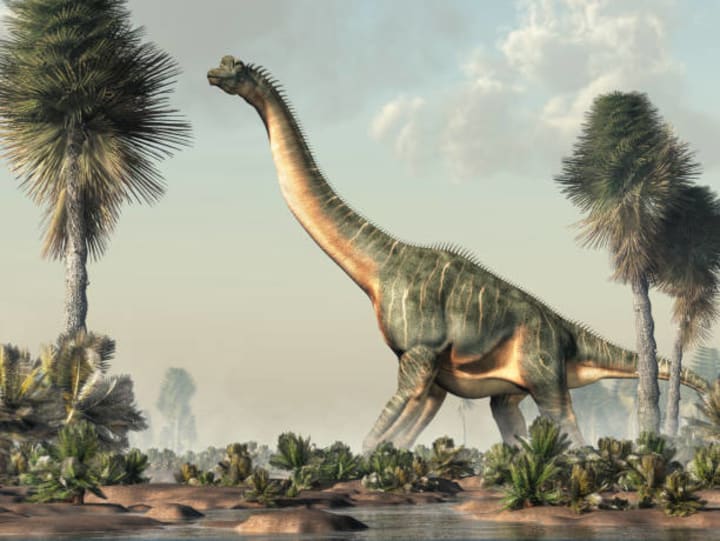
These remarkable giants from the past continue to fascinate scientists and ignite the imaginations of people around the world, reminding us of the incredible diversity and grandeur of Earth's history.
About the Creator
GuyDussek
I love to write and I like to output articles that surprise me, so if you like my articles, follow me!
Can the United States Leave NATO?
Can the United States Leave NATO? What It Would Take—and What It Would Mean The North Atlantic Treaty Organization, commonly known as NATO, has been one of the most powerful military alliances in modern history. Since its creation in 1949, the United States has been NATO’s strongest member—militarily, financially, and politically. But in recent years, debates have grown louder about whether the U.S. should remain in the alliance. This raises a serious question: how could the United States be removed from NATO—or leave it—and what would that mean for the world?
By Wings of Time 3 days ago in History




Comments
There are no comments for this story
Be the first to respond and start the conversation.