
How Ordinary Workers Shaped American History
The Unsung Architects of Progress
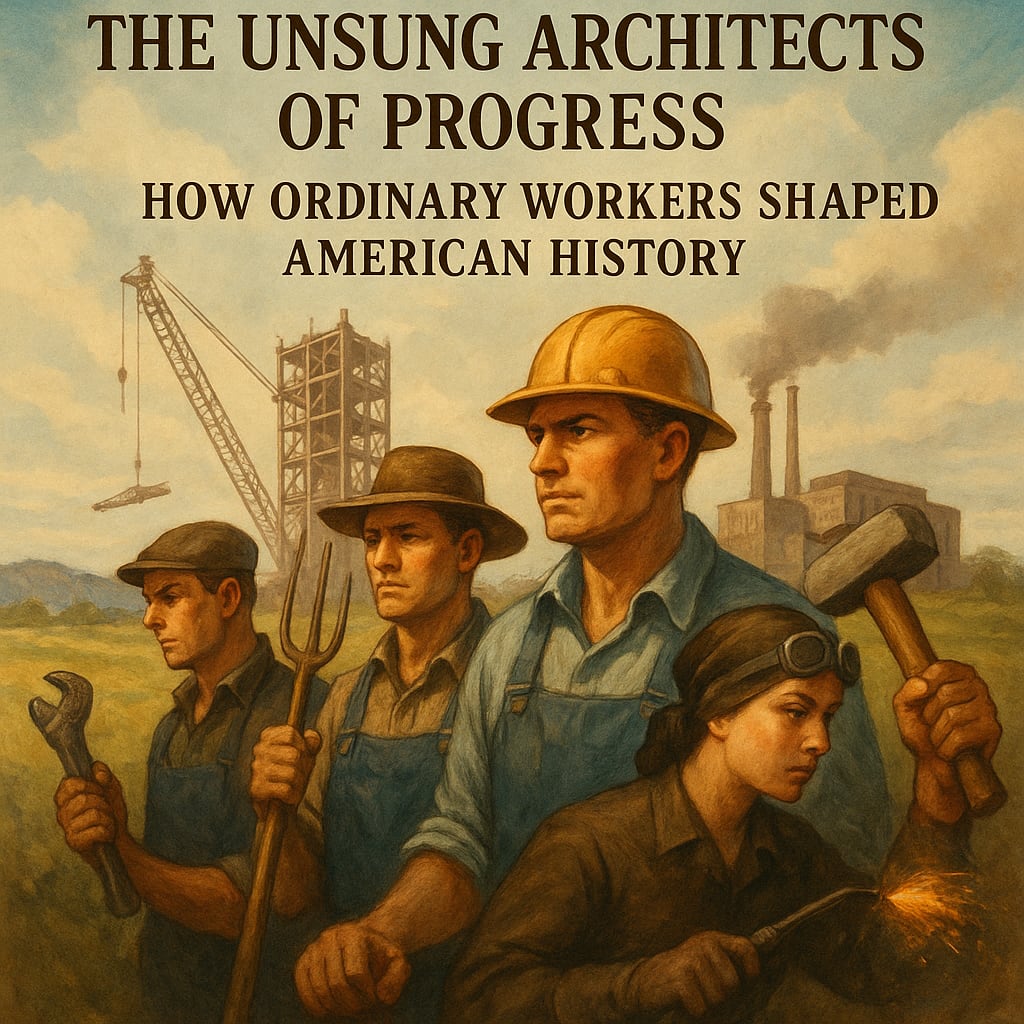
History tends to spotlight presidents, generals, and tycoons. But the story of America isn’t only about the people whose names appear in textbooks. It’s also about the millions of workers who built bridges, staffed factories, laid railroads, and kept cities running—often with little recognition.
From the Industrial Revolution to the Digital Age, it’s the everyday laborers, skilled tradespeople, and behind-the-scenes professionals who’ve powered the country’s progress. In fact, if we zoom in on history’s most transformative eras, it’s clear that American workers weren’t just participants—they were the foundation.
The Labor Force That Built a Nation
In the 19th century, America underwent massive industrialization. Factories surged, railroads crisscrossed the country, and urban centers exploded in population. But none of that growth would have been possible without the grueling labor of millions—immigrants, women, and working-class citizens—many of whom worked 12-hour shifts in dangerous conditions.
By the early 1900s, the rise of labor unions helped pave the way for safer workplaces, minimum wage laws, and the 40-hour workweek. These reforms weren’t handed down from above—they were demanded by workers who understood their own value.
World War II: The Rise of the “Rosie” Workforce
During World War II, with men deployed overseas, women stepped into roles previously reserved for male labor. Factory floors filled with Rosies—riveting, welding, assembling aircraft, and managing logistics. These women not only helped win the war but permanently altered perceptions of what the workforce could look like.
The war effort showcased the adaptability and power of the American labor force. It also planted seeds for future movements around gender equity in the workplace.
Post-War Boom and the American Dream
The decades following WWII marked a time of economic expansion. Middle-class families bought homes, enrolled in college, and entered stable jobs that paid livable wages. This era was driven by workers who took pride in their trades—from auto manufacturing in Detroit to steel production in Pittsburgh.
It was also a time when career paths felt linear. You could start in the mailroom and retire with a pension after 40 years. That sense of security shaped a generation.
But that structure started to erode in the late 20th century.
The Shift: From Stability to Flexibility
Outsourcing, automation, and tech disruption began to reshape work in the 1980s and 1990s. Job security faded, pensions disappeared, and workers were increasingly asked to “reskill” or face obsolescence.
Fast forward to today, and career paths look very different. People are no longer expected to stay in the same role—or even the same industry—for life. The modern workforce is marked by flexibility, contract work, side hustles, and career reinvention.
In this new landscape, job seekers often need more support than ever. That’s where organizations come in to bridge the gap between talent and opportunity. Similar to how a staffing agency helps job seekers find meaningful, well-matched employment, today’s workforce relies on career resources, training platforms, and networking communities to navigate change.
Looking Ahead: The Workers of Tomorrow
The American worker continues to evolve. AI, remote work, and green industries are already shaping the future of employment. But just like in the past, success will depend on the same timeless elements: skill, grit, adaptability, and collaboration.
If history teaches us anything, it’s that progress isn’t just about innovation—it’s about the people who make that innovation possible.
So the next time we celebrate a national achievement, let’s remember the invisible hands behind the milestone. Because those unsung workers? They are the story.
About the Creator
Keep reading
More stories from Zachary Gagnon and writers in History and other communities.
The Psychology of First Impressions: Why Job Interviews Are Won in the First 7 Seconds
When it comes to job interviews, most people focus on perfecting their résumé or rehearsing answers to common questions. But science says you might be overestimating how much of that actually matters—at least in the beginning.
By Zachary Gagnon9 months ago in Styled
Mummified Monkey Found at Minnesota Department Store
Shoppers expect to find clothing, household goods, seasonal decorations, and maybe the occasional odd collectible at a department store. What they do not expect to find is a mummified monkey. Yet that is exactly the kind of bizarre discovery that has captured attention in Minnesota, where reports say a preserved monkey was found inside a department store, leaving employees, customers, and local authorities both puzzled and fascinated.
By Irshad Abbasi about 21 hours ago in History



Comments
There are no comments for this story
Be the first to respond and start the conversation.