
The Psychology of First Impressions: Why Job Interviews Are Won in the First 7 Seconds
Discover how quickly first impressions are formed during job interviews—and why your appearance may matter more than your words.
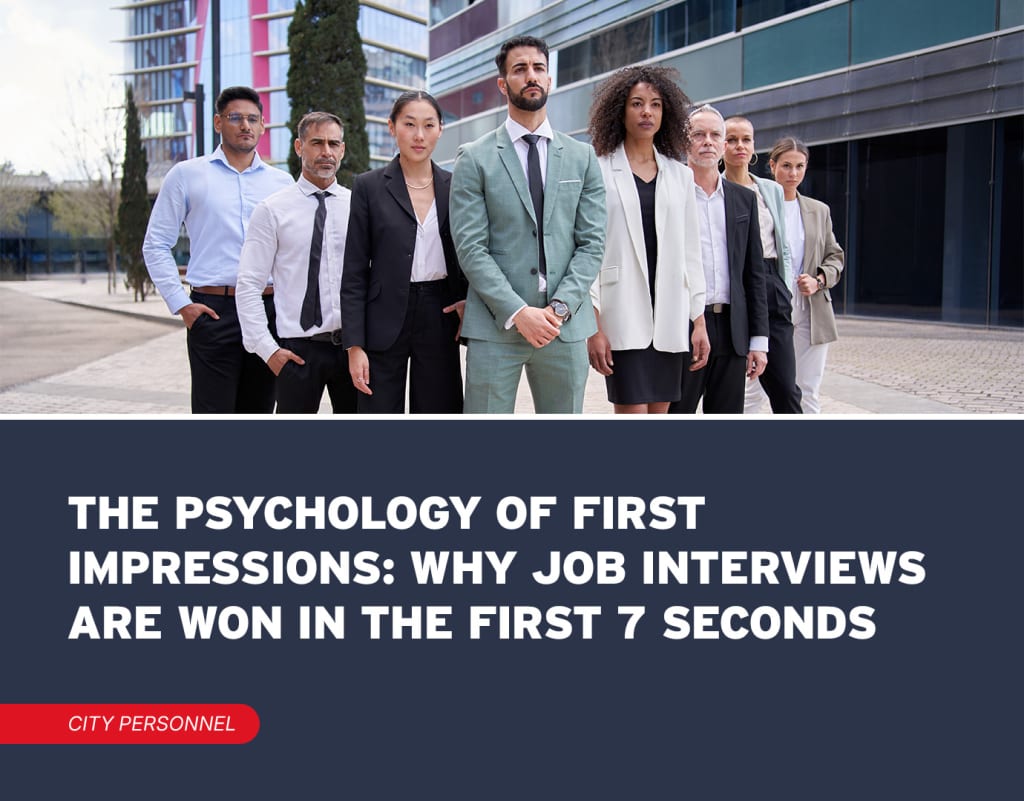
When it comes to job interviews, most people focus on perfecting their résumé or rehearsing answers to common questions. But science says you might be overestimating how much of that actually matters—at least in the beginning.
According to research from Princeton University, people form judgments about others in just one-tenth of a second based on facial appearance alone. And in the high-stakes environment of a job interview, that snap judgment sets the tone for everything that follows.
Let’s explore the science of first impressions and why your appearance—yes, even your outfit—might be silently speaking volumes before you’ve even said “hello.”
The 7-Second Rule: Reality or Myth?
You may have heard the idea that people make up their minds about you within seven seconds. That’s not just pop psychology—it’s backed by numerous studies in behavioral science. Researchers have found that interviewers often form strong impressions within the first few seconds of meeting a candidate, and those impressions can color their entire evaluation.
What happens in those seven seconds?
- Eye contact is made—or not.
- Posture is read.
- Facial expressions are interpreted.
- Clothing is subconsciously assessed.
Even before you've had the chance to introduce yourself, your interviewer may have already formed a baseline opinion—positive or negative.
What First Impressions Are Actually Based On
Most people believe they’re being judged based on what they say. In truth, nonverbal cues dominate the early moments of an interaction.
A classic study by Dr. Albert Mehrabian suggested that communication is:
- 7% verbal (what you say)
- 38% vocal (how you say it)
- 55% visual (appearance and body language)
That means more than half of your first impression is based solely on how you look and carry yourself. So if your wardrobe or grooming is out of place, you’re starting the interview at a disadvantage—whether you realize it or not.
Why Employers Can’t Help But Judge
Even the most open-minded hiring managers are human. They’re hardwired to make quick judgments—an evolutionary mechanism rooted in safety and efficiency.
In job interviews, this unconscious bias can work for or against you. Clean, well-fitted, and appropriate clothing suggests competence, attention to detail, and professionalism. On the other hand, poorly chosen outfits may lead to assumptions about reliability, seriousness, or even respect for the role.
It may not be fair, but it’s real.
The Silent Message Your Outfit Sends
Imagine two candidates with identical résumés. One walks in wearing a wrinkled hoodie and sneakers. The other arrives polished, confident, and dressed appropriately for the industry.
Who do you think makes a better first impression?
The goal isn’t to wear a suit to every interview—it’s about understanding the silent message your clothing and presentation send. And if you're unsure what level of formality fits your industry, this guide on what to wear to an interview can help you decode the dress code in 2025's evolving job market.
Can First Impressions Be Overcome?
Yes—but it’s an uphill battle.
Once a first impression is formed, confirmation bias kicks in. That means people naturally look for evidence that supports their initial judgment and overlook information that contradicts it.
So while it’s possible to change someone’s mind during a 30-minute interview, it’s significantly harder than simply making a strong impression from the start.
Final Thought: You’re Being Interviewed Before You Speak
In today’s competitive job market, preparation is everything. But it’s not just about knowing the right answers—it’s about showing up with the right energy, attitude, and yes, appearance.
Your interviewer doesn’t know your experience, your values, or your work ethic in those first moments. They only know what you’ve chosen to show them—literally.
So whether you're applying at a startup or a Fortune 500, remember: you’re being interviewed before the questions even begin.
About the Creator
Keep reading
More stories from Zachary Gagnon and writers in Styled and other communities.
Why Your Hiring Timeline Might Be Costing You Talent
Hiring is one of the most important decisions a company makes. But here's the truth: if your hiring process drags on for weeks—or even months—you’re likely losing your best candidates long before you send the offer letter.
By Zachary Gagnon7 months ago in Education
Latest Women’s Fashion News: Trends Shaping Modern Style
Women’s fashion is undergoing a powerful transformation, shaped by changing lifestyles, global cultural influences, and a growing demand for individuality and responsibility. In recent years, fashion has moved beyond seasonal trends and has become a reflection of personal values, comfort, and confidence. The latest women’s fashion news highlights a dynamic industry where creativity meets practicality, and tradition blends seamlessly with modern innovation. From runways to street style, women’s fashion is redefining how style is perceived and worn across the world.
By duran lorena7 days ago in Styled
FREE THE NIPPLE. BURN THE BRA. APOLOGISE TO OUR SPINES.
There are few things in modern life as quietly infuriating as the social expectation that women should strap themselves into uncomfortable, restrictive underwear every single day for the emotional comfort of strangers. Not safety. Not warmth. Not even practicality. Comfort. Specifically men’s comfort. Because somewhere along the way, we collectively decided that a woman’s nipple is a public threat, while a man’s nipple is background furniture.
By No One’s Daughter5 days ago in Styled


Comments
There are no comments for this story
Be the first to respond and start the conversation.