
HOW AN ENTIRE ARMY FROZE TO DEATH
How did this happen and why?

The soldier's face stung with each blast of frigid wind, as if countless needles were pricking his skin. With temperatures dipping below forty degrees, the wind chill made it feel even colder. Huddled on the icy hillside alongside his silent comrades, he had been waiting for hours, surrounded by the vast, cold expanse of the North Korean night, anticipating the command to launch an attack.
The Americans were entrenched, prepared to defend the Chosin Reservoir. Yearning to move, he stumbled across the treacherous, frozen terrain, desperately seeking the nearby company. Each step was a struggle, his legs numb from the cold. The howling wind enveloped him as he climbed the hill, calling out, but his voice vanished into the darkness. Upon reaching the first soldier, his heart sank; frozen faces stared back at him, lifeless in the snow. Terror seized him, tightening his chest with every breath.
He faced a critical choice: stay and succumb to the freezing fate of his comrades or dash into the deadly barrage of American gunfire. His heart raced, and panic gripped his breath as the seconds ticked away. In today's episode of The Infographics Show, we reveal the harrowing true account of how an entire Chinese army nearly succumbed to the cold.
On June 25, 1950, a massive wave of North Korean forces surged across the 38th Parallel, sparking a conflict that would dramatically alter the region. Meanwhile, in China, the high command was reluctant to engage in a foreign war, as the Chinese Communist Party (CCP) concentrated on dismantling the last remnants of Nationalist power in Taiwan, Hainan, and nearly fifty other islands. Among the elite units chosen to systematically defeat the Nationalists was the formidable 9th Army.
Veterans had primarily engaged the Japanese throughout World War Two before swiftly redirecting their efforts against the Nationalist forces in China. By the summer of 1950, Communist troops had nearly obliterated the remaining Nationalist strongholds, with the Chinese Communist Party gearing up for a significant offensive on Taiwan, bolstered by a force of approximately 300,000 soldiers in southern China, including 150,000 from the elite 9th Army designated to spearhead the attack. However, the outbreak of the Korean War dramatically shifted the landscape for the CCP.
The soldiers set out with only three to eight days' worth of supplies, facing an arduous 18-day trek to the Chosin Reservoir. To evade air strikes, they marched under the cover of night and rested during the day. The scarcity of food began to severely impact their strength, leaving them increasingly fatigued and vulnerable. Many veterans remember the generosity of North Korean villagers, which was crucial for their survival. Some soldiers scavenged for potatoes, while others had to resort to eating whatever animals they could find, including cats, dogs, and rats. Exhausted and weak, many fell behind their units, promising to catch up but ultimately succumbing to the cold as they lay down in the snow. Headquarters recognized the urgency of the situation; without a solution to the food shortage, the 9th Army faced the grim prospect of starvation long before encountering American forces. The answer lay in mobilizing thousands of Chinese and Korean civilians, resulting in an impressive supply of 150,000 pounds of bread.
General MacArthur's audacious amphibious assault at Inchon led to a swift and decisive defeat of the North Korean forces. Although the 9th Army was initially excluded from this operation, the rapid advance of U.S. troops compelled a reassessment of their mission.
In early October, Mao Zedong informed the 9th Army commander that their focus had shifted from invading Taiwan to preparing for winter combat in Shandong. Unfortunately, this strategy unraveled as the situation in North Korea deteriorated, with UN forces capturing Pyongyang and leaving the 9th Army with fewer than 20,000 troops.
Chinese troops in eastern North Korea faced an urgent deployment ordered by the CCP, drastically reducing their training time from two months to just one week. This hasty decision led to dire consequences. Upon arrival, Chinese officers were alarmed to discover that many soldiers were ill-equipped for the harsh North Korean winter, wearing only canvas shoes and light jackets. In a desperate attempt to shield their troops from the biting cold, officers at the train station seized over 600 winter coats, but this was woefully insufficient for the 10,000 men of the 59th Division.
As days passed, Chinese logisticians raced to procure 72,000 winter coats for the 9th Army, yet more than half the soldiers would face the record-breaking cold with merely a light shirt for warmth. Compounded by a shortage of trucks and treacherous mountain roads, the 9th Army was forced to abandon nearly all their artillery, heavy weapons, and supplies, leaving each soldier with minimal provisions.
The soldiers were burdened with 80 rounds of rifle ammunition each, transforming them into pack mules for the Army's staggering 1300 tons of ordnance. After just one night, the 58th Division of the 20th Corps suffered a devastating loss of 700 men to frostbite, marking not only a tactical defeat but a harrowing descent into despair for those who remained. Veterans recounted the grim reality of having to sleep in their boots, as removing them would lead to swollen feet that made re-tying impossible by morning. As if the situation couldn't deteriorate further, the 9th Army faced a critical shortage of food, with soldiers departing China with only three to eight days' worth of rations for an 18-day march to the Chosin Reservoir. Marching under the cover of night to evade air attacks, the lack of sustenance began to sap their strength, leaving them increasingly vulnerable. Many veterans remembered the compassion of North Korean villagers, who provided some relief, while others resorted to foraging for potatoes or scavenging any available animals. Exhausted and weakened, soldiers fell behind, promising to catch up, only to succumb to the cold, lying down in the snow and never waking again.
Headquarters was acutely aware of the dwindling time. If the food crisis remained unresolved, the 9th Army would face starvation long before encountering American forces. The answer lay in mobilizing thousands of Chinese and Korean civilians, who managed to bake and deliver an impressive 150,000 pounds of bread daily to the troops. However, the situation on the ground was dire, as much of this vital sustenance failed to reach the famished soldiers. Desertions became rampant, with entire units abandoning their posts, and one battalion commander met a grim fate, executed by the 9th Army's own leader.
Initially, the prestigious 9th Army was not involved in this operation, but the rapid advance of U.S. forces quickly compelled China to act. In early October, Mao directly communicated with the 9th Army's commander, altering their mission. Rather than proceeding with the invasion of Taiwan, they were redirected to Shandong, where they were to undergo two months of winter warfare training. However, this strategy also unraveled, as the 9th Army arrived in Shandong.
After enduring 18 grueling days, the 9th Army finally approached the Chosin Reservoir, with the Americans within striking distance. Despite their hardships, the soldiers were ready for a decisive confrontation, yet the most challenging moments lay ahead. On the eve of battle, the 9th Army devised an audacious plan to encircle and eliminate the Americans, but the reality was starkly different. After two weeks of relentless marching in freezing conditions, the Chinese troops were far from battle-ready, weaker and more fatigued than their American adversaries.
The situation was dire as the soldiers had to leave their heavy weaponry behind in China, entering battle armed only with rifles, bayonets, and grenades. Minimal artillery support was available, and even reaching the battlefield was uncertain. One veteran recounted how they waited for hours on the first day, lying in the snow, huddled together for warmth under shared blankets.
When the order to attack finally came, the soldiers expected to surge forward, but instead found themselves barely able to move, their bodies stiff from the cold. Their weapons had frozen, rendering them ineffective against the American forces, who easily picked them off. One soldier described the panic of trying to load his rifle, only to find the bolt immovable in the frigid temperatures. In desperation, he reached for a grenade, but his fingers were frozen, preventing him from pulling the pin. With no other option, he charged at an American machine gun wielding only a knife. After breaching the initial American defenses, the soldiers halted their advance, drawn instead to the warm boots and food left behind by the dead, prioritizing survival over further combat.
After weeks of relentless marching and fierce combat, the soldiers succumbed to exhaustion and fell into an unbreakable slumber, never to awaken. The urgency of their situation was undeniable; they could not afford to wait for the command to attack, as the bitter cold threatened to claim their lives before they could engage in battle. The frigid temperatures were as lethal as any adversary, and inaction would lead to inevitable demise. Faced with the choice, many preferred the swift end of a bullet from American forces over the slow agony of freezing in the snow.
By December 6, temperatures plummeted to a staggering 45 degrees below zero, prompting the U.S. Marines to launch a bold early morning assault on the nearby Chinese troops. As they gathered their resolve and charged up the hill, they anticipated an imminent firefight, only to be met with an eerie silence. Upon reaching the summit, they were confronted with a haunting sight—the entire Chinese company lay frozen in their foxholes, victims of the merciless cold.
In the following weeks, the harsh winter and American steel wreaked havoc on the 9th Army, with cold-related injuries outpacing combat losses in several units. The 79th Division faced nearly 2,150 combat casualties, yet an additional 2,300 men succumbed to frostbite. Recognizing the impending conclusion of the battle, the Chinese high command ceased their advance by December 15, allowing the Americans to withdraw with minimal resistance.
Initially, around 150,000 troops had mobilized in early November 1950, but by mid-December, the Chinese Army reported over 19,000 battle casualties and an astonishing 29,000 losses attributed to the severe weather. After the conflict, Mao Zedong praised the 9th Army for their triumph and inquired about their provisions for warmth and sustenance, but such sentiments came too late. For the soldiers, these words felt empty, as they endured unprecedented cold and hardship. Was this mission destined for failure from the outset?
About the Creator
Keep reading
More stories from Faith mukundi and writers in History and other communities.
How they engaged in intimate relations
Picture yourself in 50,000 BC, where the biting cold wind swirls around your Neanderthal form as you seek warmth beside your companion for the day. "Nia," you murmur softly, and she responds, "Oh Dag," as she melts into your embrace. You both dive into the moment, oblivious to the fact that she is, in fact, your cousin. Life for Neanderthals was undeniably harsh and wildly unpredictable, particularly in matters of intimacy. These tumultuous romantic entanglements may have played a role in their eventual decline, a phenomenon humorously dubbed "sextinction."
By Faith mukundi about a year ago in History
Maya Angelou – A Voice That Rose Like a Song
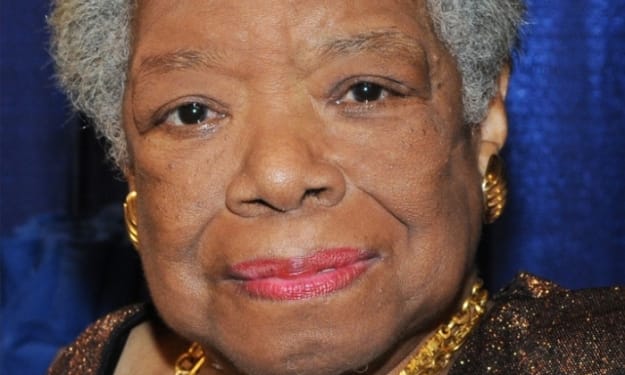
In the spring of 1928, in St. Louis, Missouri, a baby girl was born and named Marguerite Annie Johnson. The world would later know her as Maya Angelou—a poet, performer, activist, and one of the most powerful voices of the twentieth century. But her journey to greatness was not simple or smooth. It was a road marked by pain, silence, courage, and finally, a voice that would echo across generations. When Maya was very young, her parents separated. She and her older brother, Bailey, were sent to live with their grandmother in Stamps, Arkansas, a small Southern town divided by racial segregation. Life in Stamps was shaped by strict rules and deep prejudice. Black families lived with limited opportunities, and injustice was a daily reality. Yet, within her grandmother’s small store, Maya found a world of dignity and strength. Her grandmother, Annie Henderson, was a respected woman in the community—firm, faithful, and hardworking. From her, Maya learned resilience. As a child, Maya loved words. She listened carefully to the rhythms of speech and the music of stories told in church. But at the age of eight, her life changed in a traumatic way. After returning briefly to live with her mother, she was harmed by her mother’s boyfriend. When he was later killed, young Maya believed her own words had caused his death because she had testified against him. Overcome with guilt and fear, she stopped speaking. For nearly five years, she lived in silence. Many thought the quiet girl would remain lost in her muteness. But her silence became a time of deep listening and learning. Back in Stamps, a kind teacher named Mrs. Bertha Flowers recognized Maya’s intelligence. She introduced her to literature—Charles Dickens, William Shakespeare, Paul Laurence Dunbar. Mrs. Flowers gently encouraged her to read aloud, explaining that poetry must be spoken to be truly understood. Slowly, word by word, Maya found her voice again. Literature became her refuge and her strength. As a teenager, Maya moved to San Francisco with her mother. Determined and independent, she became the first Black female streetcar conductor in the city at just sixteen years old. It was a small job in the eyes of many, but for Maya, it was proof that barriers could be broken. Around this time, she also became a young mother, giving birth to her son, Guy. Raising him while building her own life required courage and sacrifice. In her early adulthood, Maya explored many paths. She worked as a dancer, singer, and actress. She toured Europe in an opera production and later recorded music. During these years, she adopted the name “Maya Angelou,” combining her childhood nickname with a version of her former husband’s surname. The name would become legendary. The 1950s and 1960s were years of transformation in America. The Civil Rights Movement was rising, and Maya felt called to be part of it. She met and worked with influential leaders such as Dr. Martin Luther King Jr. and Malcolm X. In Ghana, where she lived for a time, she worked as a journalist and educator. Africa deepened her sense of identity and connection to her roots. Yet no matter where she lived—America, Europe, or Africa—she carried with her the memories of Stamps and the lessons of survival. In 1968, tragedy struck again when Dr. King was assassinated on Maya’s birthday. Grief overwhelmed her. For a time, she withdrew once more. But friends encouraged her to write about her life. The result was a groundbreaking memoir published in 1969: I Know Why the Caged Bird Sings. The book was unlike anything many readers had seen before. With honesty and poetic beauty, Maya described her childhood in the segregated South, her trauma, her silence, and her awakening. The title symbolized her own life—the caged bird representing oppression, yet still daring to sing. The memoir gave voice to countless people who had suffered in silence. It became an international success and established Maya Angelou as a major literary figure. She continued writing memoirs, essays, and poetry. Her poems carried rhythm like music and truth like lightning. One of her most famous poems, Still I Rise, became an anthem of strength and dignity: “You may write me down in history With your bitter, twisted lies… But still, like dust, I’ll rise.” Her words were not only about race, but about the human spirit—the ability to stand up again after being pushed down. She wrote about love, loss, motherhood, and hope. She believed that words could heal and that stories could change hearts. In 1993, Maya Angelou stood before millions at the inauguration of President Bill Clinton and recited her poem On the Pulse of Morning. Her voice, calm and powerful, carried across the nation. It was a historic moment—she became the first Black woman to recite a poem at a U.S. presidential inauguration. For many watching, it was more than poetry; it was history speaking. Throughout her life, Maya received numerous awards and honors, including the Presidential Medal of Freedom. Universities invited her to teach and speak. Students admired her wisdom and warmth. Yet despite fame and recognition, she remained deeply connected to her roots. She often said that courage was the most important virtue because without courage, you cannot practice any other virtue consistently. Maya Angelou did not pretend her life was free from pain. Instead, she showed that pain can be transformed into purpose. She believed that people should not only survive but thrive. “We may encounter many defeats,” she once wrote, “but we must not be defeated.” In her later years, she lived in North Carolina, continuing to write and inspire. Even as her hair turned silver and her steps slowed, her voice never lost its strength. She spoke about kindness, reminding people that “people will forget what you said, people will forget what you did, but people will never forget how you made them feel.” When Maya Angelou passed away in 2014, the world mourned not only a writer, but a guiding light. Tributes poured in from presidents, poets, and ordinary readers whose lives had been touched by her words. Yet her voice did not fade. It lives on in classrooms, libraries, and hearts around the world. Her story is not just about fame or success. It is about a little girl who once stopped speaking because she believed her voice had caused harm—and who later used that same voice to bring hope to millions. It is about rising after every fall. It is about turning silence into song. Maya Angelou once compared herself to a caged bird who sings of freedom. And through her courage, her poetry, and her unbreakable spirit, she proved that even the most wounded voice can become a melody of strength. Her life reminds us that no matter where we begin—no matter how small the town or how heavy the burden—we carry within us the power to rise. And like dust, like air, like the morning sun— Maya Angelou rose.
By The best writer a day ago in History
Sylvia Plath
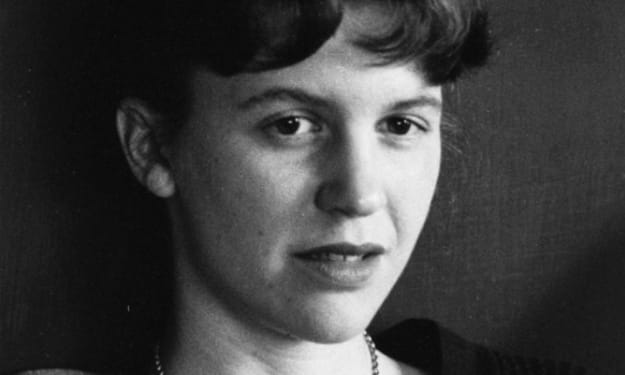
Sylvia Plath was born on October 27, 1932, in Boston, Massachusetts, into a world that would both inspire and wound her deeply. From the beginning, she seemed marked by intensity. Her father, Otto Plath, was a German immigrant and a professor of biology, a strict and intellectual man who studied bees. Her mother, Aurelia, was a devoted parent who valued education and discipline. Sylvia grew up near the sea, and the rhythms of the ocean would later echo in her poetry. When Sylvia was eight years old, her father died from complications related to diabetes. His death left a deep scar on her young heart. She felt both abandoned and haunted by his memory. This early loss shaped much of her later writing, especially her famous poem “Daddy,” in which she explored feelings of grief, anger, and longing. For Sylvia, words became a way to wrestle with emotions too powerful to hold inside. Even as a child, she was brilliant. She published her first poem at the age of eight. In school, she excelled in everything—writing, drawing, academics. She kept journals filled with detailed observations and ambitious dreams. Sylvia did not just want to be a writer; she wanted to be a great one. She worked tirelessly, often pushing herself beyond her limits. Success came early. By the time she entered Smith College on a scholarship, she had already published in national magazines. Yet behind her achievements was a storm of self-doubt. Sylvia often felt she had to be perfect. Anything less felt like failure. In her college years, the pressure intensified. She won prizes and praise, but internally she struggled with depression. In 1953, after a particularly difficult period, she attempted to take her own life. She survived and later received psychiatric treatment, including electroconvulsive therapy, which at the time was a common method for severe depression. After recovering, Sylvia returned to Smith College and graduated with highest honors. Her resilience was remarkable. She then received a Fulbright scholarship to study at Cambridge University in England. It was there, in 1956, that she met the English poet Ted Hughes. Their meeting was passionate and electric. They married just a few months later. Sylvia and Ted shared a deep love for poetry. They encouraged each other’s writing and traveled between England and America. For a time, their life seemed filled with promise. Sylvia published her first poetry collection, The Colossus, in 1960. Though it received respectful reviews, it did not bring her the fame she longed for. She also published a novel in 1963 under the pseudonym Victoria Lucas. The novel, The Bell Jar, was semi-autobiographical and told the story of a young woman struggling with mental illness and societal expectations. The book captured the suffocating feeling of being trapped under an invisible glass bell jar—a powerful metaphor for depression. Motherhood brought both joy and challenge. Sylvia gave birth to two children, Frieda and Nicholas. She loved them deeply, yet she struggled to balance her identity as a mother and as a writer. Meanwhile, her marriage to Ted Hughes began to fracture. In 1962, she discovered that he was having an affair. The betrayal devastated her. The couple separated, and Sylvia found herself alone in London with two young children during one of the coldest winters in years. But it was during this painful period that Sylvia’s most extraordinary poetry emerged. In the early mornings, before her children awoke, she wrote with fierce concentration. The poems she produced would later be collected in Ariel. These works were bold, sharp, and emotionally raw. Poems like “Lady Lazarus,” “Ariel,” and “Daddy” explored themes of death, rebirth, anger, identity, and power. Her language was vivid and intense, filled with striking images and fearless honesty. Sylvia’s style is often described as “confessional poetry,” a movement in which poets wrote openly about personal experiences, including mental illness, trauma, and private emotions. Yet her work was more than confession. It transformed personal pain into art of universal resonance. Readers around the world recognized their own fears and struggles in her words. Despite her creative triumph, Sylvia’s mental health continued to decline. The isolation, harsh winter, and lingering heartbreak weighed heavily on her. On February 11, 1963, at the age of thirty, Sylvia Plath died in London. Her death shocked the literary world. She left behind two young children and a body of work that would soon gain international recognition. After her passing, Ariel was published and received widespread acclaim. Critics hailed it as a masterpiece of modern poetry. In 1982, Sylvia Plath became the first poet to win a Pulitzer Prize posthumously for her Collected Poems. Her voice, once fragile and doubting, had become immortal. Today, Sylvia Plath is remembered as one of the most influential poets of the twentieth century. Her writing continues to be studied in classrooms and read by those searching for understanding in their own struggles. She wrote with a rare intensity, refusing to soften her truths. Her poems do not look away from darkness; instead, they walk straight into it, carrying a small but powerful flame. Her life was not an easy one. It was marked by ambition, brilliance, love, loss, and deep emotional battles. But through it all, she remained devoted to her craft. She once wrote in her journal about wanting to live “deeply and suck out all the marrow of life.” In many ways, she did exactly that—experiencing life in its brightest highs and darkest lows. Sylvia Plath’s story is not only a story of tragedy. It is also a story of courage—the courage to speak honestly, to create boldly, and to transform pain into something beautiful and lasting. Her words continue to breathe, reminding readers that even in silence, even in despair, the human voice can rise and be heard. In the end, Sylvia Plath’s greatest legacy is her poetry. It remains fierce, luminous, and unforgettable—a testament to the power of language and the complexity of the human heart.
By The best writer a day ago in History
The Duelist
The rays of a dying red sun flashed against the onrushing blade. The grey beards say the key to dueling lies in size, speed, reach, righteous fury, whatever the person in front of them pays them to say. Matteo knew better than any it was none of these and had an undefeated record on these sands to prove it.
By Matthew J. Frommabout 9 hours ago in Fiction


Comments
There are no comments for this story
Be the first to respond and start the conversation.