

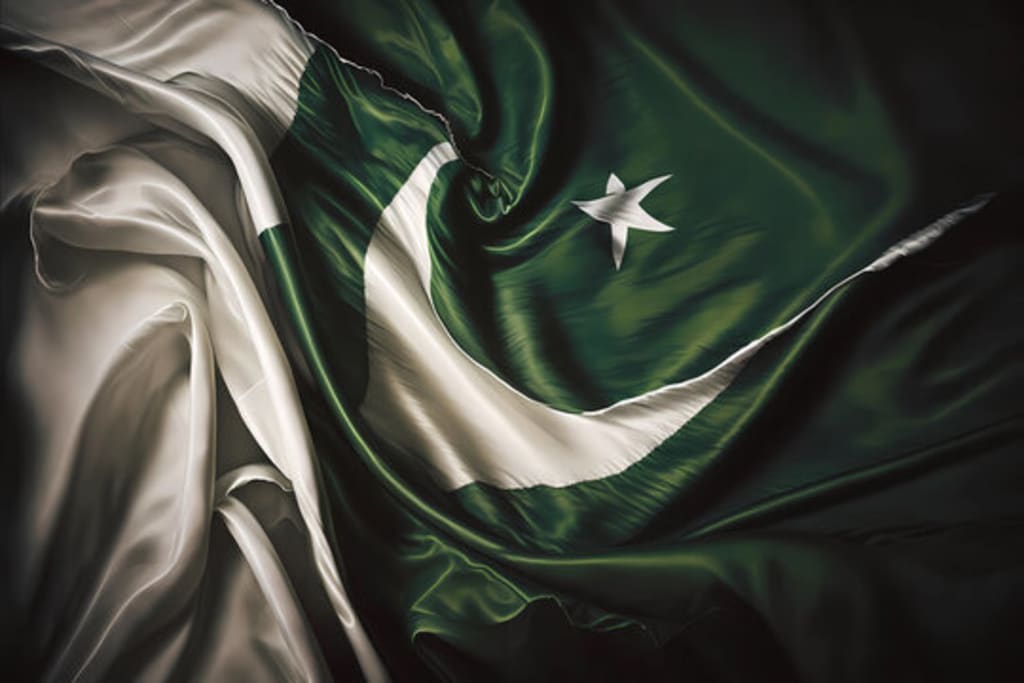
Pakistan, officially known as the Islamic Republic of Pakistan, is a country located in South Asia. It shares borders with India to the east, Afghanistan and Iran to the west, China to the north, and the Arabian Sea to the south. With a population of over 225 million people, it is the sixth most populous country in the world.
Pakistan gained independence from British colonial rule on August 14, 1947, as a result of the partition of India. The partition created two separate nations: India, with a Hindu majority, and Pakistan, with a Muslim majority. Pakistan was initially composed of two regions, East Pakistan (present-day Bangladesh) and West Pakistan (present-day Pakistan).
In the early years of its existence, Pakistan faced various challenges, including establishing a functioning government, defining its identity as an Islamic republic, and dealing with the mass migration and violence that accompanied the partition. The country adopted a parliamentary democratic system with Islam as its state religion.
Over the years, Pakistan has experienced periods of military rule and political instability, with several military coups shaping its political landscape. It has also faced regional and international conflicts, including three major wars with India in 1947, 1965, and 1971, primarily over the disputed territory of Kashmir. Pakistan also played a significant role in the Soviet-Afghan War in the 1980s, supporting Afghan resistance groups against the Soviet Union.
Economically, Pakistan has had its share of challenges, including poverty, corruption, and an overreliance on agriculture. However, it has made progress in various sectors, such as textiles, manufacturing, and IT services. Pakistan is also known for its agricultural products, including cotton, wheat, rice, and fruits.
Pakistan is a nuclear-armed nation, conducting its first successful nuclear tests in 1998. It remains an important player in regional politics, especially in relation to its neighbors, India and Afghanistan. It is a member of several international organizations, including the United Nations, the South Asian Association for Regional Cooperation (SAARC), and the Organization of Islamic Cooperation (OIC).
Culturally, Pakistan is diverse, with several ethnic groups and languages. Urdu and English are the official languages, while Punjabi, Sindhi, Pashto, and Balochi are among the regional languages spoken. The country has a rich cultural heritage, with influences from the ancient Indus Valley Civilization, Islamic traditions, and various regional customs.
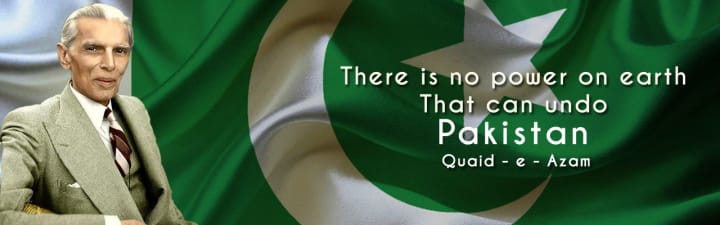
Notable figures in Pakistan's history include its founder Muhammad Ali Jinnah, who is revered as Quaid-e-Azam (Great Leader), and Benazir Bhutto, the first female Prime Minister of Pakistan. The country has produced renowned poets, writers, artists, and musicians who have contributed to its cultural and artistic landscape.
Today, Pakistan continues to face challenges related to governance, economic development, terrorism, and regional conflicts. However, it also possesses immense potential and a resilient population striving for progress and stability.
Pakistan, officially known as the Islamic Republic of Pakistan, is a country located in South Asia. It shares borders with India to the east, Afghanistan and Iran to the west, China to the north, and the Arabian Sea to the south. Here is a brief biography of Pakistan:
Formation and Independence:
Pakistan's history is closely tied to the partition of British India in 1947. On August 14, 1947, Pakistan gained independence from British colonial rule. The country was established as a separate homeland for Muslims in the region, as demanded by the All India Muslim League, led by Muhammad Ali Jinnah.
Early Years:
After its formation, Pakistan faced numerous challenges, including the mass migration of people between the newly created India and Pakistan, communal violence, and the integration of diverse ethnic and linguistic groups. The country adopted a parliamentary system of government, with Jinnah serving as its first Governor-General until his death in 1948.
Constitutional Development:
Pakistan's constitution was adopted in 1956, which declared the country an Islamic Republic. However, political instability, military interventions, and constitutional crises plagued the early years. In 1971, East Pakistan, geographically separated from the rest of the country, declared independence as Bangladesh after a bitter civil war.
Political Instability and Military Rule:
Pakistan witnessed several periods of military rule throughout its history. The first military coup took place in 1958 when General Ayub Khan seized power. After a decade of Ayub Khan's rule, political turmoil led to another military coup in 1969, bringing General Yahya Khan to power. However, it was under General Zia-ul-Haq's regime from 1977 to 1988 that military rule was most significant.
Nuclear Program and Regional Conflicts:
During the 1970s and 1980s, Pakistan intensified its nuclear program, which led to the country becoming a declared nuclear power in 1998. Pakistan has since faced international scrutiny and sanctions due to its nuclear weapons development. It has also been involved in regional conflicts, such as the Soviet-Afghan War and the ongoing Kashmir conflict with India.
Democratic Transition and Challenges:
Pakistan experienced a period of democratic transition in the late 1980s and early 1990s, with various political parties coming to power through elections. However, political instability, corruption, economic challenges, and sectarian violence have remained persistent issues in the country.
War on Terrorism and Internal Struggles:
Pakistan became a key ally of the United States in the "War on Terror" after the September 11, 2001 attacks. It faced significant internal struggles with terrorism, particularly from militant groups operating within its borders. The Pakistani military launched multiple offensives against these groups in an effort to restore peace and stability.
Current Affairs:
As of my knowledge cutoff in September 2021, Pakistan continues to grapple with political, social, and economic challenges. It faces issues such as poverty, corruption, religious extremism, and regional conflicts. The country's democratic system remains fragile, with power shifting between political parties and the military.
It's important to note that political and social landscapes are subject to change, and the current situation in Pakistan may have evolved since my last update.
About the Creator
Abdullah Ayaz
interesting biographies
Keep reading
More stories from Abdullah Ayaz and writers in History and other communities.
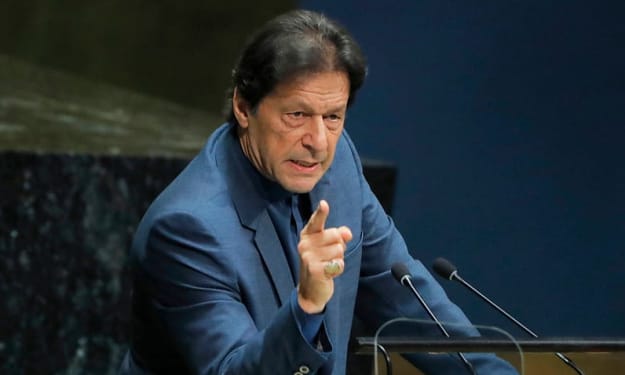
Imran Ahmad Khan Niazi
Imran Khan Niazi, commonly known as Imran Khan, is a Pakistani politician, former cricketer, and philanthropist. He was born on October 5, 1952, in Lahore, Pakistan, to a Pashtun family. Imran Khan is the founder and leader of the political party Pakistan Tehreek-e-Insaf (PTI) and served as the 22nd Prime Minister of Pakistan from August 18, 2018, to July 5, 2023.
By Abdullah Ayaz3 years ago in History
Balloonfest 1986
Balloonfest 1986 was meant to be a joyful celebration. It was planned as a world record attempt and a symbol of hope, fun, and community spirit. Instead, it became one of the most famous examples of how a good idea can go wrong when nature is underestimated.
By shaoor afridi6 days ago in History


Comments
There are no comments for this story
Be the first to respond and start the conversation.