
History through the eyes of Golden Bird
The Golden Bird: A Story of India’s Glory

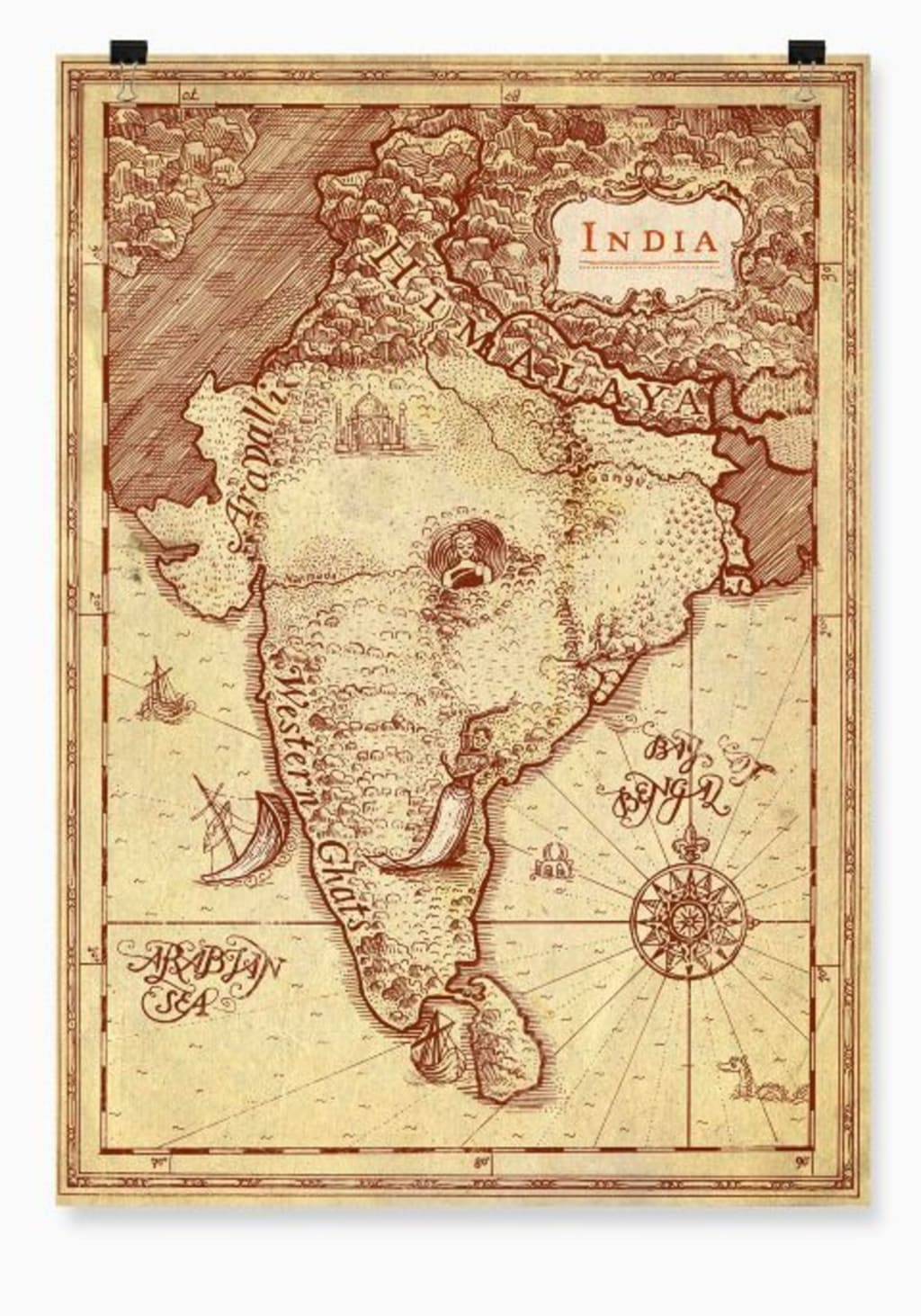
Long ago, before modern borders were drawn and before the industrial machines roared to life, there was a land unlike any other. A land where rivers shimmered under the golden sun, where bustling markets overflowed with silk, spices, and precious gems, and where wisdom flowed as freely as the sacred rivers. This was India—The Golden Bird.
For centuries, India stood as a beacon of knowledge, wealth, and culture. The world looked towards it with admiration, curiosity, and, eventually, greed. From pioneering scientific discoveries to revolutionary medical advancements, India was not just a nation of riches but a cradle of civilization. But, as with every golden age, the tides of time shifted, and what was once the envy of the world became a land of conquest and plunder.
A Land of Prosperity Beyond Imagination
Imagine a land where traders from distant shores dreamt of arriving, their ships loaded with goods to barter for India's famed treasures. Merchants from China, Persia, Arabia, and even Europe set their sights on this magnificent land. India wasn’t just rich—it was the economic superpower of the ancient world. In 1000 AD, India contributed nearly 25% of the world’s GDP.
One such foreign explorer, Vasco da Gama, braved the unknown seas in search of India’s wealth. When he finally reached Indian shores in 1498, he was stunned by what he saw. The spices, the fabrics, the jewels—everything was beyond his wildest imagination. He filled his ships with goods and returned home, making 60 times his usual profit. News of India’s unimaginable riches spread, and soon, waves of traders and invaders set their sights on this Golden Bird.
But India’s wealth wasn’t just in gold and spices. Its true treasure lay in its knowledge.
A Civilization of Pioneering Thinkers
India was not only home to wealth but also home to wisdom. When much of the world still struggled to grasp basic mathematics, Indian scholars had already unlocked the mysteries of numbers, astronomy, and medicine.
🔹 Aryabhata, the genius mathematician, gazed at the night sky and formulated theories about planetary motion long before the Western world caught on. He also introduced zero, a concept so powerful that modern mathematics would be unimaginable without it.
🔹 Bhaskara I & II, brilliant minds ahead of their time, laid the foundation for algebra and calculus centuries before these concepts became mainstream. Today, students worldwide still study their works.
🔹 Takshashila & Nalanda—two of the oldest universities in the world—attracted scholars from as far as Greece and China. They came to India to learn about astronomy, medicine, and philosophy, carrying back knowledge that shaped their own civilizations.
Medical Science: Centuries Ahead of Its Time
Long before modern medicine took shape, India’s physicians were already pioneering surgical techniques and medical treatments that would later influence the world.
🔹 The Sushruta Samhita, written by Sushruta around 600 BCE, is one of the world’s earliest medical texts on surgery. It describes over 300 surgical procedures, including plastic surgery and cataract removal—techniques so advanced that modern medicine still studies them.
🔹 Meanwhile, Charaka Samhita, written by Charaka, focused on internal medicine and Ayurveda, highlighting the importance of diet, lifestyle, and holistic healing—concepts that are now making a comeback in alternative medicine research.
Even today, medical experts explore Ayurvedic principles, proving that India's wisdom was far ahead of its time.
The Cultural & Technological Marvels of India
India’s contributions weren’t limited to science and trade; it was also a land of breathtaking architecture, metallurgy, and craftsmanship.
🔹 The Iron Pillar of Delhi, an engineering marvel from the 4th century, has stood rust-free for over 1,600 years, leaving scientists baffled by its advanced metallurgy.
🔹 India’s legendary Wootz Steel was so strong and pure that it was used to craft the world-famous Damascus swords.
🔹 From the Ajanta & Ellora caves to temples that defied gravity, India’s architecture was centuries ahead of its time.
But no golden era lasts forever.
The Beginning of the Fall: Greed, Conquests & Colonization
For centuries, India flourished as an independent, self-sufficient nation. But the world’s greedy eyes did not look upon it with admiration—they looked upon it with hunger.
Foreigners first came as traders. They marveled at India’s wealth. But soon, they wanted more than just trade—they wanted control.
🔹 Invasions and Looting – From the Persians and Mughals to the British, one wave after another of foreign powers arrived, not just to trade, but to conquer. Palaces were burned, temples were looted, and knowledge was lost.
🔹 Colonization & Exploitation – The British Raj drained India’s resources, dismantled its industries, and turned it into a colony of exploitation. The world that once looked at India with admiration now saw it as a source of cheap labor and raw materials.
The Golden Bird, once soaring high, was now caged, its feathers plucked one by one.
A New Dawn: Can India Rise Again?
History moves in cycles. Just as the sun sets, it rises again.
Today, India is awakening once more. It is one of the fastest-growing economies, a global leader in technology, and an innovation powerhouse. From space exploration to AI advancements, India is carving its place back on the world stage.
But the question remains—Can the Golden Bird soar again?
The future is unwritten, but one thing is certain: India’s story is far from over.
(Stay tuned for Part 2: The Fall of the Golden Bird)
About the Creator
Ink Minded
Words + Ideas = Impact. Writing about AI, tech, and online money-making. Let’s go!
Currently studying AI & exploring its impact on careers & businesses.
Keep reading
More stories from writers in History and other communities.
The Spanish Donkey: A Dark Instrument of Punishment in European History
History is often told through kings, wars, and revolutions. But hidden between those grand narratives are quieter, darker stories. Stories of ordinary people, unnamed in records, who experienced history not as progress, but as pain. One such story is tied to an object known as the Spanish Donkey, also called the Wooden Horse, an instrument of punishment used in parts of Europe during the late medieval and early modern periods.
By Salman Writes3 days ago in History




Comments (1)
India is glorious and historical! Great work!