
HISTORY OF GARDENING TOOLS
HISTORY OF GARDENING TOOLS

The History of Gardening Tools
Gardening tools have played a pivotal role in human history, evolving alongside agricultural practices to shape civilizations and sustain communities. Their origins trace back thousands of years, as humans transitioned from nomadic lifestyles to settled agricultural societies. This development marked the beginning of a profound relationship between humanity and the tools that made cultivating the earth possible.
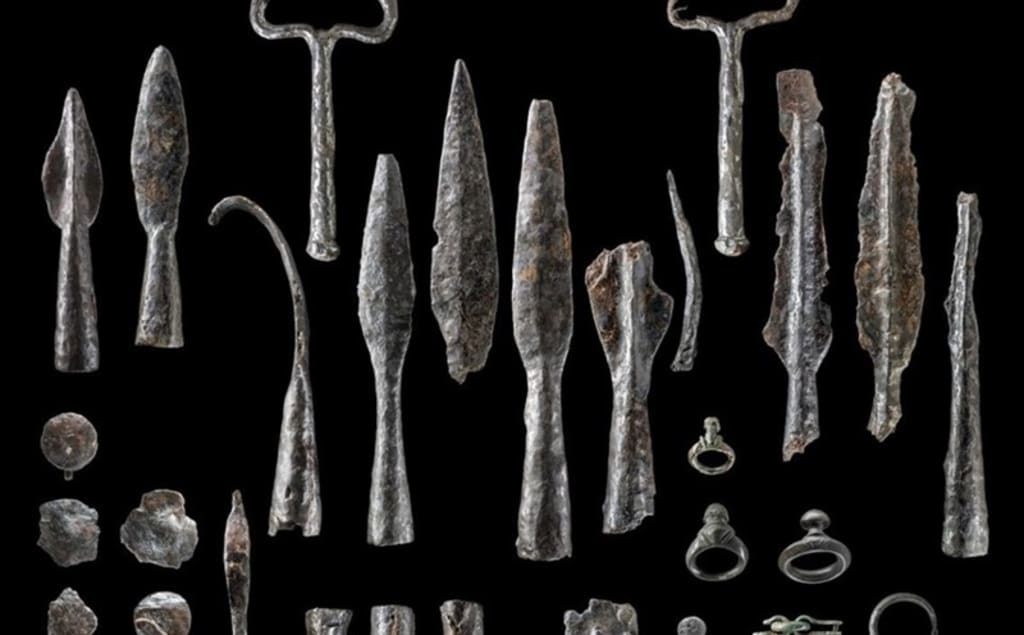
The earliest gardening tools were simple and crafted from natural materials like wood, bone, and stone. During the Neolithic period (roughly 10,000 BCE), when humans began domesticating plants, rudimentary tools emerged. Digging sticks, used to break the soil, and sharp stones for cutting vegetation are considered among the earliest forms of gardening equipment. These tools were crude but effective, allowing early farmers to clear land and plant crops.
As civilizations advanced, so did the sophistication of gardening tools. In Mesopotamia, the cradle of agriculture, tools such as wooden plows, hoes, and sickles were introduced. The ancient Egyptians refined these implements, using copper and later bronze to create more durable and efficient tools. Hieroglyphics often depict farmers and gardeners using hoes, sickles, and shovels, emphasizing the cultural importance of agriculture.
In ancient China, agriculture was central to society. Metal tools, such as iron hoes and plows, became widespread during the Zhou dynasty (1046–256 BCE). These innovations improved soil cultivation and crop yields, laying the groundwork for China's agricultural success.
The Greeks and Romans also made significant contributions. The Romans, known for their engineering prowess, developed specialized gardening tools like the “sarculum” (a type of hoe) and pruning knives. Roman gardens, both ornamental and practical, inspired a culture of landscape design that persists to this day.
During the Middle Ages, gardening tools became essential for survival, particularly for peasants who relied on subsistence farming. Tools such as spades, scythes, and rakes were used to maintain small plots of land. The quality of tools varied based on social class; wealthier landowners often had access to better materials and craftsmanship.
Monastic gardens, tended by monks, became centers of horticultural knowledge. These gardens provided food, medicinal herbs, and spiritual solace. Monks utilized simple but effective tools, passing down their techniques to future generations.
The Renaissance (14th–17th centuries) brought a renewed interest in science, art, and agriculture. This era saw the development of more specialized tools, such as shears for trimming hedges and spades for precise digging. Advances in metallurgy during this period led to stronger, more durable tools made of iron and steel.
Gardening also became a leisure activity for the wealthy. Ornate tools, often embellished with decorative engravings, were crafted for aristocratic gardens. The formal gardens of Europe, such as those designed by André Le Nôtre at Versailles, demanded precision and innovation, further driving the evolution of gardening tools.
The 18th and 19th centuries marked a turning point with the advent of the Industrial Revolution. Mass production made gardening tools more affordable and accessible. Factories produced items like shovels, hoes, and rakes on a large scale, ensuring uniformity and quality.
This period also saw the introduction of mechanical tools. Steam-powered equipment, and later gas-powered machines, revolutionized large-scale farming and gardening. Lawn mowers, invented in the early 19th century, transformed landscape maintenance.
In the 20th and 21st centuries, gardening tools have continued to evolve. Lightweight materials like aluminum and fiberglass make tools easier to handle. Ergonomic designs reduce strain, enabling people of all ages to garden comfortably. Electric and battery-powered tools, such as hedge trimmers and tillers, provide efficiency while reducing physical effort.
Sustainability has become a significant focus in recent years. Tools made from recycled materials and organic gardening practices emphasize environmental stewardship. Advanced technology, including smart gardening devices, integrates sensors and automation to optimize planting and maintenance.
From humble digging sticks to high-tech gadgets, gardening tools reflect humanity's enduring connection to the earth. They are symbols of ingenuity, cultural heritage, and our collective effort to cultivate beauty and sustenance. As technology advances, gardening tools will undoubtedly continue to evolve, adapting to the needs of future generations while preserving the traditions of the past.
About the Creator
Thomas
Hi, I’m Thomas, a new story editor eager to improve. I’d love your feedback on the stories I’ve worked on—your insights will help me grow and craft better narratives. Please share your thoughts, and thank you for supporting my journey!
The Partition of the Ottoman Empire: How Britain and France Reshaped the Middle East
The collapse of the Ottoman Empire after World War I dramatically transformed the political map of the Middle East. For more than four centuries, the Ottoman Empire had ruled vast territories stretching across the Middle East, North Africa, and parts of Europe. However, by the early twentieth century, the empire had weakened politically, economically, and militarily. When the Ottomans joined Germany and the Central Powers in World War I, Britain and France saw an opportunity to reshape the region according to their own strategic and economic interests. The result was the partition of Ottoman lands, an event that still shapes Middle Eastern politics today.
By Irshad Abbasi 8 days ago in History



Comments
There are no comments for this story
Be the first to respond and start the conversation.