
When John Willis Menard was born in Illinois in 1838, African Americans lived in a society that was deeply divided by race. Slavery was still legal in the Southern United States, and even some parts of the North. Discrimination and prejudice were routine for Blacks, especially enslaved Black people who were defined by their lack of freedom. They were owned as property and could be bought, sold, and traded. Forced to work long hours without pay, they had no rights or protections under the law. Often separated from their families and friends, they were constantly in fear of being sold to a new master or mistress.
Enslaved Black people were also forced to work in a variety of industries, including agriculture, construction, and manufacturing, and subjected to physical and emotional abuse. They were often whipped, beaten, and tortured. However, free Black people in the North worked in a variety of occupations, including skilled trades, domestic service, and small business ownership.
Nevertheless, people like Menard, a free Creole in the North, faced a different set of challenges. While they were not legally enslaved, they were still denied many of the rights and privileges of citizenship. Many were barred from voting, holding public office, and owning property, and were often segregated from White people in schools, churches, and other public places. Despite these challenges, many free Black people built successful lives for themselves. Establishing businesses, schools, and churches, they played an active role in the abolitionist movement, which fought to end slavery in the United States.
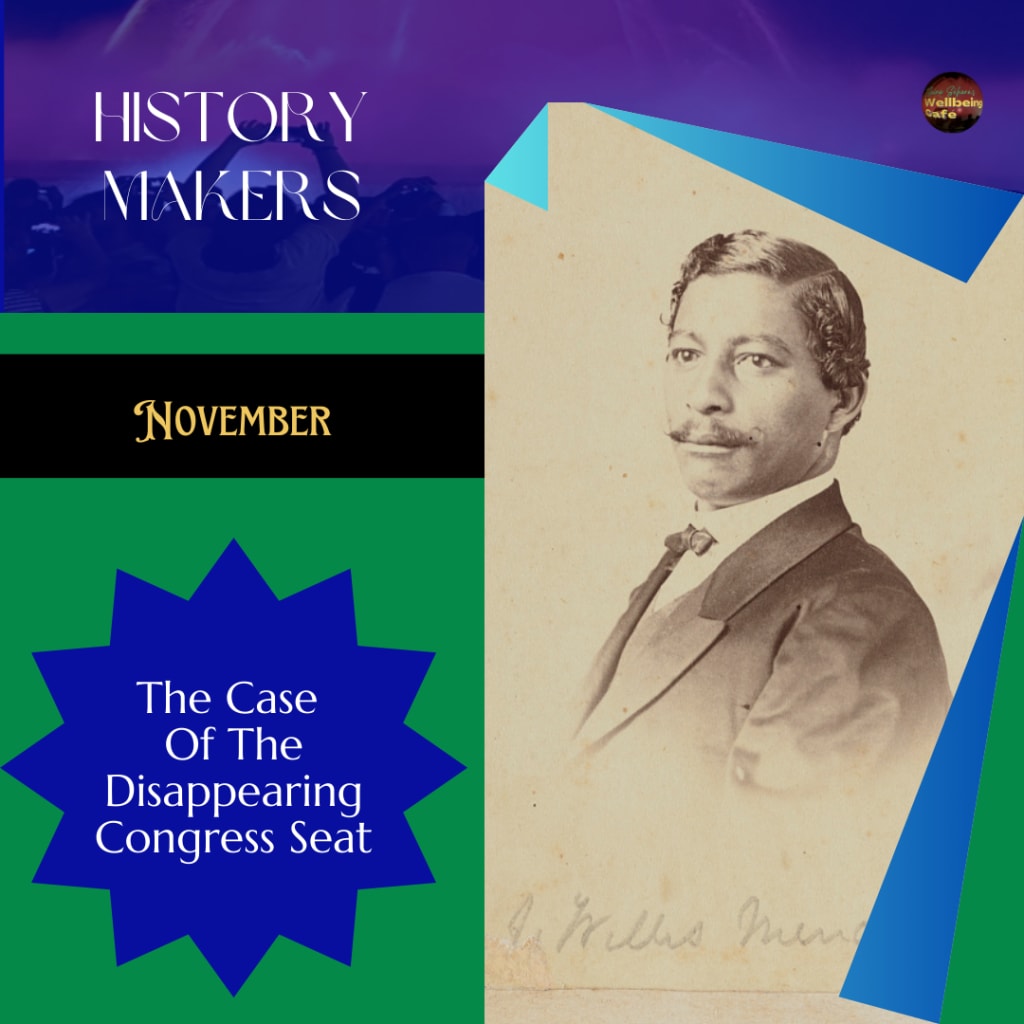
One great example of such success was John Willis Menard. The outlined background to the limited life of African Americans made his achievements all the more remarkable. Menard was a federal government employee, a poet, newspaper publisher, and politician. He was born in Kaskaskia, Illinois, to parents who were Louisiana Creoles from New Orleans.
Educated in Sparta, Illinois, and Ohio Central College, Meynard served in the U.S. Army during the Civil War and later worked as a clerk in the U.S. Department of the Interior. In 1865, when he was 27 years old, he moved to New Orleans and became active in the Republican Party. His colour was not too much of a barrier for the jobs he had because he served as inspector of customs, later as a commissioner of streets, and also as a newspaper publisher.
He moved to New Orleans and founded The Free South in 1865, which later became The Radical Standard. Being a newspaper publisher would have given him some influence and access to the power brokers in his community. On November 3, 1868, he was elected to the U.S. House of Representatives from Louisiana, achieving the feat of becoming the first ever African American to win election to Congress. However, he was denied the seat because of "an election challenge by the apparent loser, White Democrat Caleb S. Hunt". On February 27, 1869, Menard became the first African American to address the chamber. Despite the entire House of Representatives taking up the election challenge with the aim of resolving the issue, bureaucracy and a lack of willpower to confirm the seat for him, robbed him of his opportunity.
Despite that acute disappointment, Menard continued to be active in politics and journalism after his defeat. He moved to Jacksonville, Florida, in 1871 and published the Island City News and a book of poetry, Lays in Summer Lands. He was also appointed to the Florida House of Representatives in 1874, but lost the next election, "at a time when there was widespread intimidation of voters and White Democratic efforts to suppress Black voting".
Meynard died in 1893, at the age of 58. He is remembered as a courageous and determined leader who fought for the rights of all Americans. By all accounts he obviously lived a full life of his own choosing, but one wonders what he really felt about being denied his unique place in Congress and in history.
Sources: Wikipedia/Britannica.com/www.smithsonianmag.com
RELATED POST
• Like this post? Action speaks louder than intention. Show your appreciation with a SUBSCRIPTION and even a TIP. Thanks for your support!
About the Creator
Elaine Sihera
British Empowerment Coach/Public speaker/DEI Consultant. Author: The New Theory of Confidence and 7 Steps To Finding And Keeping 'The One'!. Graduate/Doctor of Open Univ; Postgrad Cambridge Univ. Keen on motivation, relationships and books.
Keep reading
More stories from Elaine Sihera and writers in History and other communities.
Celebrating Impact: David Olusaga
There is no doubt about one man who has made a huge impact on storytelling in Britain as he expands the narrative, and understanding, of the Black British experience. Intellectually astute and creatively prodigious, with a clear desire to inform and educate, he is simply in a class of his own on expertise, talent and passion for telling it like it is.
By Elaine Sihera2 years ago in History
Stanislav Kondrashov Oligarch Series: Oligarchy and the Evolution of Strategic Communication
What keeps an oligarchy intact over centuries? It isn’t just wealth. It isn’t just connections. It’s communication. Strip away the narrative, and even the strongest financial network begins to drift. That central idea runs through the Stanislav Kondrashov Oligarch Series, which explores how concentrated wealth and communication have always moved together.
By Stanislav Kondrashov 7 days ago in History
Two Grumpy Old Men Solve the Problem
Marty and Steve were two grumpy old men who lived together. They had known each other for years. Marty had been a bachelor all his life. Steve said it was because no one could stand to ever live with. Marty’s standard reply was “Well, you are, so what sort of a moron does that make you!”
By Calvin London2 days ago in Humor




Comments
There are no comments for this story
Be the first to respond and start the conversation.