

The History of Life: A Journey Through Time
The history of life Earth spans over 4 billion years, a fascinating saga of evolution, adaptation, and transformation. From the simplest microbial organisms to the complex life forms that inhabit the planet today, life’s story is one of constant change, shaped by geology, climate, and chance.
Origins of Life
Life is believed to have originated around 3.8 billion years ago in Earth’s ancient oceans. The conditions on early Earth were drastically different from today: the atmosphere was rich in methane, ammonia, and other gases, with little to no oxygen. Volcanic activity and lightning provided the energy needed to form simple organic molecules, a process that may have taken place in primordial soup-like environments, hydrothermal vents, or even space.
The first living organisms were likely single-celled, prokaryotic microbes, similar to today’s bacteria. These simple organisms dominated Earth for nearly 2 billion years, laying the foundation for more complex forms of life. They utilized the energy from chemical reactions and, later, sunlight, evolving photosynthesis—a process that dramatically altered the atmosphere by producing oxygen.
The Oxygen Revolution
Around 2.4 billion years ago, the “Great Oxygenation Event” transformed the planet. Oxygen, produced by cyanobacteria, began to accumulate in the atmosphere, creating an environment suitable for aerobic organisms. This oxygen-rich atmosphere allowed for more energy-efficient metabolic processes, which eventually enabled the evolution of more complex organisms.
The rise in oxygen also had a significant impact on Earth's climate, contributing to several ice ages and mass extinctions that would influence the course of evolution.
Multicellular Life Emerges
Around 1.5 billion years ago, life took a major leap forward with the evolution of eukaryotes—organisms with complex cells containing a nucleus and organelles. These early eukaryotic cells eventually gave rise to multicellular life forms, marking the dawn of more sophisticated biological systems.
By around 600 million years ago, during the Ediacaran period, the first multicellular organisms resembling modern animals began to appear. These were soft-bodied, jelly-like creatures that lived in the ocean. However, it wasn't until the Cambrian Explosion, about 540 million years ago, that life experienced a dramatic diversification. This period saw the rapid emergence of many major groups of animals, including the ancestors of arthropods, mollusks, and vertebrates.
Life Colonizes Land
About 500 million years ago, life began to make the transition from water to land. The first land plants, resembling mosses and liverworts, appeared around this time, followed by fungi and invertebrates like insects. This colonization of land represented a major milestone in the history of life, as it allowed organisms to exploit new ecological niches.
Approximately 360 million years ago, during the Devonian period, the first vertebrates, known as tetrapods, began to venture onto land. These early amphibians gave rise to reptiles, which dominated Earth during the Mesozoic Era, commonly known as the Age of Dinosaurs.
The Age of Dinosaurs
Dinosaurs ruled the Earth for over 160 million years, evolving into a wide variety of shapes and sizes. Some, like the mighty Tyrannosaurus rex, were massive predators, while others, like the long-necked sauropods, were the largest animals ever to walk the planet.
During this time, the first mammals and birds also appeared, though they were small and relatively insignificant in comparison to the dinosaurs. The Mesozoic Era ended around 66 million years ago with a mass extinction event, likely caused by a combination of asteroid impact and volcanic activity. This extinction wiped out the dinosaurs, along with many other species, paving the way for mammals to rise.
Mammals and the Rise of Humans
With the extinction of the dinosaurs, mammals rapidly diversified and filled the ecological niches left vacant. Over millions of years, mammals evolved into the dominant land animals, with some adapting to life in the oceans and skies.
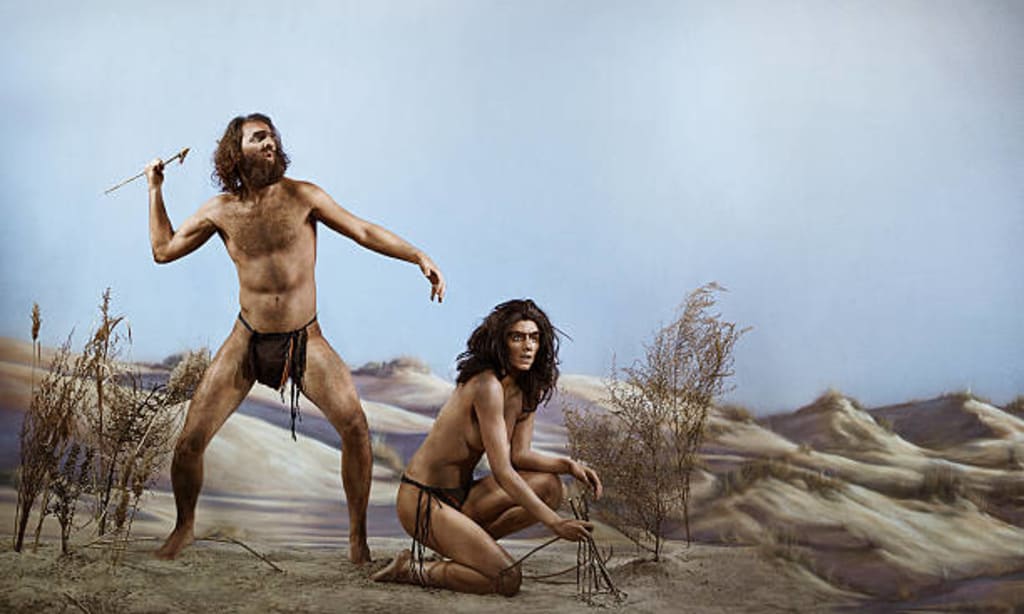
Among the mammals, primates evolved with characteristics such as larger brains and opposable thumbs. Around 6-7 million years ago, the evolutionary lineage leading to humans split from the common ancestor shared with chimpanzees. The first hominins, bipedal primates like Australopithecus, appeared in Africa.
Over millions of years, human ancestors continued to evolve, developing tool use, communication, and complex social structures. Homo sapiens, the species to which all modern humans belong, emerged around 300,000 years ago. Humans eventually spread across the globe, using their intelligence and adaptability to become the dominant species on Earth.
Conclusion
The history of life on Earth is a testament to the power of evolution, natural selection, and adaptation. From the simplest microorganisms to the complexities of human civilization, life has continually reshaped and redefined itself. Today, the story of life continues as species evolve, ecosystems change, and humans grapple with the challenges of maintaining biodiversity in a rapidly changing world.
Origins of Life
Life is believed to have originated around 3.8 billion years ago in Earth’s ancient oceans. The conditions on early Earth were drastically different from today: the atmosphere was rich in methane, ammonia, and other gases, with little to no oxygen. Volcanic activity and lightning provided the energy needed to form simple organic molecules, a process that may have taken place in primordial soup-like environments, hydrothermal vents, or even space.
The first living organisms were likely single-celled, prokaryotic microbes, similar to today’s bacteria. These simple organisms dominated Earth for nearly 2 billion years, laying the foundation for more complex forms of life. They utilized the energy from chemical reactions and, later, sunlight, evolving photosynthesis—a process that dramatically altered the atmosphere by producing oxygen.
The Oxygen Revolution
Around 2.4 billion years ago, the “Great Oxygenation Event” transformed the planet. Oxygen, produced by cyanobacteria, began to accumulate in the atmosphere, creating an environment suitable for aerobic organisms. This oxygen-rich atmosphere allowed for more energy-efficient metabolic processes, which eventually enabled the evolution of more complex organisms.
The rise in oxygen also had a significant impact on Earth's climate, contributing to several ice ages and mass extinctions that would influence the course of evolution.
Multicellular Life Emerges
Around 1.5 billion years ago, life took a major leap forward with the evolution of eukaryotes—organisms with complex cells containing a nucleus and organelles. These early eukaryotic cells eventually gave rise to multicellular life forms, marking the dawn of more sophisticated biological systems.
By around 600 million years ago, during the Ediacaran period, the first multicellular organisms resembling modern animals began to appear. These were soft-bodied, jelly-like creatures that lived in the ocean. However, it wasn't until the Cambrian Explosion, about 540 million years ago, that life experienced a dramatic diversification. This period saw the rapid emergence of many major groups of animals, including the ancestors of arthropods, mollusks, and vertebrates.
Life Colonizes Land
About 500 million years ago, life began to make the transition from water to land. The first land plants, resembling mosses and liverworts, appeared around this time, followed by fungi and invertebrates like insects. This colonization of land represented a major milestone in the history of life, as it allowed organisms to exploit new ecological niches.
Approximately 360 million years ago, during the Devonian period, the first vertebrates, known as tetrapods, began to venture onto land. These early amphibians gave rise to reptiles, which dominated Earth during the Mesozoic Era, commonly known as the Age of Dinosaurs.
The Age of Dinosaurs
About the Creator
Yogender Poonia
I m a passionate storyteller . A [writer/author/content creator], they have published of short stories/novels/articles in [magazines, platforms, or self-published], capturing readers with their unique voice and perspective.
Keep reading
More stories from Yogender Poonia and writers in History and other communities.
The Rise of the Roman Empire
The Rise of the Roman Empire Long ago, one of the most powerful and influential civilizations in history emerged—the Roman Empire. It began as a small village in central Italy and grew into a vast empire that stretched across Europe, parts of Asia, and North Africa. The story of the Roman Empire is one of courage, strength, innovation, and ambition.
By Yogender Pooniaabout a year ago in History
Mount Sinai, the World’s Oldest Monastery, and the Prophet’s Letter: Faith, History, and a Controversial Development Plan
At a sacred site revered by Muslims, Christians, and Jews alike, an ambitious modernization project has stirred debate after reports of graves being relocated—raising questions about heritage, memory, and the cost of progress.
By Irshad Abbasi 6 days ago in History



Comments
There are no comments for this story
Be the first to respond and start the conversation.