
Hatim al-Tai: The King Whose Generosity Became a Legend
A timeless tale of sacrifice, hospitality, and forgiveness that turned Hatim al-Tai into a symbol of generosity across the ages.

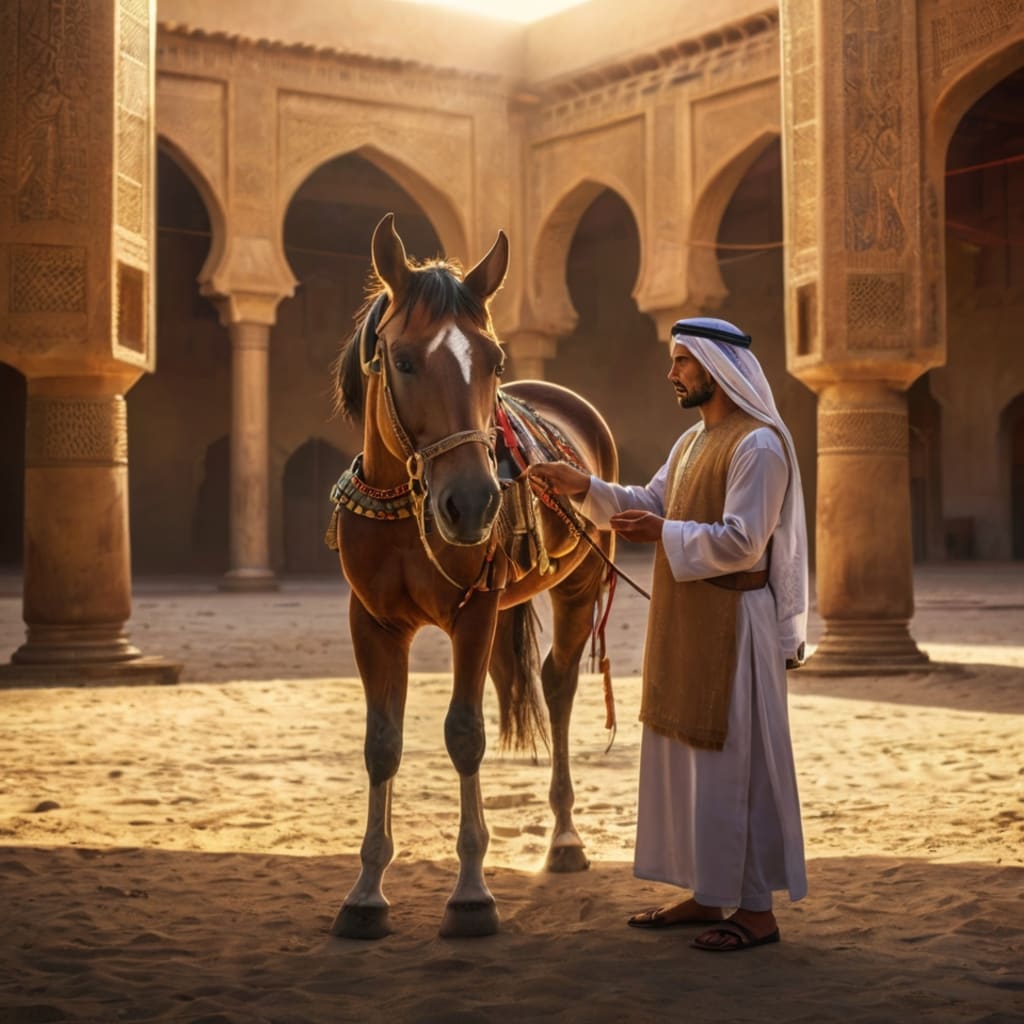
The Legendary Generosity of Hatim al-Tai
BY:Khan
In the Arabian Peninsula, long before the light of Islam spread across the land, society was deeply entangled in ignorance, greed, and cruelty. Yet, amidst the darkness of that era, there were still men of remarkable character whose names became eternal. Among them was Hatim al-Tai, whose generosity became a proverb, celebrated in stories that have echoed for centuries.
Hatim belonged to the tribe of Tayy, from which he received his famous title “al-Tai.” He was a ruler in Yemen, a region neighboring Arabia. While Arab lands at that time were ruled by King Naufal, Hatim’s fame began to overshadow many rulers. His generosity was not limited to his people alone; anyone who came to his door—stranger or friend—was never turned away empty-handed. Travelers, merchants, and even those who came merely to test his reputation all returned with hearts filled by his kindness.
So extraordinary was his generosity that even when the stories were stripped of exaggeration, the truth remained more impressive than myth.
---
The Beloved Horse
One of the most well-known stories about Hatim centers around his beloved horse. This horse was not just valuable in wealth but in personal affection—his companion in hunts and journeys.
One day, a man who had heard of Hatim’s generosity decided to test him. He had learned that Hatim possessed this prized horse and wanted to see if he would truly give it away. The man traveled to Hatim’s palace as a guest.
That same day, Hatim had gone out hunting but returned empty-handed. When informed that a guest was waiting, Hatim immediately ordered his servants to prepare a grand meal. His household, however, explained that there was no fresh meat available. For Hatim, the thought of offering a guest a meal without meat was unacceptable. He could not imagine dishonoring hospitality.
After a moment’s struggle, he gave a heartbreaking command:
“Slaughter my favorite horse and prepare it for the guest.”
Though it pained him, Hatim sacrificed what was most precious to him for the sake of hospitality. The guest was treated with utmost care, dining happily, unaware of the sacrifice behind the meal.
The next morning, as the guest prepared to leave, he thanked Hatim warmly and added:
“I have heard much about your generosity. If you could grant me your beloved horse as a gift, it would be the greatest honor.”
Hatim’s heart sank. He replied gently:
“My honored guest, if only you had made this request a day earlier, I would have gladly fulfilled it. But now, that horse already rests in your stomach. Last night, in my desire to honor you, I had no choice but to slaughter it for your meal.”
The man was struck speechless. Shame washed over him as he realized that his curiosity had cost Hatim his dearest possession. Before leaving, Hatim placed a heavy pouch of gold coins in his hands.
“Take this,” Hatim said, “so that you may purchase a horse even finer than mine.”
The man refused, saying he could not accept it after what had happened. But Hatim insisted:
“I cannot allow my guest to leave unsatisfied. If I could not meet your request for the horse, then at least let this gift make up for it.”
The guest departed in awe, singing praises of Hatim’s generosity to everyone he met.
---
A Plot Against Hatim
King Naufal of Arabia soon grew restless. Hatim’s reputation spread far and wide, and people flocked to him instead of their ruler. Fearing that Hatim’s popularity would undermine his authority, Naufal plotted to have him killed.
He summoned a brave soldier and promised him great wealth if he succeeded in assassinating Hatim. Knowing that Hatim was a man of peace who kept no guards, the soldier disguised himself as a traveler and sought shelter in Hatim’s palace.
That night, while everyone slept, the soldier crept silently into Hatim’s chamber. Drawing his dagger, he prepared to strike. Just then, Hatim turned in his sleep, and the soldier’s blow missed, causing him to stumble forward. Hatim awoke instantly and seized the intruder.
Looking into his eyes, Hatim asked calmly,
“Why would you try to kill me? Was there something lacking in my hospitality?”
Ashamed, the soldier confessed everything—the king’s plot, the promised reward, and his own greed.
Hatim listened and then said with serenity:
“If killing me will bring you fortune, then do it now. Before my servants arrive, take my life if that is what you came for. I will not resist.”
The soldier trembled. He had expected anger, punishment, or death—but instead he faced mercy. Overwhelmed, he fell at Hatim’s feet.
“Forgive me! I see now how wrong I was. From this day on, I will be your loyal servant.”
Hatim not only forgave him but did the unthinkable—he handed him another pouch filled with gold.
“Take this, my guest. I will not have you leave my home empty-handed.”
The soldier, now humbled and devoted, left carrying both the gift and the unforgettable lesson of Hatim’s generosity.
---
The Legacy of Generosity
The stories of Hatim al-Tai traveled across deserts and generations. His hospitality was not just about wealth but about spirit—the ability to sacrifice what was most loved for the sake of others, and to forgive even those who sought his harm.
Later, in the age of Islam, the world would see similar examples in the life of Uthman ibn Affan (RA), whose generosity helped spread the faith far and wide. But Hatim’s legacy from the era of ignorance became a timeless reminder that true nobility lies not in power or possessions, but in giving selflessly.
Hatim al-Tai’s name became eternal—synonymous with generosity. His life remains proof that kindness can outshine cruelty, and that the heart of a single man can leave a light that lasts for centuries.
About the Creator
The Best Bargain in History: How America Bought Alaska for a Song
In the mid-19th century, the idea of purchasing a vast, frozen wasteland thousands of miles away from the American capital seemed like a punchline to a bad joke. Yet, on March 30, 1867, the United States signed a treaty with the Russian Empire to purchase Alaska for **$7.2 million**. At roughly two cents per acre, it would eventually be recognized as one of the most brilliant real estate deals in human history, though at the time, the American public was far from convinced.
By Irshad Abbasi about 11 hours ago in History



Comments
There are no comments for this story
Be the first to respond and start the conversation.