
Hamas Releases First Hostages Under Ceasefire as Aid Flows Into Gaza
"A Fragile Truce: Hostage Releases, Military Withdrawal, and Humanitarian Aid Offer Hope Amid Ongoing Tensions"

A long-awaited ceasefire between Israel and Hamas took effect early Sunday, marking a significant moment in the ongoing conflict. Under the terms of the truce, both sides began taking steps toward de-escalation, starting with the release of hostages and prisoners and the easing of restrictions in Gaza. The ceasefire has already led to a breakthrough: the release of three Israeli hostages, sparking hope for a broader resolution and bringing momentary relief to war-weary populations.
Hostage Release Brings Relief and Jubilation

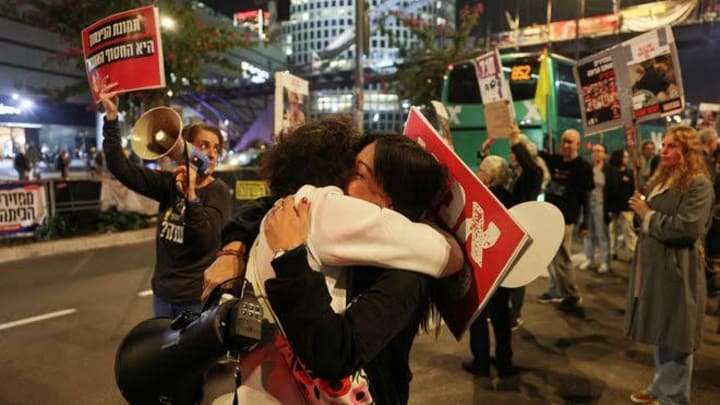
The first tangible outcome of the ceasefire was the release of three Israeli hostages by Hamas into the custody of the International Committee of the Red Cross (ICRC). The hostages, identified as Romi Gonen, Doron Steinbrecher, and Emily Damari, were freed after weeks of captivity. Their release is part of a larger agreement that will see a total of 33 Israeli hostages freed over the next six weeks.
News of the release sparked jubilant celebrations in Tel Aviv, where large crowds gathered to mark the moment. For many Israelis, it was a bittersweet moment of relief mixed with continued anxiety for those still in captivity. Families of the hostages expressed their gratitude while urging both sides to ensure the agreement is upheld in full.
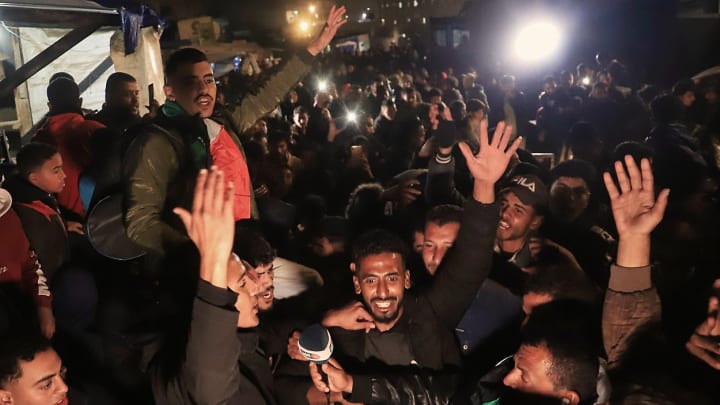
In exchange for the hostages, Israel will release 90 Palestinian prisoners and detainees. The release of Palestinian prisoners is expected to serve as a goodwill gesture to build trust between the two sides, though tensions remain high and skepticism lingers about the long-term viability of the ceasefire.
Military Withdrawal and Shifting Dynamics on the Ground
As part of the ceasefire arrangements, the Israeli military began withdrawing from several locations in southern and northern Gaza. The withdrawal is seen as a critical step in creating the conditions for humanitarian relief and allowing displaced civilians to return to their homes.
For weeks, parts of Gaza have been under intense bombardment, resulting in widespread destruction and the displacement of hundreds of thousands of people. Many Gazans have been forced to seek refuge in overcrowded shelters, often without adequate food, water, or medical supplies. The military withdrawal has given some of these displaced families the opportunity to return to their neighborhoods, though the challenges of rebuilding in the midst of devastation remain immense.
Humanitarian Aid Begins to Flow
With the ceasefire in place, aid trucks carrying much-needed supplies have begun entering Gaza. This marks a critical moment for humanitarian organizations, which have struggled to deliver assistance during the hostilities. The first shipments include food, medical supplies, and fuel – essentials for a population that has endured weeks of deprivation.
Aid agencies have long warned of a looming humanitarian catastrophe in Gaza, where infrastructure has been severely damaged and access to basic services is limited. The influx of aid is a welcome development, but it is only a small step toward addressing the immense needs of the population.
How the Ceasefire Will Work
The ceasefire agreement is designed to unfold in phases over the next six weeks, with incremental exchanges of hostages and prisoners. The immediate release of three Israeli hostages and the corresponding release of Palestinian prisoners represent the first stage of this process. Both sides are expected to carry out further exchanges in the coming weeks, with international mediators monitoring the situation closely.
The agreement also includes provisions for the flow of humanitarian aid into Gaza, aiming to alleviate the dire conditions faced by civilians. The ceasefire is being framed as a temporary truce rather than a permanent resolution, with negotiations expected to continue on broader issues.
A Fragile Peace
While the ceasefire has brought a brief respite from violence, it remains a fragile and tentative peace. The region has seen numerous ceasefires collapse in the past, and both sides remain deeply mistrustful of each other. Critics of the agreement have expressed concerns that it may not address the root causes of the conflict, leaving the door open for future escalations.
For the people of Gaza, the ceasefire offers a glimmer of hope, but it also underscores the enormous challenges that lie ahead. Rebuilding homes, restoring infrastructure, and addressing the psychological trauma of the conflict will require sustained international support. Meanwhile, for Israelis, the focus remains on ensuring the safe return of all hostages and preventing further attacks.
International Response and Future Prospects
The international community has welcomed the ceasefire and urged both sides to honor their commitments. Mediators, including Egypt and Qatar, played a crucial role in brokering the truce, and their involvement will likely continue as the agreement progresses.
As the ceasefire unfolds, the world will be watching closely. While the immediate focus is on the exchange of hostages and prisoners, the ultimate goal must be a more comprehensive resolution to the conflict. For now, the ceasefire provides a much-needed pause in the violence and a chance to address the humanitarian crisis. Whether it can serve as a foundation for lasting peace remains to be seen.
In the coming weeks, the success of the ceasefire will depend on the willingness of both sides to adhere to its terms and on the continued efforts of mediators to keep the process on track. For those affected by the conflict, the hope is that this fragile truce can lead to a more enduring peace.
About the Creator
Reader insights
Outstanding
Excellent work. Looking forward to reading more!
Top insight
Heartfelt and relatable
The story invoked strong personal emotions
Alexander the Great’s Looted Wealth from India: A Historical and Economic Estimation
While his campaigns reshaped the ancient world politically and culturally, one of their most lasting impacts was the massive wealth he acquired from conquered territories, especially during his Indian campaign. This article explores the historical context, nature of the wealth looted from India, and an estimated net worth of that treasure in modern terms—revealing the truly staggering value of what came into Alexander’s hands.
By Say the truth 4 days ago in History
A woman from a vanished female dynasty was discovered buried with 270,000 beads.
In a Copper Age tomb close to Seville, Spain, the Montelirio bead assemblage contains over 270,000 beads that identify the ladies buried there as elites. The discovery is the biggest collection of beads ever
By Francis Damiabout 15 hours ago in History



Comments (1)
This was beautifully written. Thank you for staying up-to-date on world events.