
Government Silence, Community Love
AIDS Memory Under Attack Again
By Rev. Jason Carson Wilson, M. Div.
History's Cruel Echo
World AIDS Day, Dec. 1, should unite America in remembrance.
Instead, we face déjà vu.
The Trump administration has instructed federal employees not to commemorate this sacred day. No government funds for World AIDS Day events. No federal recognition of 36 million global deaths.
Silence returns as policy.
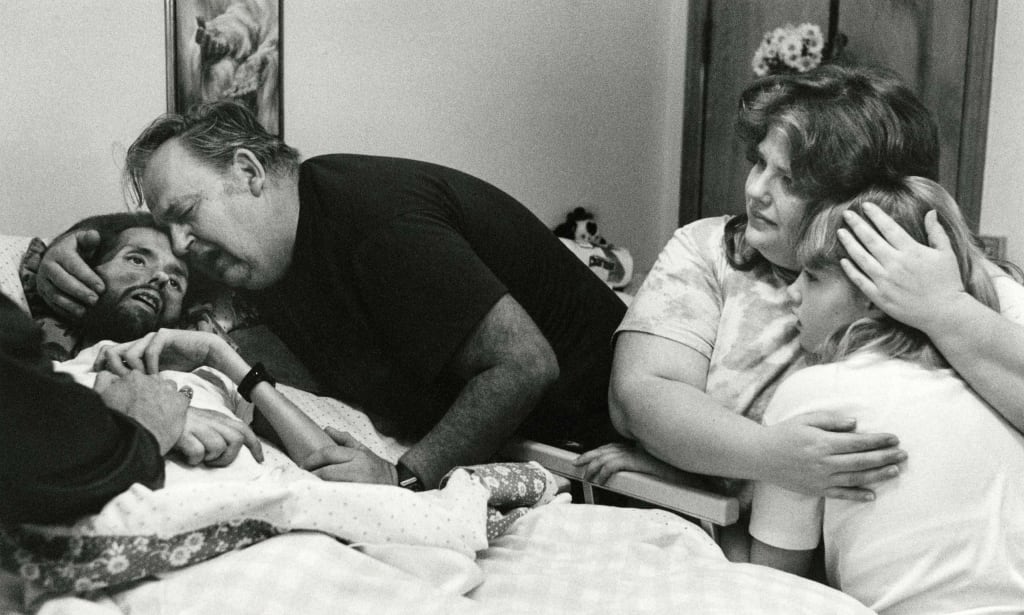
As a Black gay pastor in Washington, D.C., I've walked alongside families devastated by AIDS. This moment feels hauntingly familiar. Power chooses silence when love demands action.
Marginalized communities carry remembrance alone. Again.
Reagan's Deadly Delay
The parallels sting.
Ronald Reagan ignored AIDS for years in the 1980s. Gay men, drug users, communities of color — all deemed expendable by political calculation.
Reagan didn't mention AIDS publicly until 1985. Four years into an epidemic. Thousands already dead.
That silence killed.
Every day without federal action meant more deaths. More families shattered. More communities abandoned.
The message was clear: Some lives matter less.
By 1989, over 100,000 Americans had died from AIDS-related causes. A pandemic spread globally. Early intervention might have contained it.
Instead, governmental indifference created generational trauma.
Grassroots Memory Rises
Communities refused to disappear quietly.
The AIDS Memorial Quilt began in 1987. Activist Cleve Jones created the first panel for friend Marvin Feldman, a 33-year-old actor.
"There's a promise in a quilt," Jones said. "It's not a shroud or tombstone. I don't want to stop remembering."
Each panel told stories government wouldn't acknowledge. Sons and daughters. Partners and friends. Artists and activists.
Lives that mattered deeply to someone.
Today's digital platforms continue this resistance. The AIDS Memorial Facebook page makes every day World AIDS Day. Families share stories. Post photos. Speak names.
Sidney from Peaks Island, Maine, who passed in 1994. Wolfgang Praegert, known as Rydar Hansen. Robert Lee Campbell, who "would have been 67 today."
The page's motto captures truth: "#whatisrememberedlives."
Memory becomes resistance against erasure.
Today's Moral Regression
The State Department's new directive dishonors millions.
This comes precisely when hope should flourish. Effective treatments let people with HIV live full lives. Prevention methods can stop transmission entirely.
Science offers unprecedented possibility. Politics chooses amnesia.
President Biden had restored federal recognition. The White House displayed AIDS Memorial Quilt panels in 2024 — a first.
That gesture acknowledged obvious truth: Government has responsibility to honor the lost and support the living.
The reversal sends chilling messages. To people with HIV: Your lives don't matter enough. To grieving families: Your pain isn't worthy of acknowledgment.
Sacred Work of Memory
Faith traditions understand remembrance as divine command.
"Zakhor" — the Hebrew imperative to remember — appears over 200 times in Scripture. Always a command. Never suggestion.
We remember not just for the past. Memory shapes present and future action.
Jesus said "do this in remembrance of me." Not nostalgia. A practice keeping love alive across generations. Ensuring sacrifice isn't forgotten. Community endures despite death.
World AIDS Day serves this sacramental function globally.
What we choose to remember shapes who we become. Forgetting the AIDS crisis risks repeating failures. Remembering with intention honors dead and living while building justice.
Liberation theologian Gustavo Gutiérrez taught God's "preferential option for the poor." In AIDS, this divine preference extends to all marginalized by power.
Digital Sanctuaries Emerge
The Library of Congress recently digitized AIDS Memorial Quilt archives. Nearly 50,000 panels representing over 105,000 lives now accessible online.
"We have the responsibility to safeguard this history," said Librarian Carla Hayden. "Through every pixel, it can continue to educate, heal, and inspire."
Digital platforms democratize memory. Anyone can contribute to historical record.
The AIDS Memorial Facebook page demonstrates social media's profound potential beyond entertainment. Stories preserve what institutions would erase.
When algorithms bury content, communities amplify voices. When platforms restrict memorial posts, love finds new channels.
Technology serves healing when guided by justice.
Resistance Through Remembrance
Government may choose silence. We cannot.
Faith communities must fill federal voids. Advocacy organizations continue vital work. Ordinary citizens become extraordinary witnesses.
Support AIDS Healthcare Foundation. Contribute to local service organizations. Advocate for PrEP access and treatment availability.
Challenge stigma wherever it appears. Discrimination kills as surely as any virus.
Share stories on social media. Attend memorial services. Light candles. Say names.
Make clear: Love persists when leadership fails.
Sacred Trust Endures
Tomorrow we mark World AIDS Day without federal recognition.
We carry sacred trust transcending political administrations. We remember the lost and fierce love sustaining communities through darkness. We honor dead and living fighting for a world where no one dies from AIDS.
This trust requires being historians and prophets. Preserving past stories while envisioning just futures. Speaking truth to power while extending compassion to all who suffer.
The government may forget. We will not.
Love remembers. Love endures. Love acts.
In the end, love wins.
Rev. Jason Carson Wilson is founder of Politically Pastoral, a progressive media ministry in Washington, D.C. He continues building beloved community through faith-rooted activism.
About the Creator
Rev. Jason Carson Wilson
Politically Pastoral, a media outlet founded by Rev. Jason Carson Wilson, focused on the intersection of faith, politics, and society as well as advocacy for marginalized communities.
Keep reading
More stories from Rev. Jason Carson Wilson and writers in History and other communities.
Our National Nightmare Decimating Dreams
We can’t seem to wake from this current national nightmare. Nearly 60 years ago this week, the Rev. Martin Luther King, Jr. invited us to dream at the Lincoln Memorial’s steps. It’s a dream which some of us had been deluded into thinking would come true soon.
By Rev. Jason Carson Wilson6 years ago in The Swamp
A Crisis of Power, Politics, and the People
The relationship between Venezuela and the United States remains one of the most complicated political dynamics in the Western Hemisphere. Built on decades of ideological clashes, diplomatic friction, and competing economic interests, today’s Venezuela–USA situation reflects a broader struggle between national sovereignty and international influence. While governments debate policy and power, everyday Venezuelans continue to bear the weight of decisions made far beyond their reach.
By Muhammad Islam khan swati4 days ago in History
3 Things That Were Invented for Good Reasons and Used for Terrible Ones
Human history is full of optimism. Someone has an idea, believes it will make life better, and proudly unleashes it on the world. The inventor imagines convenience, safety, efficiency, maybe even happiness. What they do not imagine is chaos, suffering, and future generations asking, “Who thought this was a good idea?”
By Enoch Saginiabout 3 hours ago in History
"Hear Me Out"
"Hear me out, what if we ran away together?" "Where do you want to go?" "Anywhere but here. We could move to a new city or to Canada, or we could disappear from society to live in the middle of the woods. Maybe a combination of two of those things would be good. What do you say?"
By Kay Husnick7 days ago in Fiction



Comments
There are no comments for this story
Be the first to respond and start the conversation.