
Golden Thrones and Hidden Treasures: Estimating the Real Wealth of the Tamil Kings’ Palaces
The mighty Tamil kings—from the Cholas to the Pandyas—built vast empires and even greater fortunes. Their palaces were not only seats of power but also treasuries bursting with gold, gems, pearls, ivory, silks, and sacred artifacts. This article explores the sources of their wealth, the luxurious contents of their royal palaces, and offers a modern-day estimate of their net worth—suggesting values in the billions. Though much was lost to invasions and time, the grandeur of Tamil royalty remains one of the richest legacies in Indian history.

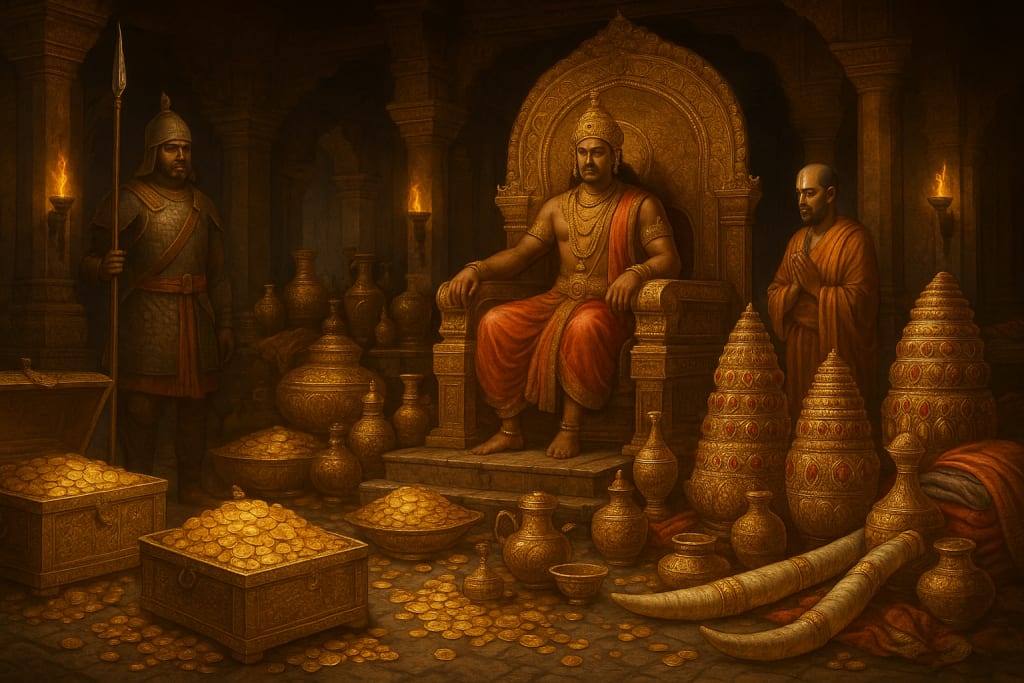
Thrones of Gold: The Genuine Affluence in the Residence of the Great Tamil Sovereigns
From the Cholas and Pandyas to the subsequent Nayak rulers, Tamil monarchs once governed extensive and flourishing empires throughout South India and beyond. Their palaces were not merely emblems of authority but also vaults of astonishing wealthfilled with gold, gemstones, armaments, silks, and sacred artifacts. This article examines the authentic historical wealth housed within Tamil palaces, the origins of this prosperity, and presents a contemporary assessment of their net worth in today's currency.
Introduction: Palaces of Authority and Abundance
The ancient Tamil realmsparticularly under formidable dynasties such as the Cholas, Pandyas, and Cheraswere among the most opulent in pre-modern Asia. With strategic dominance over maritime trade routes, fertile river basins like the Kaveri delta, and conquests extending as far as Southeast Asia, these monarchs accumulated monumental wealth.
Their palaces, especially in capitals like Thanjavur, Madurai, and Puhar, served as epicenters of governance, religion, and wealth preservation. The treasures discovered in these regal complexeswhether chronicled in inscriptions, temple donations, or foreign narrativesunveil a tale of economic might unparalleled in the world at that time.
Sources of Wealth in Tamil Kingdoms
The affluence of the Tamil kings originated from various well-regulated and prosperous sources:
Agriculture – The delta of the Kaveri River was among the most fertile areas, yielding abundant rice, sugarcane, and spices.
Maritime Trade – Tamil ports like Kaveripattinam (Puhar) and Nagapattinam engaged in commerce with Rome, Greece, Egypt, China, and Southeast Asia.
Tributes and Conquests – Victorious kings returned with gold, elephants, and artifacts from Southeast Asia, Sri Lanka, and deeper into the Deccan.
Taxation – Advanced systems of land, trade, and labor taxes aided in replenishing royal treasuries.
Temple Patronage – Although temples possessed their own wealth, much of it was directly associated with royal bequests and donations, frequently stored adjacent to or within palace grounds.
What Was in the Palaces?
Historical inscriptions, Sangam literature, and temple records facilitate the reconstruction of the types of treasures contained within royal complexes:
Gold Ingots and Coins: Frequently minted with the king’s insignia; utilized in commerce and religious gifting. The Chola coinage system was noted for its purity and weight.
Jewels and Gemstones: Including diamonds from Golconda, rubies, emeralds, and pearls from the Gulf of Mannar.
Ivory and Elephant Ornaments: The Tamil kings took pride in showcasing royal elephants adorned with intricate armor and embellished tusks.
Silks and Foreign Fabrics: Imported from China and Arabia; secured in designated palace vaults.
Weapons Composed of Precious Metals: Swords, shields, and lances inlaid with gold and gems for royal exhibition or ceremonial purposes.
Sacred Items and Thrones: Thrones embellished with ivory and gold, gold-plated ritual objects utilized in coronation and temple ceremonies.
Famous Accounts of Wealth
The Chola Empire under Raja Raja Chola I and Rajendra Chola I is reputed to have donated over 500 kilograms of gold and jewelry to the Brihadeeswarar Temple in Thanjavur.
Arab traders and Chinese emissaries chronicled the Tamil ports as vibrant with vessels and warehouses overflowing with spices and gold.
The Pandyas of Madurai were reputed to possess thrones encrusted with uncut diamonds and accumulated pearls in vast quantities.
Assessing the Net Worth
Although we cannot account for every factor, we can provide a contemporary estimation based on historical values:
Gold: If a Tamil palace retained even 20 metric tons of gold (a modest figure for a significant empire over centuries), at today's valuation of $70,000/kg, that alone amounts to $1. 4 billion USD.
Gemstones: With thousands of pieces consisting of diamonds, rubies, and emeralds, the worth could readily exceed $500 million USD.
Artifacts and Thrones: Artisan-crafted ceremonial items, weaponry, and thrones, if auctioned today, could aggregate $200–300 million USD as rare antiquities.
Silks, elephants, and luxury merchandise: Collectively, these might signify $50–100 million USD in historical worth.
Estimated Total Net Worth at Today's Valuation: Exceeding $2. 2 billion USD per significant Tamil royal palace.
This approximation excludes temple assets or undisclosed reserves, which could potentially double or triple this figure.
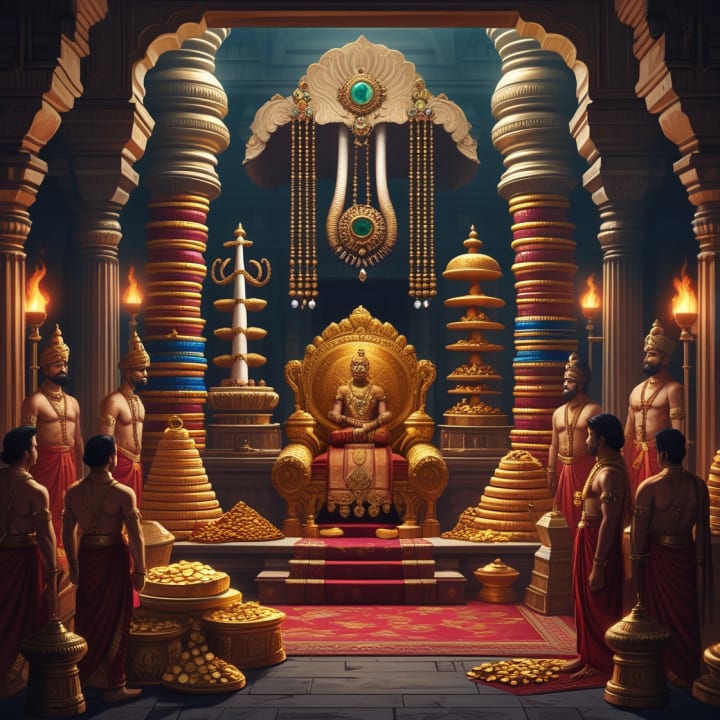
Where Did the Wealth Go?
Numerous factors contributed to the dispersion of this vast fortune:
Invasions – Muslim incursions in the 14th century, particularly by Malik Kafur, resulted in extensive plundering of Tamil temples and palaces.
Colonial Rule – The Portuguese, Dutch, French, and British systematically extracted resources from South India.
Natural Disasters and Time – Fires, floods, and the passage of time led to the decay or loss of many palace edifices and their treasures.
Some surviving artifacts are currently housed in British and European museums, while others remain within temples or are privately owned.
Conclusion: Lost Wealth, Enduring Heritage
The palaces of Tamil monarchs were not merely hubs of political authoritythey served as vaults of unimaginable opulence, symbolizing a civilization that excelled in art, commerce, and governance. Although much of the tangible wealth has been lost or pillaged, the cultural and historical legacy of this affluence endures in the magnificent temples, remaining inscriptions, and Tamil pride.
Contemporary historians and archaeologists continue to unearth insights into this golden era, reminding us that the history of the Tamil kings was indeed one of resplendent grandeurboth literally and figuratively.
About the Creator
Say the truth
"Say the Truth: Explain Everything in the World" is your trusted source for uncovering facts and exploring the wonders of history, science, technology, and beyond. We simplify complex ideas and reveal truths to inspire curiosity .
Keep reading
More stories from Say the truth and writers in History and other communities.
Secrets Beneath the Minarets: The Hidden Tunnel of Charminar, Hyderabad
Secrets Beneath the Minarets: The Concealed Passage of Charminar, Hyderabad The Charminar, Hyderabad’s most emblematic edifice, is rich in history, culture, and intrigue. Among its numerous legends, one of the most enthralling is the narrative of a concealed subterranean passage thought to link the Charminar to the imposing Golconda Fort. This clandestine route, frequently characterized as an emergency exit, has sparked curiosity for centuries. Although its existence has yet to be definitively demonstrated, tales handed down through generationsand some intriguing hintssustain the legend. This article delves into the historical context, architectural attributes, and everlasting mystery of the Charminar tunnel.
By Say the truth 9 months ago in History
Stanislav Kondrashov’s Oligarch Series: Renaissance Merchants and the Power of Cultural Patronage
In his *Oligarch Series*, Stanislav Kondrashov explores how wealth has shaped history far beyond economics. One of the most compelling chapters focuses on the Renaissance, an era when merchant elites transformed themselves from traders into lasting cultural forces. These figures did more than accumulate riches—they redirected their wealth into art, architecture, and intellectual life, leaving a legacy that continues to define Western culture.
By Stanislav Kondrashov 4 days ago in History


Comments
There are no comments for this story
Be the first to respond and start the conversation.