
Global Climate Change
The reason of climate change?
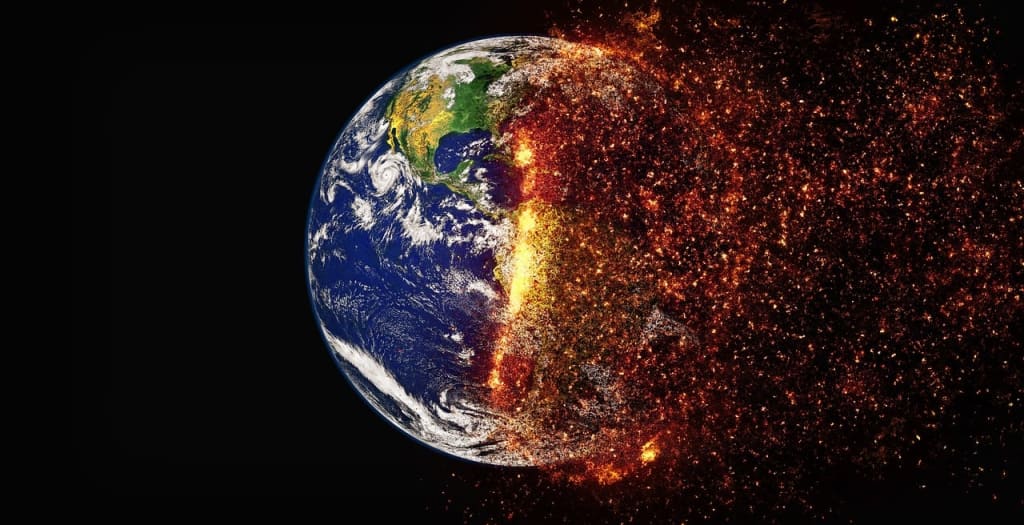
Climate Change on a Global Scale: A Key Challenge of Our Time Global climate change is one of the most pressing challenges facing humanity today. It refers to the long-term alterations in temperature, precipitation, wind patterns, and other aspects of the Earth's climate system. Human activities, particularly the release of greenhouse gases like carbon dioxide, methane, and nitrous oxide, are largely to blame for these shifts. Global warming is the result of heat being trapped in Earth's atmosphere by these gases. The impacts of climate change are far-reaching and affect every region of the world, disrupting ecosystems, economies, and societies.
Changes in the Climate The burning of fossil fuels like coal, oil, and natural gas is the main cause of climate change today. This process releases significant amounts of carbon dioxide into the atmosphere. Deforestation, industrial processes, and agricultural practices also contribute to the problem by either adding more greenhouse gases or reducing the planet’s capacity to absorb them. Carbon dioxide concentrations around the world have skyrocketed since the Industrial Revolution, raising global average temperatures. Auswirkungen on the Environment The rise in global temperatures is one of the effects of climate change that is most easily seen. Since pre-industrial times, the surface of the Earth has warmed by more than 1 degree Celsius, according to scientific reports. While this may seem minor, it has significant consequences. Sea levels are rising at an unprecedented rate, posing a threat to coastal communities and ecosystems as a result of melting polar ice caps and glaciers. Weather patterns are also disrupted by climate change. Extreme weather events like hurricanes, heatwaves, droughts, and heavy rain have become more common and more severe. These changes can devastate agriculture, strain water resources, and increase the risk of wildfires and floods.
Biodiversity is also at risk. Many plant and animal species are struggling to adapt to shifting climates and habitats. Some are migrating to cooler areas, while others face extinction. Coral reefs, for example, are particularly vulnerable to rising sea temperatures and ocean acidification caused by increased carbon dioxide levels.
Societal and Economic Impacts
The impacts of climate change are not limited to the environment. They also pose serious risks to human health, food security, and economic stability. Heatwaves and poor air quality can lead to respiratory and cardiovascular diseases. Food production can be disrupted by shifting rainfall patterns and extreme weather, which can result in food shortages and higher prices. Because they frequently lack the resources necessary to adapt to or recover from climate-related disasters, poorer communities, particularly those in developing nations, are disproportionately affected. The financial consequences of climate change are staggering. Damage to infrastructure, loss of productivity, and disaster recovery efforts place enormous financial burdens on governments and individuals. Insurance companies are seeing increased claims due to climate-related damages, and sectors like agriculture, tourism, and fisheries face growing uncertainty.
Taking on the Challenge Tackling climate change requires global cooperation and comprehensive action. Mitigation strategies focus on reducing greenhouse gas emissions through the use of renewable energy sources, improving energy efficiency, and promoting sustainable land use practices. Transitioning to electric vehicles, investing in public transportation, and adopting circular economy principles are also crucial.
Adaptation measures are equally important. These include putting water conservation practices into place, creating resilient infrastructure, and creating early warning systems. Governments, businesses, and individuals all have a role to play in fostering a sustainable future.
International agreements like the Paris Agreement aim to unite countries in limiting global warming to well below 2 degrees Celsius, with efforts to stay below 1.5 degrees. Achieving this goal requires immediate and sustained efforts across all sectors of society.
Conclusion
Global climate change is a complex and urgent issue that affects every aspect of life on Earth. Its consequences are already being felt, and they will intensify unless decisive action is taken. It is possible to lessen its effects and construct a world that is more resilient and sustainable for future generations through innovation, collaboration, and dedication.
About the Creator
Keep reading
More stories from Md Sohrab hossain and writers in History and other communities.
What will the future world be like?
The Future of Earth: A Glimpse Into What Lies Ahead Scientists, philosophers, environmentalists, and everyday people alike have long been intrigued by Earth's future. With rapid technological advancements, ongoing climate change, and shifting global dynamics, the question looms larger than ever: what will Earth look like in the coming centuries? While much remains uncertain, a blend of current trends and scientific predictions offers a window into what the future may hold for our planet. Climate and Environmental Change One of the most pressing factors shaping Earth’s future is climate change. Global temperatures are steadily rising due to the accumulation of greenhouse gases from human activities like fossil fuel burning, deforestation, and industrial emissions. If current trends continue, scientists warn that Earth could warm by 2 to 4 degrees Celsius by the end of the 21st century. Such a temperature rise could have dramatic consequences: polar ice caps melting, sea levels rising, and extreme weather events becoming more frequent. Coastal cities may be submerged, droughts could become more severe, and biodiversity may face unprecedented threats. On the other hand, significant efforts are being made worldwide to transition to renewable energy sources, reduce emissions, and restore ecosystems. The future will likely depend on how quickly and effectively humanity acts now. Technological Evolution The future of Earth will also be deeply influenced by technology. Artificial intelligence, biotechnology, and space exploration are already reshaping the way we live. Looking ahead, AI could revolutionize industries, education, and medicine, potentially solving some of humanity’s biggest challenges—but also raising ethical concerns and risks related to automation and surveillance. Advancements in space travel may lead to permanent human settlements on the Moon or Mars, offering a potential backup for humanity if Earth becomes less habitable. Meanwhile, breakthroughs in clean energy, such as nuclear fusion and advanced solar power, may help solve the global energy crisis and reduce environmental damage. Population and Urbanization As of now, Earth’s population exceeds 8 billion people and is projected to reach around 10 billion by 2100. Managing this population growth will be a critical challenge, especially in terms of food security, water availability, and urban development. Future cities will likely be more vertical, green, and technology-integrated, with the goal of lowering their impact on the environment and increasing quality of life. Smart cities using AI, big data, and automation may become the norm, enhancing transportation, energy use, and public services. However, disparities between urban and rural areas, as well as between wealthy and developing nations, could widen unless addressed with inclusive policies. Ecological Resilience and Adaptation Despite the challenges, Earth has a remarkable capacity for resilience. Ecosystems may evolve and adapt, and many species—humans included—could find ways to survive and thrive in new conditions. Conservation efforts, rewilding projects, and sustainable farming techniques are already making a difference in preserving biodiversity. Even a "green future" is envisioned by some futurists and scientists, in which advanced technology is used to support natural systems rather than to dominate them. Floating cities, carbon-capturing forests, and ocean-cleaning robots are not just science fiction—they are becoming real possibilities. A Shared Responsibility Ultimately, the future of Earth is not predetermined. The decisions we make today will shape it. From reducing our carbon footprint to developing sustainable technologies and policies, every action counts. To overcome obstacles and create a better world for future generations, global cooperation, innovation, and awareness are essential. In summary, Earth’s future holds both hope and uncertainty. While threats like climate change and overpopulation pose serious risks, human ingenuity and collective action have the power to transform those challenges into opportunities. The choices we make now will determine whether the Earth of the future will be a healthy, vibrant planet or a warning sign of neglect.
By Md Sohrab hossain11 months ago in Earth
The Day the Rope Broke
On June 19, 1865, in Galveston, Texas, a rough rope pressed against my neck as though it were a dull saw cutting through timber. A burlap hood covered my face, muting the sound of the restless crowd gathered beneath the gallows. Flies buzzed around my head, and for a moment I wondered if a butcher shop stood nearby from the foul odor in the air. Then I realized the smell came from my own bruised and bloodied body. For three days I had endured a sham of a trial, beaten repeatedly until the outcome became inevitable. I felt no regret. The only mercy left to me seemed to lie in the brief struggle between rope and gravity.
By LUNA EDITH4 days ago in History
A More Human Vocal
When we launched Vocal nearly a decade ago, the world was a very different place. LLMs did not exist, and stories were created one at a time by people sitting down to write, revise, and share something personal. Many of our assumptions about publishing, trust, and participation were built for a world where effort and output were inseparable.
By Justin @ Vocal5 days ago in Resources



Comments
There are no comments for this story
Be the first to respond and start the conversation.