
George Boldt Built a Fairy-Tale Castle for His Wife, But His Dream Was Shattered by Tragedy
It was left as an unfinished symbol of heartache

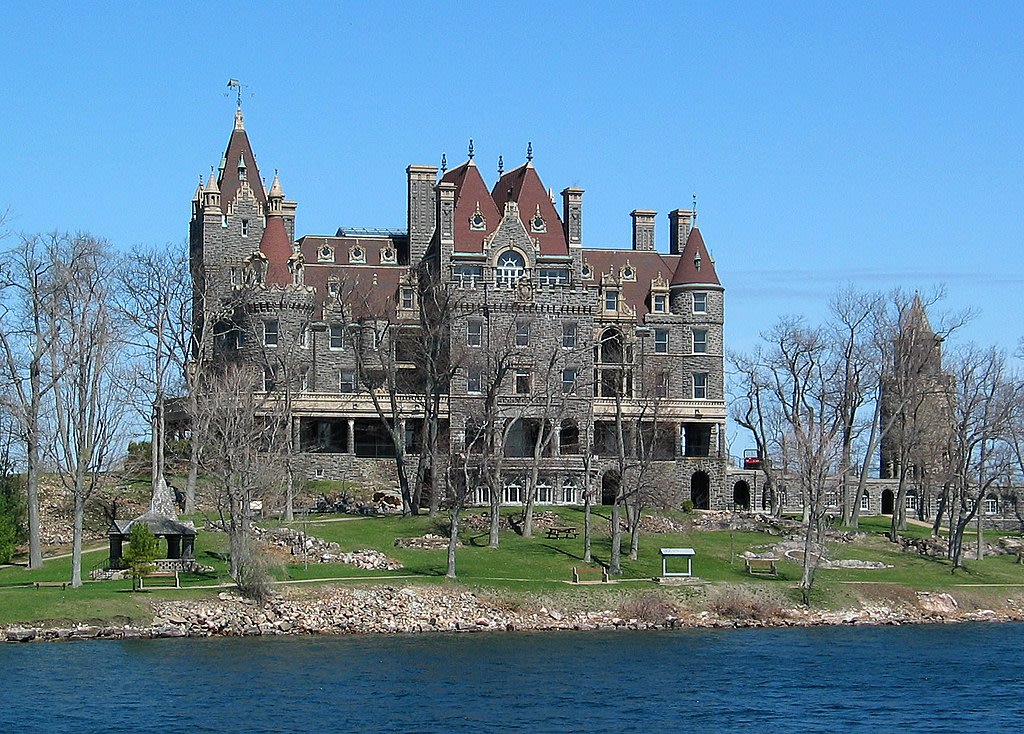
George C. Boldt was born on the German island of Rügen in the Baltic Sea in 1851, surrounded by a picturesque landscape dotted by castles. After moving to America at 13, his life became the definition of a rags-to-riches story. It isn’t every day that a poor immigrant working in a small hotel kitchen during the last year of the Civil War becomes known as the “inventor of the modern hotel.”
Boldt worked in the kitchen of various hotels in New York City and eventually secured a position at the Philadelphia Hotel when he was 25. A while after working there, he met Louise Kehrer, who became the love of his life. Only a year later, he and Louise were married and quickly started a family. They had their son, Charles in 1879 and their daughter Clover in 1883.
Rags to Riches
Louise was actually the daughter of the Philadelphia Hotel’s steward and was no stranger to the hotel business. Her father aided her new husband in raising money to set up his first small hotel, the Bellevue, which sat on the corner of Broad and Walnut Streets. Soon after, he purchased the Stratford Hotel that sat across the street. In a twist of fate, a frequent guest of the Bellevue, William Waldorf Astor, asked Boldt to come work for him in what would later become the Waldorf Astoria Hotel in New York City, the largest hotel in the world at the time.
At the Waldorf Astoria, Boldt and his wife worked together to ensure that the guests were treated like royalty during their stay. He managed the business side of the hotel and Louise decorated the rooms, providing patrons with the most beautiful flowers, candles, and even pincushions. They stood by the adage “the customer is always right.”
As much as Boldt was honored by his position at the Waldorf Astoria, he still had a dream of owning a large hotel of his own. In 1902, he expanded the Stratford and combined it with the Bellevue to create the immensely ornate Bellevue-Stratford Hotel, which became an instant success.
19 stories and thousands of guest rooms housed newly invented flush toilets, an 11,600 square-foot ballroom, and an electrical system personally designed by Thomas Edison. Also introduced to the hotel world were room service, the velvet rope, fresh flowers, and candles on dining tables, allowing men to smoke in the presence of women, and eliminating separate male and female entrances.
The Beginning of Boldt Castle
During the Boldt's’ downtime, they frequented Hart Island in the Thousand Island region of the St. Lawrence River during vacations. George had the name changed to “Heart Island” and had part of the shoreline removed to have the island resemble a heart to honor his love Louise and their undying affection. This wasn’t nearly enough, however. Louise was a princess in his eyes, and every princess deserves a castle of their very own.
In 1899, George planned the construction of a castle, modeled after those he was raised near in Rügen. He hired 300 construction workers and craftsmen to design and build the massive stone structure. The projected date was on Valentine’s Day 1904 (also Louisa’s birthday and five years from the start of the construction). His contributions to the design included hearts in the statues, flower beds, and in the stained glass that made up the castle.
In a sad turn of events, Louise suddenly died just one MONTH before the grand unveiling of the castle that her husband had worked so diligently to create for her. George was completely devastated as he found out that his soul mate, the love of his life, was gone at the age of 31. He immediately sent a telegram advising the workers to halt the construction of the castle immediately. George Boldt never again returned to Heart Island and never completed the castle, as his princess was gone.
What Happened to Boldt Castle?
George Boldt died in 1916 and flags were flown at half-staff across New York City. He was very loved, highly respected, and at the turn of the century, was the highest-paid employee in the United States.
The castle was sold to Edward Noble in 1920. Unfortunately, it fell victim to vandalism and deteriorated from the elements. In 1977, the Thousand Islands Bridge Authority purchased the property and completed the construction of the castle. The castle now sits six stories high and is made up of 120 rooms.
Its first floor was completely restored and represents the interior style that George and Louise would have preferred, complete with furnishings from that era. The Italian Gardens on the property have become one of the top spots for proposals in the area. The Alster Tower, the Dove-Cote, the Entry Arch, the Gazebo, and the Power House are other structures on the island that draw visitors to the site daily, May through October.
***Story previously published on Medium.com by the author***
About the Creator
Kassondra O'Hara
Working mom who uses her curiosity to fuel the curiosities of others ~ Writes mostly history and true crime
Keep reading
More stories from Kassondra O'Hara and writers in History and other communities.
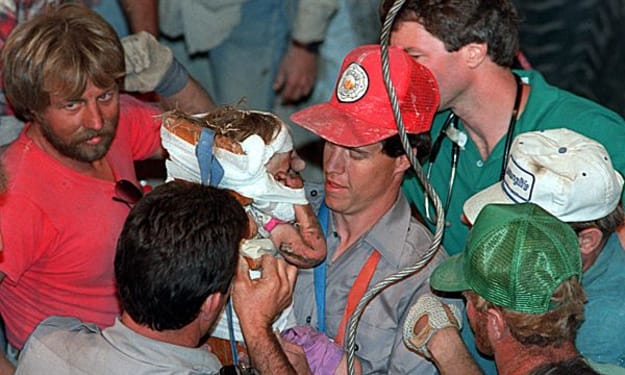
The Rescue That Captivated the World: Baby Jessica, the Little Girl in the Well
Parents always want to protect their children. We try our best to shield them from the horrors of the world, the evil that lies within some souls, and the freak accidents that just seem to happen. We try to make our homes the safest place possible for them to be able to learn and grow. Sometimes, disaster finds us regardless of what steps we take.
By Kassondra O'Hara2 years ago in History
The Catastrophic Aftermath of the Dinosaur-Killing Asteroid
Approximately 66 million years ago, the Earth experienced one of the most dramatic and catastrophic events in its history: a massive asteroid, now identified as the Chicxulub impactor, collided with the planet near what is today the Yucatán Peninsula in Mexico. Measuring roughly 10 kilometers in diameter, this space rock unleashed energy equivalent to billions of atomic bombs, marking the end of the Cretaceous period and triggering a chain of events that wiped out approximately 75% of all species on Earth, including the iconic non-avian dinosaurs.
By Irshad Abbasi a day ago in History



Comments
There are no comments for this story
Be the first to respond and start the conversation.