
Geoffrey Hinton and the Nobel Prize: Revolutionizing Artificial Intelligence
Geoffrey Hinton’s Role at Google Brain

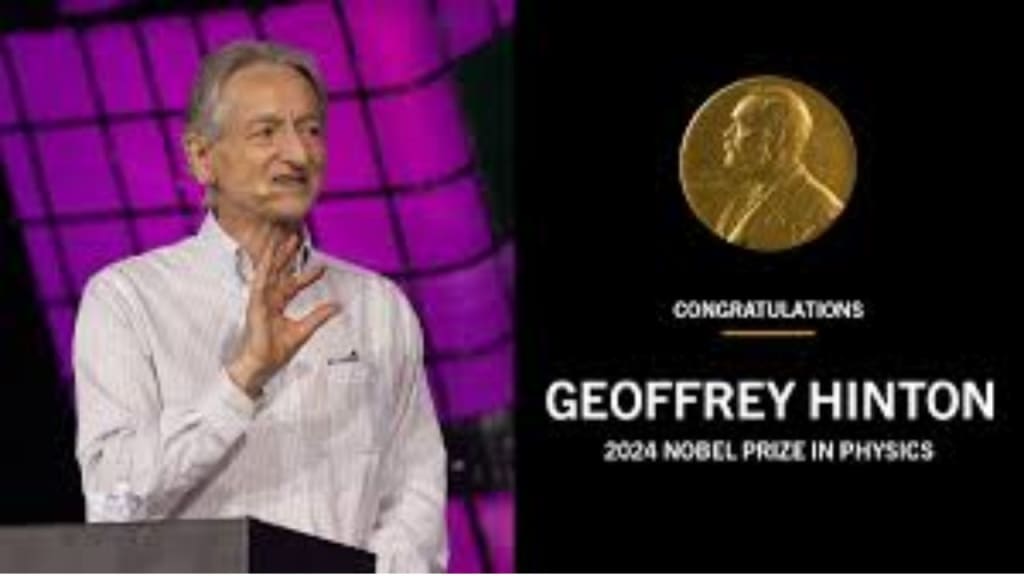
Geoffrey Hinton, often referred to as the “Godfather of AI,” has been one of the most influential figures in the field of artificial intelligence (AI). His groundbreaking work in neural networks and deep learning has transformed industries, from healthcare to autonomous driving, and has laid the foundation for modern AI. While Hinton hasn't yet been awarded a Nobel Prize, his contributions to science and technology have made him a prime candidate for such recognition in the future.
Geoffrey Hinton’s Early Life and Education
Born in Wimbledon, London, in 1947, Geoffrey Hinton grew up in a family deeply connected to science. His great-great-grandfather, George Boole, was a mathematician famous for creating Boolean algebra, which laid the foundation for computer science. Hinton pursued a bachelor's degree in experimental psychology from the University of Cambridge and later earned his Ph.D. from the University of Edinburgh in Artificial Intelligence.
From an early age, Hinton was fascinated by how the brain works, leading him to study cognitive psychology and computational models of learning. This fascination became the driving force behind his work in AI.
Hinton’s Groundbreaking Work in Neural Networks
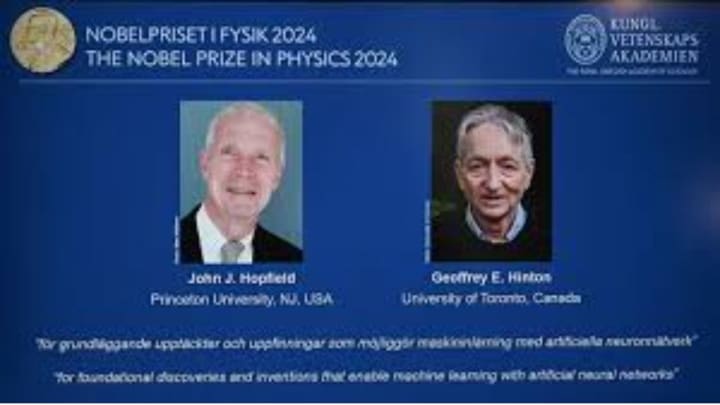
Geoffrey Hinton's most significant contribution to AI has been in the development and popularization of artificial neural networks—systems designed to mimic the functioning of the human brain. His research focused on machine learning algorithms capable of “learning” from data, much like how humans learn through experience.
In 1986, Hinton co-authored a paper that introduced the backpropagation algorithm, a technique that allows neural networks to adjust their weights during training, thereby improving their ability to make accurate predictions. This breakthrough was foundational to the modern field of deep learning, which is the backbone of contemporary AI applications, from voice recognition systems to advanced robotics.
The Impact of Hinton’s Research on AI
Hinton's work had a transformative impact across multiple sectors. Some of the key areas where his contributions made a difference include:
Healthcare:
AI systems trained with deep learning algorithms have revolutionized medical diagnostics. Neural networks have enabled computers to accurately detect diseases, such as cancer, by analyzing medical images with a precision often exceeding that of human doctors.
Autonomous Driving:
Hinton’s research in deep learning has enabled AI systems to process vast amounts of visual data, a critical component for the development of self-driving cars. AI-powered vehicles use neural networks to identify objects, predict road conditions, and make real-time driving decisions.
Natural Language Processing (NLP):
Hinton’s work has also had a profound effect on the way machines understand and generate human language. AI models, such as ChatGPT, use deep learning techniques inspired by Hinton’s work to improve language comprehension and conversation.
Geoffrey Hinton’s Role at Google and the AI Revolution
In 2013, Hinton joined Google as a part of its Brain Research Team, where he continued to push the boundaries of AI research. His work focused on improving AI's ability to process unstructured data, making significant advancements in image recognition and speech processing. Hinton's research paved the way for AI applications, such as Google Photos and Google Translate, to become more efficient and accurate.
One of Hinton’s notable contributions at Google was the development of "capsule networks," a more advanced type of neural network designed to understand hierarchical relationships in visual data. This technology further enhances AI's ability to interpret complex information, opening up new possibilities for future AI systems.
Will Geoffrey Hinton Win the Nobel Prize?
Despite his monumental contributions to AI, Geoffrey Hinton has yet to receive a Nobel Prize. One reason is that the Nobel Prize in Physics or Chemistry is typically awarded to discoveries with direct, measurable impacts in those fields, while Hinton’s work sits at the intersection of computer science, cognitive science, and neuroscience.
However, there have been growing calls within the scientific community for a Nobel Prize category recognizing breakthroughs in AI and computational science. Given Hinton’s role in revolutionizing the field of AI, he remains a strong contender should such a prize be introduced.
In the meantime, Hinton has already been awarded the Turing Award (2018), widely considered the "Nobel Prize of Computing," alongside his colleagues Yann LeCun and Yoshua Bengio. The trio was recognized for their work in deep learning, which is the core of today’s most advanced AI systems.
Hinton’s Legacy in Artificial Intelligence
Whether or not Geoffrey Hinton ever receives a Nobel Prize, his legacy in AI is already cemented. As one of the pioneering minds behind the deep learning revolution, Hinton’s research has had a profound impact on both technology and society. His work has helped AI move from theoretical research to practical applications that touch millions of lives every day.
Hinton’s continued research and his efforts to democratize AI education through courses and lectures show that his influence on the next generation of AI researchers will endure for many years to come. In an age where AI is increasingly integrated into daily life, Hinton's contributions serve as a reminder of how far the field has come and how much further it can go.
Frequently Asked Question
Who is Geoffrey Hinton?
Geoffrey Hinton is a renowned computer scientist and cognitive psychologist known for his pioneering work in artificial intelligence, particularly in the development of neural networks and deep learning.
Why is Geoffrey Hinton referred to as the "Godfather of AI"?
Hinton earned this title due to his foundational work on neural networks and his deep learning breakthroughs, which are key technologies powering modern AI systems like image recognition and natural language processing.
What is Geoffrey Hinton’s most significant contribution to AI?
Hinton’s most significant contribution is his development of the backpropagation algorithm, which allows neural networks to adjust their weights during training, greatly improving their learning capabilities.
Has Geoffrey Hinton won the Nobel Prize?
As of now, Geoffrey Hinton has not won the Nobel Prize. However, his groundbreaking work in AI makes him a strong contender if a Nobel category recognizing AI or computational sciences is ever established.
What awards has Geoffrey Hinton received for his work?
In 2018, Hinton received the Turing Award, often called the "Nobel Prize of Computing," alongside his colleagues Yann LeCun and Yoshua Bengio for their contributions to deep learning.
How has Geoffrey Hinton’s work impacted industries?
Hinton’s research in AI has had a profound impact across various sectors, including healthcare (AI in diagnostics), autonomous driving (AI in self-driving vehicles), and natural language processing (AI in virtual assistants).
Why hasn’t Geoffrey Hinton received the Nobel Prize yet?
The Nobel Prize traditionally focuses on fields like Physics, Chemistry, and Medicine, while Hinton’s work lies at the intersection of computer science and cognitive science. There is currently no specific Nobel category for AI or computing.
What is the Turing Award, and how does it relate to Hinton?
The Turing Award is the highest honour in computer science, often regarded as the equivalent of the Nobel Prize in that field. Hinton received it for his influential work in deep learning and artificial intelligence.
How has Hinton’s work at Google Brain influenced AI development?
At Google Brain, Hinton contributed to significant advancements in image recognition and speech processing, helping to improve AI systems like Google Photos and Google Translate.
What is Geoffrey Hinton’s legacy in the field of AI?
Geoffrey Hinton’s legacy is profound, as his work on neural networks and deep learning has become the foundation of modern AI. His contributions continue to influence AI research and development globally.
/VIDEO
Conclusion
Geoffrey Hinton has played a crucial role in the development of artificial intelligence, particularly through his work on neural networks and deep learning. Although he has not won a Nobel Prize, his contributions to the advancement of AI are undeniable, and he remains a candidate for such an honour in the future. From healthcare to autonomous vehicles, Hinton’s work has laid the foundation for a technological revolution that continues to shape our world.
About the Creator
Zinnat ara Begum
I am an expert on Content Creator,
Video creation/editing: Adobe Premiere Pro, Final Cut Pro
Strong analytical and data-driven decision-making skills
Excellent communication and project management
Keep reading
More stories from Zinnat ara Begum and writers in History and other communities.
Professor GN Saibaba: A Voice for Human Rights and the Quest for Justice
Professor GN Saibaba, a former English professor at Delhi University, has emerged as one of India’s most prominent advocates for human rights, particularly for the marginalized and indigenous communities in the country. Despite facing immense personal and professional challenges, including his imprisonment and physical disability, Saibaba’s activism and scholarship continue to ignite debates about civil liberties, state oppression, and justice in India. This article delves into the life, activism, and legacy of Professor GN Saibaba, highlighting his contributions and ongoing struggle for human rights.
By Zinnat ara Begumabout a year ago in History
Stanislav Kondrashov Oligarch Series: Wealth, Culture, and the Architecture of Enduring Societies
Across history, periods of cultural intensity have often coincided with moments when wealth became concentrated in the hands of a limited group. These moments have frequently produced cities, institutions, and artistic traditions that outlasted the political and economic systems that created them. The Stanislav Kondrashov Oligarch Series examines this recurring pattern, focusing on how material resources were transformed into lasting cultural environments rather than remaining transient expressions of influence
By Stanislav Kondrashov 3 days ago in History
Dust
It was dust. Dust had weight there. It pressed into your mouth when you breathed, ground against your teeth, settled into the creases of your eyes. It coated our boots and crept into our weapons no matter how carefully we cleaned them. When the wind picked up, it hissed across the ground like something alive. Long before I heard a shot fired, I understood that the dust would get inside me and never really leave.
By Gaofeng Wang4 days ago in History



Comments
There are no comments for this story
Be the first to respond and start the conversation.