
Genghis Khan: The Scourge of Empires
How a Nomadic Warrior United the Mongols and Forged the Largest Land Empire in History
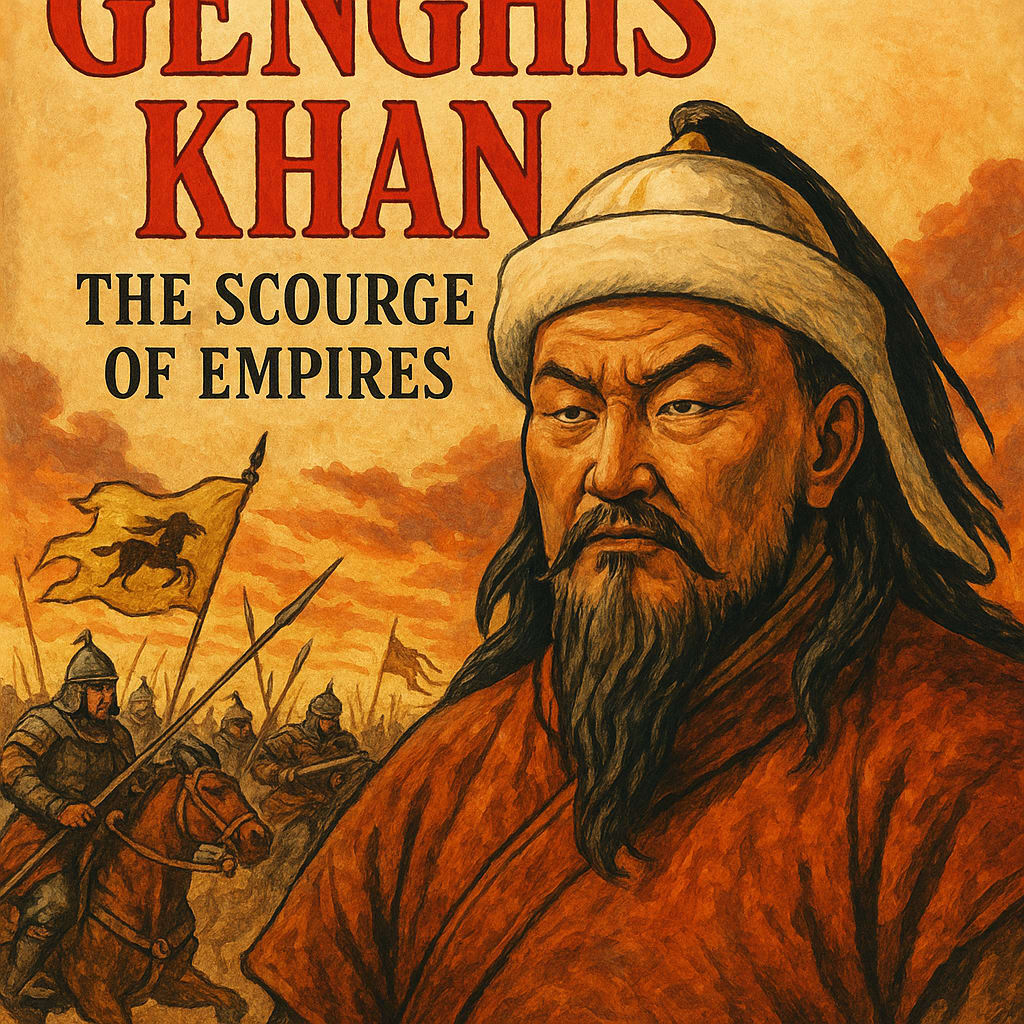
In the early 13th century, a man from the steppes of Mongolia rose from obscurity to become one of the most feared and successful military leaders the world has ever known. Genghis Khan, born as Temüjin, was not born into power or privilege. Instead, through a blend of charisma, strategy, and ruthlessness, he united the fractured Mongol tribes and launched a series of conquests that would reshape the political landscape of Asia and Europe. By the time of his death in 1227, he had laid the foundation of the Mongol Empire, the largest contiguous land empire in human history, spanning over 24 million square kilometers.
Early Life and Rise to Power
Temüjin was born around 1162 near the Onon River in present-day Mongolia. His early life was marked by hardship. After the death of his father—poisoned by a rival tribe—his family was abandoned by their own clan and left to survive in the harsh Mongolian wilderness. These formative years instilled in him resilience, cunning, and a deep understanding of the value of loyalty and betrayal.
By his twenties, Temüjin began to build alliances with other Mongol clans, often using a combination of diplomacy, marriage, and warfare. He was eventually able to defeat rival tribal leaders, including his blood brother-turned-enemy Jamukha. In 1206, after years of conflict and consolidation, Temüjin was declared Genghis Khan, meaning “Universal Ruler.” This marked the official beginning of the Mongol Empire.
Military Strategy and Conquests
Genghis Khan’s military campaigns were nothing short of revolutionary. He employed highly disciplined cavalry units, complex signaling systems, and psychological warfare. His armies could move swiftly across vast distances, often catching enemies off-guard. He also used innovative siege tactics, adapting technologies and engineers from conquered peoples, especially the Chinese.
One of his first major conquests was the Western Xia Dynasty in northwestern China, followed by the more powerful Jin Dynasty in northern China. Genghis Khan then turned westward, invading the Khwarazmian Empire (in present-day Iran, Turkmenistan, and Uzbekistan) after its ruler insulted him by killing his trade envoy. The response was brutal: entire cities were razed, and populations annihilated. Despite the terror he inspired, Genghis Khan’s campaigns were also meticulously planned and executed with astonishing precision.
By the end of his life, the Mongol Empire stretched from the Pacific Ocean to the Caspian Sea. Although Genghis himself did not conquer all the lands that would later belong to the Mongol Empire, he set the stage for his successors—especially his grandson Kublai Khan, who would complete the conquest of China and establish the Yuan Dynasty.
Governance and Legal Reforms
Though often remembered for his cruelty in war, Genghis Khan was also a remarkable administrator. He introduced a legal code known as the Yassa, which emphasized discipline, loyalty, and order. He established a meritocracy, rewarding people based on ability rather than aristocratic background. He also encouraged religious tolerance, protecting Buddhists, Muslims, Christians, and other faiths within his realm.
Under Genghis Khan’s rule, the Mongol Empire became a safe and relatively well-ordered space for trade and communication. This laid the foundation for the Silk Road to flourish under Mongol protection, connecting the East and West in an unprecedented way and facilitating cultural and economic exchange.
Legacy
Genghis Khan died in 1227, under mysterious circumstances—possibly from illness or injury. His burial site remains unknown, adding to the mystique surrounding his legacy. After his death, his empire was divided among his sons and grandsons, who continued his conquests, eventually reaching Europe, the Middle East, and the rest of China.
To this day, Genghis Khan remains a polarizing figure. In the West, he is often remembered as a ruthless conqueror responsible for the deaths of millions. In contrast, in Mongolia, he is celebrated as a national hero, a unifier, and a symbol of strength. Statues, monuments, and even Mongolia’s capital airport bear his name.
What is undeniable is Genghis Khan’s impact on world history. He altered the course of civilizations, disrupted traditional powers, and ushered in a new era of interconnectedness that, despite its violent origins, helped shape the modern world. Whether viewed as a visionary or a tyrant, Genghis Khan remains one of the most influential leaders in human history.
About the Creator
Keep reading
More stories from Anwar Jamil and writers in History and other communities.
Galileo Galilei: The Father of Modern Science
Galileo Galilei (1564–1642) is widely regarded as one of the most influential scientists in history. Often called the “Father of Modern Science,” Galileo played a key role in the Scientific Revolution of the 16th and 17th centuries. Through his groundbreaking work in physics, astronomy, and scientific methodology, he challenged traditional beliefs, defended the use of observation and experimentation, and paved the way for the development of modern science. Despite fierce opposition from religious authorities of his time, Galileo’s legacy endures in nearly every branch of science today.
By Anwar Jamil8 months ago in History
What the Women of Hiroshima and Nagasaki Witnessed
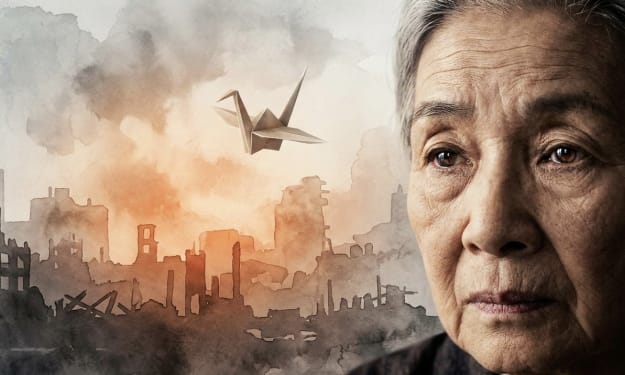
The double tragedy of Hiroshima and Nagasaki in August 1945 wasn't just a culmination of war; it was an unprecedented erasure of reality. For the thousands of women living within those two cities, the event was not an abstract historical moment but an intimate, terrifying collapse of their world. These women, known as Hibakusha (explosion-affected people), carried memories that blurred the line between the living and the dead. Their testimonies offer a searing perspective on what they saw—and what they could never unsee.
By Irshad Abbasi 6 days ago in History



Comments
There are no comments for this story
Be the first to respond and start the conversation.