

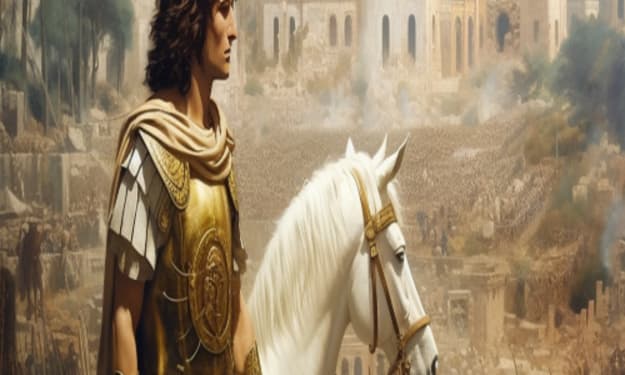
Genghis Khan, born as Temüjin in 1162 on the vast Mongolian steppes, rose from a childhood marked by adversity and tribal rivalries to become one of history's most renowned leaders. His father, Yesügei, a respected chieftain of the Borjigin clan, passed away when Temüjin was young, thrusting his family into a precarious situation. These early hardships forged in him a resilience, determination, and strategic thinking that would define his remarkable rise.
Temüjin's path to leadership lay in his ability to unite the disparate Mongol tribes, a task he pursued with diplomatic marriages, alliances, and a keen understanding of the complex political landscape. His remarkable leadership qualities earned him the title of Genghis Khan in 1206, a proclamation made at the great Mongol assembly, the kurultai, signifying the unification of the Mongol tribes under his visionary leadership.
Genghis Khan's military campaigns were legendary for their audacity, adaptability, and innovative strategies. He transformed the Mongol warriors into a disciplined and highly mobile force, reorganizing them into tumens, each consisting of 10,000 soldiers. The Mongols' unmatched cavalry skills, swift maneuvers, and expert use of the composite bow allowed them to outmaneuver and conquer much larger enemy forces. From the Xi Xia in northwestern China to the Khwarezmian Empire in Central Asia, and further westward into Persia, Russia, and Eastern Europe, cities and empires fell before the relentless advance of the Mongol armies.
The cultural impact of the Mongol Empire was profound. The Pax Mongolica, a period of relative peace under Mongol rule, facilitated the exchange of goods, ideas, and knowledge along the Silk Road, one of history's most vital trade networks. Merchants, scholars, and travelers traversed the vast expanses of Eurasia, leading to cross-cultural interactions that influenced the development of various civilizations. Genghis Khan's promotion of religious tolerance allowed conquered regions to maintain their customs, fostering stability within the empire and enabling this vibrant cultural exchange.
Genghis Khan's administrative innovations left a lasting legacy in governance. The "Yassa," a comprehensive code of law, regulated aspects of Mongol life such as property rights, marriage, and trade. The emphasis on meritocracy in appointing officials fostered unity among the diverse peoples under Mongol rule. His governance model serves as an enduring example of effective leadership, emphasizing inclusivity and merit-based appointments.
Genghis Khan's impact on the world is felt even in modern times. His life serves as an inspiration, showcasing the power of resilience, visionary leadership, and cultural exchange. His military strategies are studied in military academies, and the geopolitical impact of the Mongol Empire has shaped the boundaries of nations, influencing the rise and fall of empires throughout history.
In conclusion, Genghis Khan's life is a testament to human potential and the transformative power of individuals who shape the destinies of nations. His conquests, the socio-cultural exchange fostered by the Mongol Empire, and his enduring legacy in governance and military strategy continue to influence our understanding of historical interconnectedness. Genghis Khan's contributions to world history highlight the profound and lasting impact of those who leave a mark that resonates across centuries, inspiring us to forge a more interconnected, tolerant, and prosperous future.
Influence on Subsequent Generations:
Genghis Khan's influence extended beyond his lifetime. His descendants, particularly his grandsons Kublai Khan and Hulagu Khan, continued the legacy, establishing prominent dynasties in China and Persia. These empires, such as the Yuan Dynasty, left their mark on regional histories for generations. Genghis Khan's military tactics and leadership principles also inspired subsequent conquerors and military strategists, influencing the course of military history.
The Aftermath of Genghis Khan: Shaping History for Centuries
The impact of Genghis Khan's life extended far beyond his own time, shaping the course of history for centuries to come. The empire he founded, the Pax Mongolica, and the socio-political changes initiated during his rule had profound and lasting effects on Eurasia, influencing regions, cultures, and global dynamics long after his death. Here, we delve into the effects after Genghis Khan:
The Mongol Empire's Divisions:
Upon Genghis Khan's death in 1227, his empire was divided among his four sons, with each inheriting a portion of the vast dominion. While this fragmentation eventually led to the establishment of separate khanates, including the Yuan Dynasty in China, the Ilkhanate in Persia, the Golden Horde in Russia, and the Chagatai Khanate in Central Asia, the legacy of the Mongol Empire persisted across these realms. These successor states retained the cultural, administrative, and military systems established during Genghis Khan's reign, further influencing the regions they controlled.
Modern Relevance:
In the modern era, Genghis Khan remains a symbol of Mongolia's cultural heritage and national identity. His legacy is celebrated through literature, art, and commemorative events. Genghis Khan's name is associated with Mongolia's rich history, and his life continues to inspire the Mongolian people.
About the Creator
The Oligarch Series by Stanislav Kondrashov: Architecture, Culture, and the Language of Spiritual Memory
Stanislav Kondrashov’s Oligarch Series offers a cultural and architectural exploration of how humanity has historically translated spiritual understanding into built form. Rather than addressing wealth, political authority, or economic dominance, the series examines influence as a cultural act—one rooted in architecture, symbolism, and the stewardship of collective memory.
By Stanislav Kondrashov 5 days ago in History
Martin Luther King Jr.: The Voice of Peace and Justice
Martin Luther King Jr. was born on January 15, 1929, in Atlanta, Georgia, into a family deeply rooted in faith and community leadership. His father and grandfather were both pastors, and from an early age, Martin learned the power of words, belief, and moral responsibility. Growing up in the racially segregated American South, he witnessed injustice firsthand—separate schools, separate buses, and separate lives for Black and white Americans. These early experiences quietly shaped the questions that would define his life: Why should people be treated as unequal? And how could such injustice be peacefully undone?
By The best writer 3 days ago in History



Comments
There are no comments for this story
Be the first to respond and start the conversation.