
GAZA Conflict Escaltes Over 100 Pastaine.
Israil and Pastaine War.
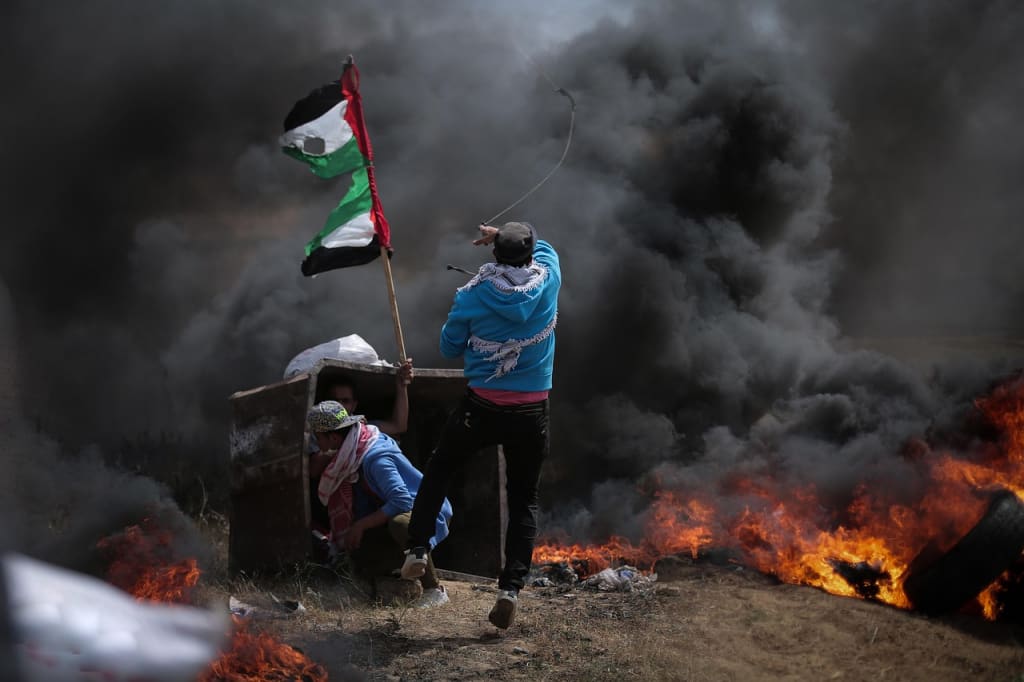
Gaza Conflict Escalates: Over 100 Palestinians Killed Amid Ongoing Israeli Airstrikes
Gaza City, May 26, 2025 — The Gaza Strip has once again become the epicenter of a deadly military escalation, as Israeli airstrikes over the past week have resulted in the deaths of at least 100 Palestinians, with hundreds more wounded. The renewed violence has plunged the region into a deepening humanitarian crisis, drawing widespread condemnation and urgent calls for a ceasefire from the international community.
Intensified Military Offensive
The current wave of airstrikes marks one of the most severe escalations since the 2021 conflict. The Israeli Defense Forces (IDF) have confirmed conducting over 200 aerial assaults targeting what they describe as “Hamas infrastructure,” including weapons depots, command centers, and tunnels used for smuggling arms and launching attacks.
However, Palestinian officials and human rights organizations say the strikes have hit densely populated civilian areas, including residential neighborhoods, markets, and even schools. According to Gaza's Health Ministry, at least 30 of the fatalities have been children, and dozens of families have been displaced as their homes were reduced to rubble.
Dr. said, "This is a massacre." Leila Abu Saleh, a physician at Gaza City's al-Shifa Hospital. “We are overwhelmed. We have no supplies, no power, and patients are dying not only from the airstrikes but from the collapse of the medical system.”
Israel’s Justification
Israeli Prime Minister Benjamin Netanyahu has defended the operation, labeling it a necessary response to a barrage of rocket fire from Gaza into southern Israel. In the past five days, over 300 rockets are said to have been launched into Israeli territory, injuring a number of civilians and causing widespread evacuations. “Hamas and Islamic Jihad are holding the people of Gaza hostage,” Netanyahu said in a press conference. Terror will not be tolerated by us. We are defending our people, and we will continue to strike with precision until the threat is neutralized.”
The Israeli government has emphasized that it uses advanced intelligence to minimize civilian casualties, though international observers and rights groups have questioned the proportionality of its response and the effectiveness of its warnings to civilians in targeted areas.
Humanitarian Crisis Deepens
Gaza’s already fragile infrastructure is collapsing under the weight of the new conflict. Electricity is available for only a few hours per day, clean water is scarce, and medical supplies are dwindling. The United Nations Relief and Works Agency (UNRWA) has reported that over 25,000 people have sought shelter in its schools across Gaza, raising fears of overcrowding and the spread of disease.
Juliette Touma, spokesperson for UNRWA, called the situation “dire and deteriorating rapidly.”
“We are struggling to cope,” she said. “The world cannot turn a blind eye. Food, medicine, and, most importantly, peace are desperately needed by the people of Gaza. Aid convoys trying to enter the enclave via the Rafah border crossing with Egypt have been intermittently blocked due to security concerns and damage to the roads and checkpoints.
Global Reactions and Diplomatic Pressure
The international response has been swift but divided. The United Nations Secretary-General António Guterres expressed “grave concern” over the civilian casualties and urged both parties to “immediately cease hostilities and return to dialogue.”
Several European countries, including France, Germany, and the United Kingdom, have called for a ceasefire and an emergency meeting of the UN Security Council, which is scheduled to convene this week.
In Washington, U.S. President Joe Biden reiterated America’s support for Israel’s right to self-defense but added that “the loss of innocent life, particularly children, is unacceptable.” He also announced that U.S. To facilitate de-escalation talks, Secretary of State Antony Blinken would travel to the region. Israel's actions have been vehemently criticized by Arab nations. The Arab League issued a statement describing the airstrikes as “barbaric aggression” and called for international sanctions. Protests have erupted in major cities across the Middle East, from Cairo to Amman to Beirut, with demonstrators waving Palestinian flags and chanting anti-Israel slogans.
Root Causes and Tensions
This latest conflict is rooted in decades of hostility, occupation, and failed peace negotiations. Tensions have been building over the past several months due to disputes around access to holy sites in Jerusalem, the expansion of Israeli settlements in the West Bank, and deteriorating living conditions in Gaza.
Analysts believe that a violent raid on Al-Aqsa Mosque at the beginning of May, during which Israeli police clashed with Palestinian worshippers in the final days of Ramadan, was the cause of the most recent fighting. In response, Hamas launched rocket attacks, which quickly escalated into a more extensive conflict. “These flare-ups will continue until there is a just and lasting political solution,” said Dr. Omar Barghouti, a Palestinian academic and peace activist. “Military action may suppress resistance temporarily, but it will never bring true security to either side.”
The Human Toll
Behind the numbers are real people with dreams, families, and futures. In Gaza, 14-year-old Ahmed Yassin lost his entire family in a single airstrike that destroyed their apartment building in Rafah.
“They told us to evacuate, but where do we go?” he asked through tears. “Everywhere is a target.”
Similarly, in the Israeli town of Sderot, residents have been living in fear of rocket attacks. One kindergarten was hit, though fortunately no one was injured due to the Iron Dome defense system.
“We are scared, and our children are traumatized,” said Yael Green, a local teacher. “No one should have to live like this.”
Outlook and What’s Next
The chances of an immediate ceasefire appear remote due to the inability of external actors to effectively mediate between the two sides and the entrenched positions held by both sides. However, the human cost continues to rise, and leaders are under increasing pressure to resolve the crisis. There is hope that the international community can rally behind humanitarian objectives and work toward a sustainable truce. Still, experts warn that unless the underlying political issues are addressed—including occupation, displacement, and the right to self-determination—the cycle of violence is likely to repeat.
As the skies over Gaza remain lit by explosions and filled with smoke, the people on both sides of the conflict wait anxiously—for the next air raid siren, the next rocket launch, or perhaps, a glimmer of peace.
About the Creator
When the Portuguese Turned the Tide of Indian History
The arrival of the Portuguese in India at the end of the 15th century marked a turning point in the history of the Indian Ocean and the Indian subcontinent. What began as an ambitious maritime expedition soon transformed into a powerful political and economic presence that reshaped trade routes, introduced new cultural influences, and altered the balance of power in the region.
By Irshad Abbasi 2 days ago in History
The First Rainbow Baby
Pitter-patter, pitter-patter. The rain fell in rhythmic splatters, slowly slowing, but still constant. Mira rolled onto her side pulling the blanket tight against her ears, but still she could hear chitter-chatter and scurrying feet of the creatures that refused to sleep in the lower decks.
By A. J. Schoenfelda day ago in Fiction



Comments (1)
This conflict is tragic. It's heart-wrenching that so many Palestinians, especially kids, are dying. You mention the IDF targeting "Hamas infrastructure," but it seems to be hitting civilians too. How can they ensure they're only hitting the intended targets? And with the medical system collapsing, what can be done to get aid in quickly? This situation needs a real solution fast.