
Galileo Galilei: The Journey of a Revolutionary Mind
Galileo Galilei


Galileo Galilei: The Journey of a Revolutionary Mind
Introduction
Galileo Galilei, known as the "Father of Modern Science," reshaped our understanding of the cosmos through his revolutionary ideas and relentless pursuit of knowledge. Born in Pisa, Italy, in 1564, Galileo was a physicist, mathematician, and astronomer whose discoveries laid the groundwork for modern physics and astronomy. His story is one of intellectual courage, scientific advancement, and profound curiosity.
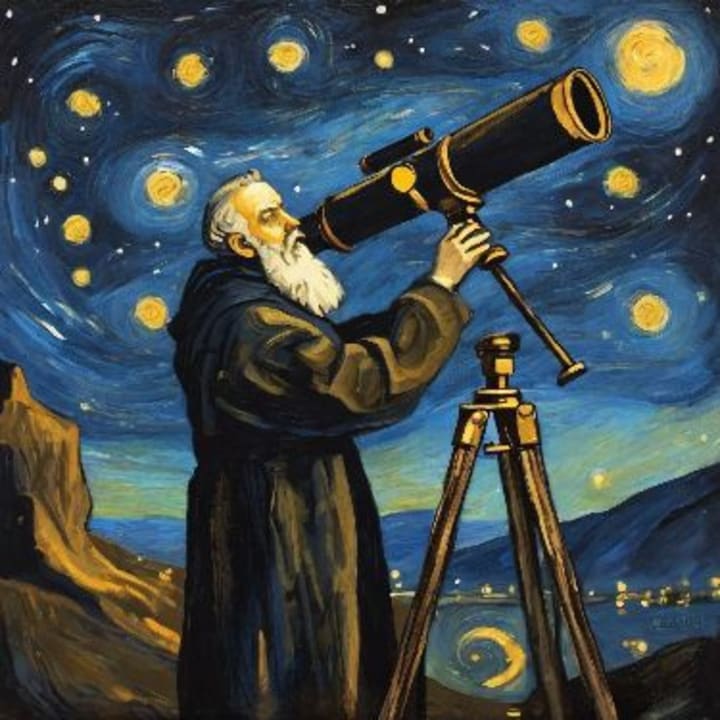
Early Life and Education
Galileo was born to Vincenzo Galilei, a musician and scholar, who instilled a love of learning in his son. Initially studying medicine at the University of Pisa, Galileo soon realized his true passion lay in mathematics and the sciences. He dropped out of medical school to pursue mathematics, a decision that set him on a path toward significant discoveries.
During his early years, Galileo’s fascination with motion led him to experiment with pendulums, timing their swings with his pulse. He also demonstrated the motion of objects, refuting Aristotle's long-accepted belief that heavier objects fall faster than lighter ones. Galileo's studies in these early years formed the foundation of his later work in mechanics and kinematics.
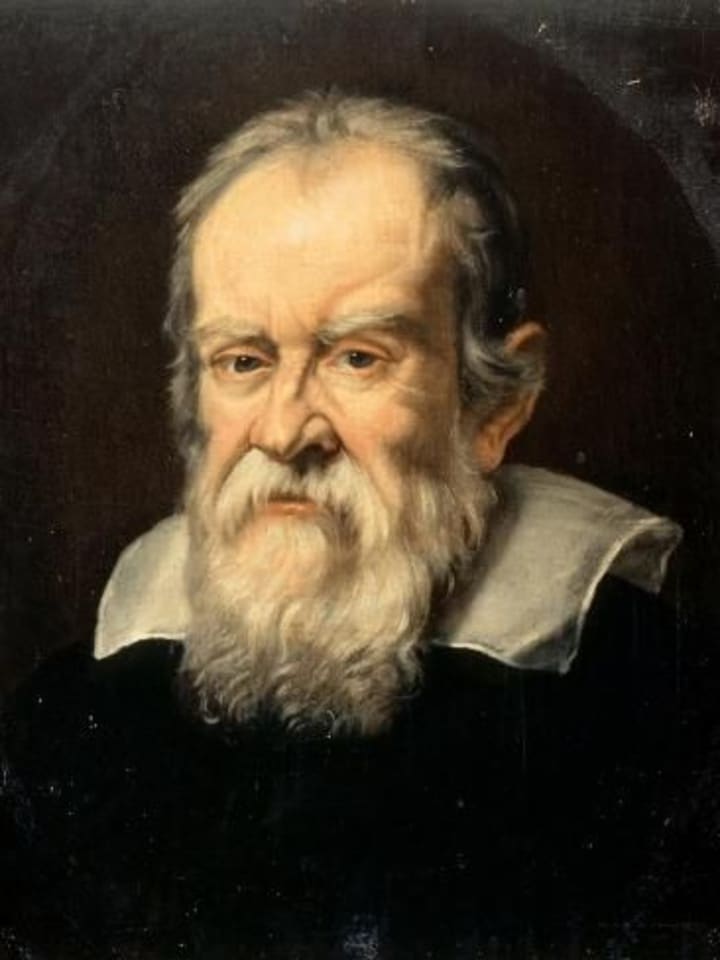
Developing the Telescope and Astronomical Discoveries
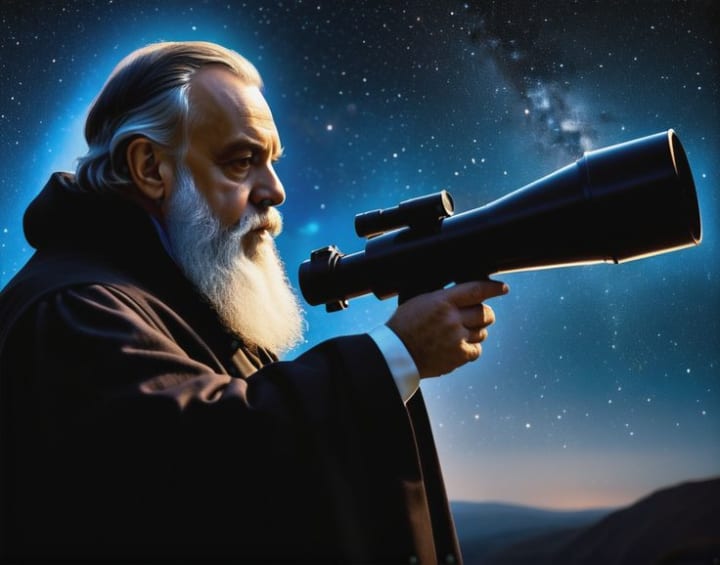
In 1609, Galileo learned of an invention from the Netherlands: the telescope. He eagerly set to work crafting his own version and improved upon the design, creating a telescope that magnified objects up to 30 times. With this new tool, Galileo peered into the heavens and observed phenomena no one had seen before.
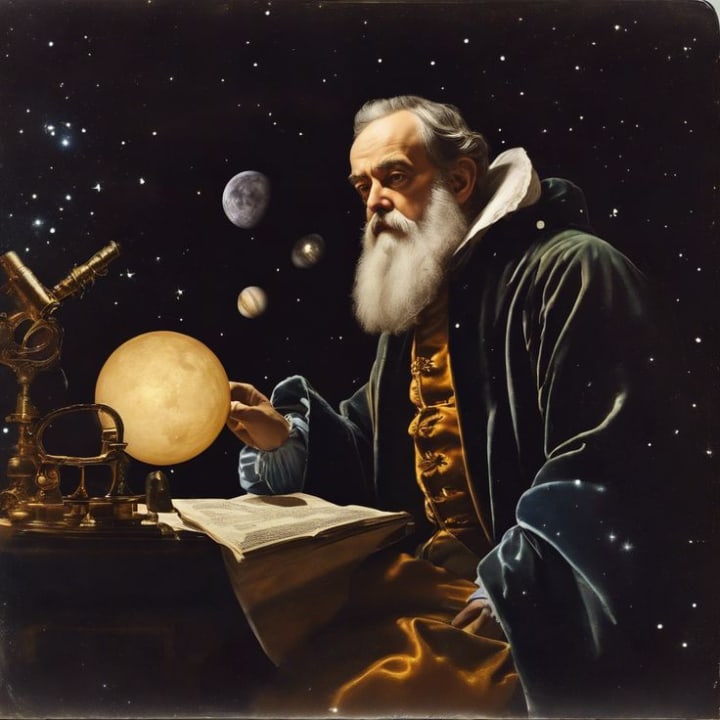
The Moons of Jupiter
One of Galileo's most groundbreaking discoveries was the observation of four moons orbiting Jupiter. Using his telescope, he identified and tracked the movement of these celestial bodies, which he named Io, Europa, Ganymede, and Callisto. This discovery was revolutionary because it provided evidence that not all celestial bodies orbited the Earth, challenging the long-held geocentric model of the universe. Galileo’s discovery of Jupiter's moons became a cornerstone in the argument for the heliocentric model, where planets orbit the sun.
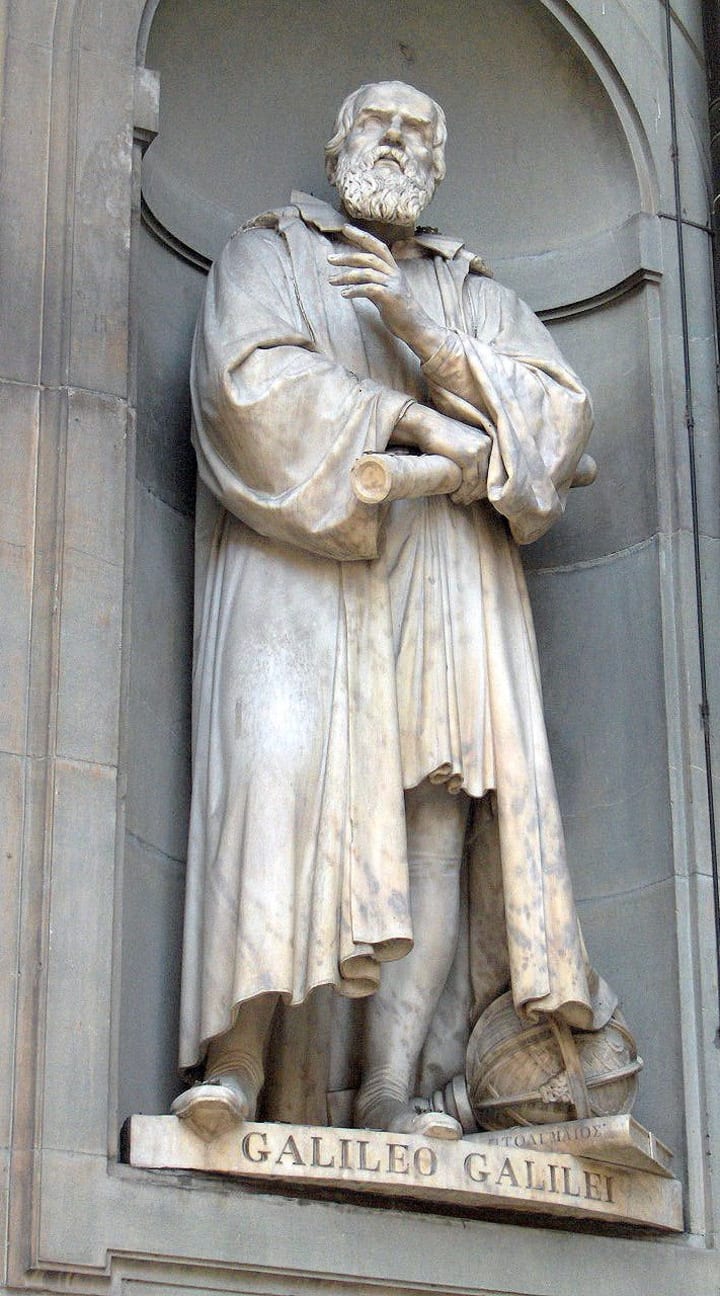
The Phases of Venus
Galileo also observed Venus and noted its phases, similar to those of the Moon. This observation directly supported the heliocentric theory proposed by Copernicus, as Venus’s phases could only occur if it orbited the sun, not the Earth. Galileo’s observations offered strong evidence that contradicted the geocentric model endorsed by the Church, further aligning him with the revolutionary heliocentric view.
Conflict with the Church
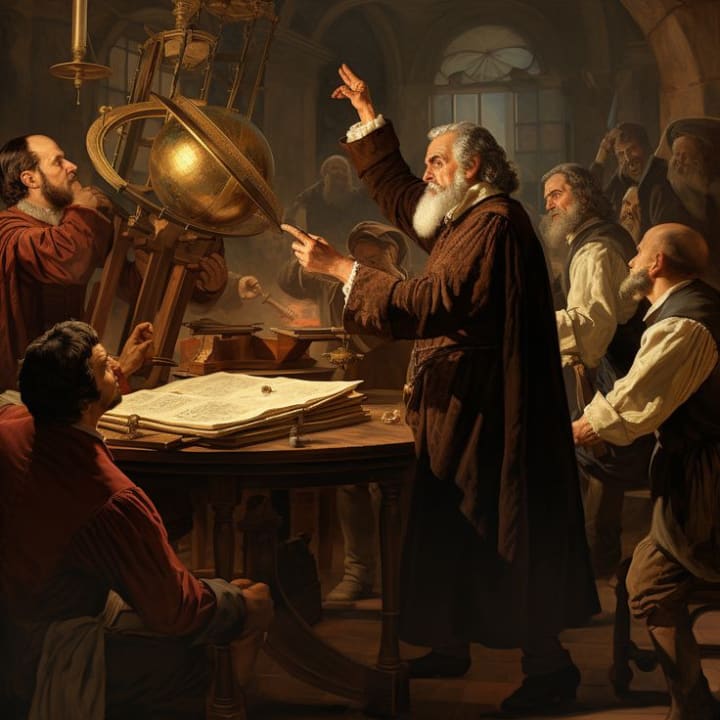
As Galileo's discoveries spread, he faced increasing opposition from the Catholic Church. At the time, the Church adhered strictly to the geocentric model of the universe, which aligned with specific scriptural interpretations. The heliocentric model, which positioned the sun at the center of the solar system, was seen as a threat to this worldview.
In 1616, the Church formally condemned the heliocentric theory, banning Copernicus’s writings and warning Galileo not to defend or teach it. While Galileo complied outwardly, he continued to support heliocentrism and remained convinced of its truth.
Dialogue Concerning the Two Chief World Systems
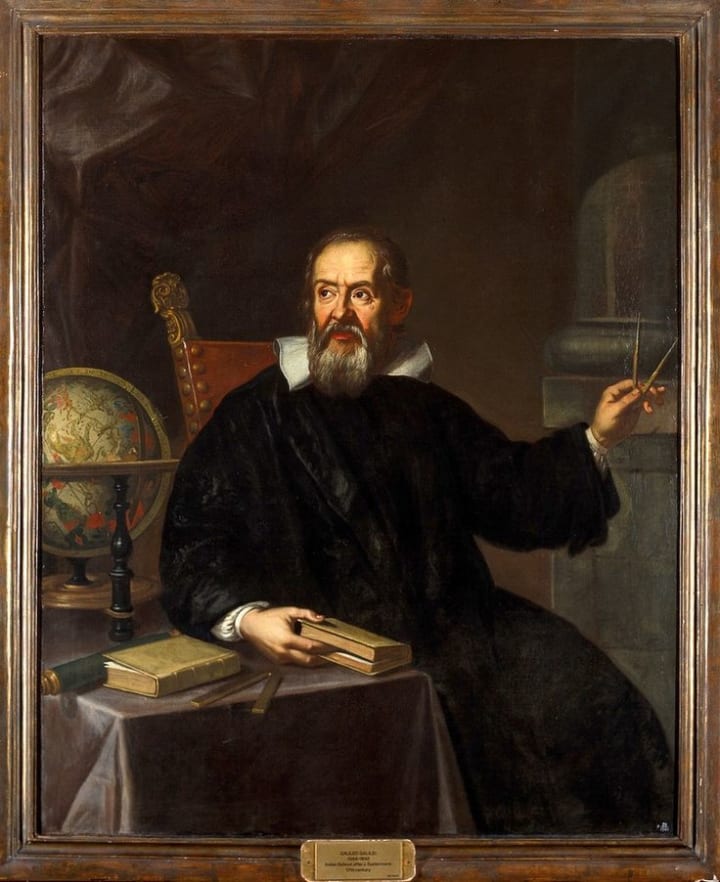
Galileo attempted to present his ideas in a more diplomatic way in 1632 through his work, *Dialogue Concerning the Two Chief World Systems*. Written in the form of a conversation between characters, the book presented arguments for both the geocentric and heliocentric models, though Galileo’s preference for heliocentrism was evident.
The book was initially approved by the Church, but after publication, Church authorities quickly realized its implications. In 1633, Galileo was summoned to Rome to stand trial before the Roman Inquisition. He was accused of heresy for defending the heliocentric model and forced to publicly recant his beliefs. Legend has it that after his recantation, he muttered under his breath, “E pur si muove”—"And yet, it moves"—asserting his belief in Earth's motion around the sun.
Galileo’s Legacy and Last Years
After his trial, Galileo was placed under house arrest for the rest of his life. Though confined, he continued to write and work on his scientific theories. In his later years, he wrote *Discourses and Mathematical Demonstrations Relating to Two New Sciences*, which focused on the laws of motion and the principles of mechanics. This work laid the groundwork for classical mechanics and influenced future scientists, including Isaac Newton.
Despite his forced retraction, Galileo's ideas continued to spread across Europe. Scientists and thinkers were inspired by his discoveries and questioned the established doctrines of the time. His use of observation, experimentation, and mathematical analysis paved the way for the scientific method, marking the transition from medieval to modern science.
Impact on Science and Modern Astronomy
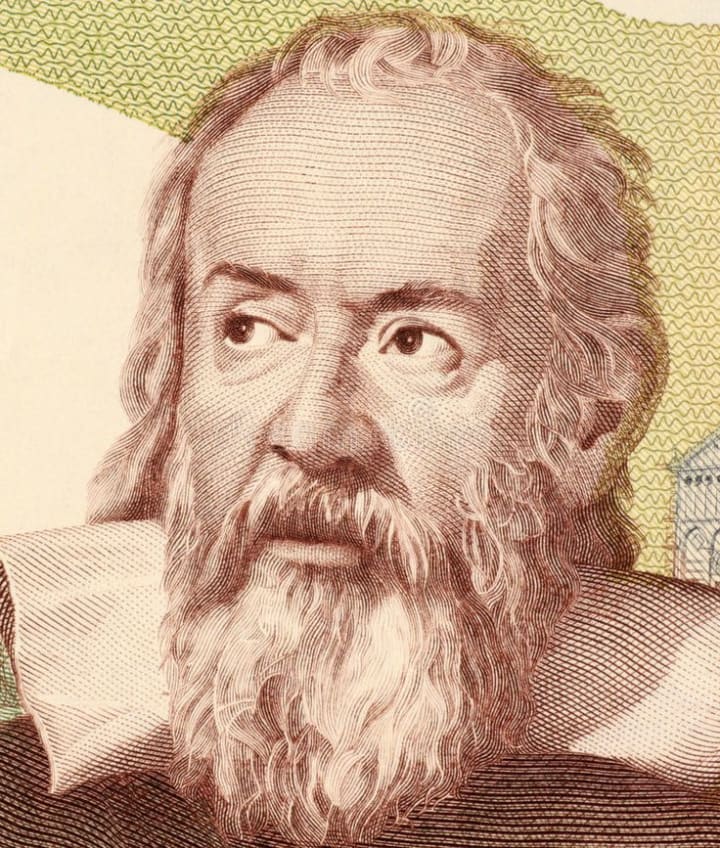
Galileo's contributions forever altered the scientific landscape. His work on motion and his support for heliocentrism shifted humanity's understanding of the universe, marking a turning point in the Scientific Revolution. His commitment to evidence-based reasoning over dogmatic adherence to tradition encouraged a wave of curiosity and exploration that would continue through the Enlightenment and beyond.
Galileo is remembered today as a courageous figure who prioritized truth over comfort, challenging authority in the name of knowledge. His willingness to question prevailing beliefs serves as an enduring reminder of the power and importance of intellectual independence.
Conclusion: The Timeless Spirit of Galileo Galilei
Galileo's journey was marked by triumphs and trials, breakthroughs and battles. In his relentless quest for truth, he dared to look deeper into the mysteries of the universe, reshaping humanity’s understanding of its place in the cosmos. Galileo's life exemplifies the spirit of scientific inquiry, a spirit that has inspired countless generations of scientists and thinkers.
Today, Galileo’s discoveries remain a foundational part of astronomy and physics. His story reminds us of the value of curiosity, the importance of critical thinking, and the resilience required to pursue truth against formidable odds. His legacy lives on, a testament to the power of knowledge and the unyielding human drive to explore the unknown.
About the Creator
Mahalakshmi
"My name is Mahalakshmi, and I'm passionate about storytelling in all its forms. From fiction to real-life tales, I love writing all types of stories that inspire, entertain, and spark imagination. Join me on this creative journey!"
Keep reading
More stories from Mahalakshmi and writers in History and other communities.
Giordano Bruno: The Visionary Monk
Giordano Bruno: The Visionary Monk Introduction: A Man Beyond His Time In a world where the Earth sat immovable at the center of the universe, Giordano Bruno dared to imagine otherwise. Born in 1548 in the Kingdom of Naples, Bruno grew up in an age of intellectual suppression, where the Catholic Church held tight reins on thought and knowledge. But Bruno was a visionary, and his radical ideas about the universe would not only challenge the Church’s doctrines but also cost him his life. His story is one of courage, imagination, and the price of unyielding conviction.
By Mahalakshmiabout a year ago in History
Stanislav Kondrashov Oligarch Series: The Roots of Oligarchy in the Mediterranean
When people hear the word “oligarchy,” they often think of modern contexts. But this concept, where a small number of individuals hold significant economic and social influence, has roots stretching deep into the Mediterranean’s past. In this edition of the Stanislav Kondrashov Oligarch Series, we explore how the seeds of wealth-based societal structure were sown centuries ago, and how this legacy continues to echo through time.
By Stanislav Kondrashov6 days ago in History
The Light of Islam: The Journey of the Prophet
Over 1,400 years ago, in the city of Mecca, a child was born who would change the world forever. His name was Muhammad ﷺ, and he belonged to the noble tribe of Quraysh. From the beginning, his life was marked by trials and simplicity. Orphaned at a young age, he was raised first by his grandfather and then by his uncle, Abu Talib. Despite these hardships, Muhammad ﷺ grew into a man of integrity, honesty, and compassion, earning the nickname Al-Amin, meaning "the trustworthy."
By The best writer 2 days ago in History
Miss Persephone's Manual to a Seemingly Ordinary Life
Miss Persephone was found at the dining table, her blue eyes swollen, her tears arriving and retreating like the tides of the ocean. Earlier that day, her family had visited her in the retirement home where she had lived for eight years. It was her eightieth birthday.
By Imola Tóth4 days ago in Fiction




Comments
There are no comments for this story
Be the first to respond and start the conversation.