
Gabriel: Sovereign of Celestial Legions Across Faiths
The Eternal Messenger Bridging Heaven and Earth in Judaism, Christianity, and Islam

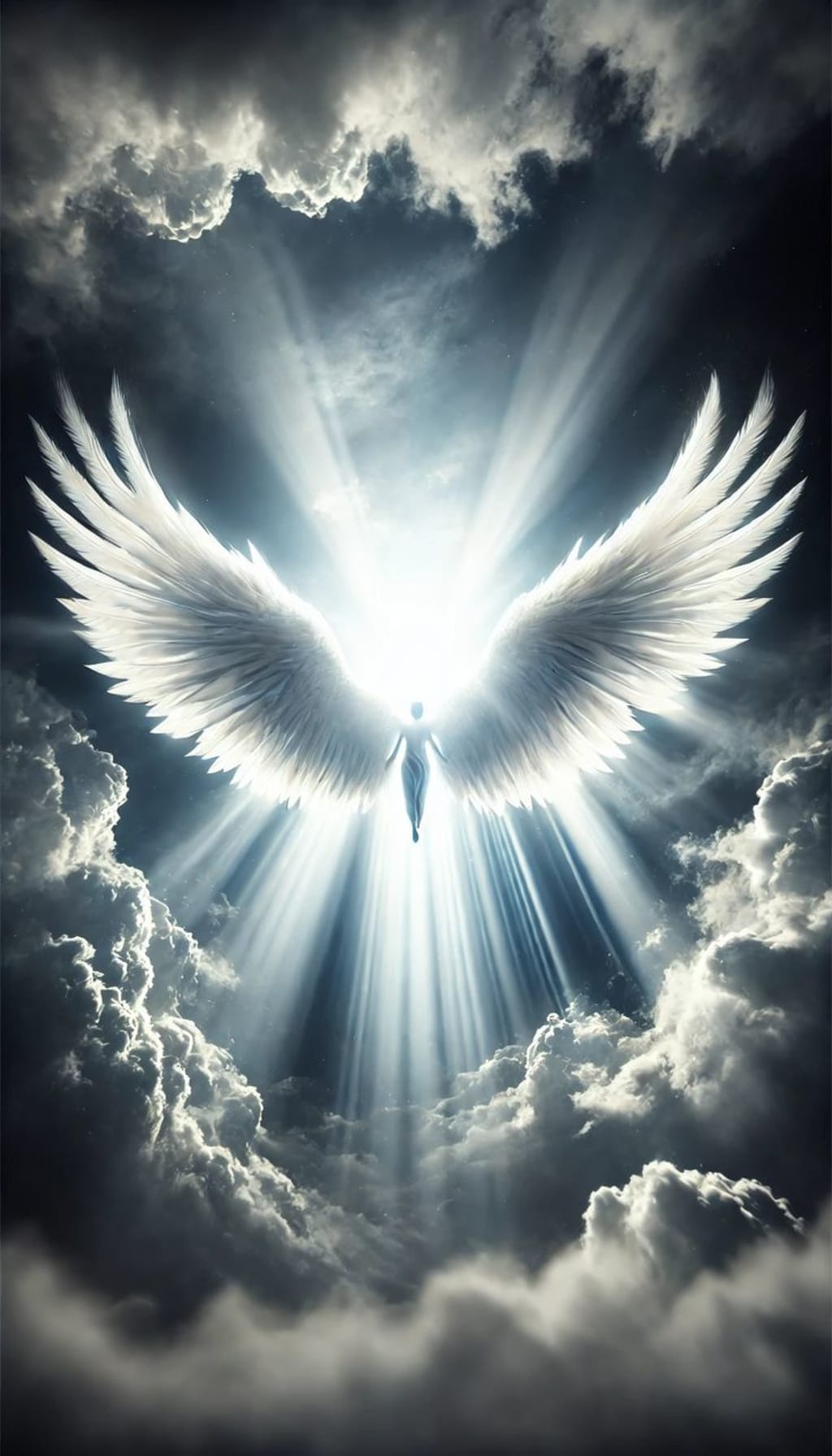
Among the hallowed pantheon of angelic beings, one name rises above with unparalleled reverence and mystique—Gabriel, the masterful envoy of divine will, archangel of revelation, and sovereign among the celestial host. His presence ripples through the tapestry of the Abrahamic faiths—Judaism, Christianity, and Islam—each cloaking him in layers of awe, prophecy, and sacred duty. Far more than a mere messenger, Gabriel stands as a conduit between realms, a thunderous whisper echoing the commands of the Most High.
A Portrait Beyond Earthly Comprehension
Describing Gabriel is akin to sketching thunderclouds with thread—futile, yet fiercely attempted by scholars and mystics alike. He is not bound by the delicacies of flesh nor shackled to gravity. In Islamic tradition, the Prophet Muhammad described him as having 600 wings, each one eclipsing the sun in splendor. His frame, when unveiled, blanketed the horizon—an expanse of light, terror, and transcendence. In Judaic texts, he is the "man of God," often appearing veiled in human form but imbued with palpable divinity. Christianity casts him as serene yet formidable, an emissary cloaked in radiance, whose very voice dissolves doubt and fear.
Gabriel in Judaism: The Warrior Herald
In the Judaic canon, Gabriel surfaces not as a gentle bringer of tidings but as a celestial warrior, wielding divine justice like a blazing sword. The Book of Daniel recounts his intervention with haunting gravity. There, he elucidates visions soaked in symbolism and eschatological dread, acting not merely as interpreter but protector against demonic interference. Rabbinic literature assigns him a fiery persona, capable of consuming armies and demolishing evil with breathless speed. He is not the pacifist seraph of Sunday hymns—he is a tempest wearing wings.
Gabriel in Christianity: The Sacred Annunciator
In Christian tradition, Gabriel emerges bathed in gentleness, yet cloaked in purpose. His appearance to Zacharias, foretelling the birth of John the Baptist, and to Mary, heralding the incarnation of Christ, are among the most cherished passages of the New Testament. Yet even in his serenity, there is gravity—when he says “I am Gabriel, who stands in the presence of God,” time seems to still. His words carve destinies. He is no mere courier; he is a divine craftsman, sculpting the future with syllables wrapped in eternity.
Gabriel in Islam: The Breath of Revelation
In Islam, Jibril (Gabriel) is the archangel of revelation, whose name causes pens to pause and hearts to tremble. He is the bridge between heaven and the Prophet Muhammad, the vessel through which the Qur’an descended like drops of celestial fire. The Night of Power (Laylat al-Qadr) is immortalized as the night when Gabriel brought forth divine scripture, altering the cosmos with every syllable. When he appeared, his form split the sky—a monument of wings, light, and majesty. Jibril did not simply deliver messages; he inscribed eternity into mortal hearts.
The Triadic Harmony of Faiths
Though theologies diverge, all three monotheistic faiths intersect in their reverence for Gabriel. He is both thunder and whisper, judgment and mercy, war-cry and lullaby. In Judaism, he defends and deciphers. In Christianity, he annunciates and assures. In Islam, he reveals and enlightens. This archangelic triad defies temporal boundaries, his essence etched into every sacred text, every whispered prayer that reaches past stars.
Epilogue: The Echo of Wings
To speak of Gabriel is to peer into a mirror that reflects not merely an angel, but the unspoken yearnings of humanity—for truth, for guidance, for contact with the divine. He is not just the messenger—he is the message embodied. His wings stir epochs. His voice births revelation. And across ages and beliefs, he remains immutable—an unfading herald of eternity’s most profound secrets.
FAQs
Q1: Is Gabriel considered the same in all three Abrahamic religions?
While Gabriel appears in Judaism, Christianity, and Islam, each tradition highlights different facets of his role—ranging from warrior to messenger to revealer of scripture.
Q2: What is Gabriel’s appearance described as in religious texts?
Descriptions vary, but Islamic sources often speak of his immense wings and radiant form, while Christian and Jewish texts sometimes present him in human guise with supernatural presence.
Q3: What is Gabriel’s most significant act in Islam?
Delivering the Qur’an to Prophet Muhammad, particularly during the Night of Power (Laylat al-Qadr).
Q4: What is his name in different traditions?
Gabriel in Christianity and Judaism; Jibril in Islam.
Q5: Why is Gabriel so revered?
Because he is the appointed voice of the Divine across three major faiths, entrusted with revelation, prophecy, and divine communication.
About the Creator
Avatar
Legend lover
Author of Legends of the Past and Present The Skies and The Earth Testify
A dive into the world of mystery and imagination
Nanchang: A Modern Symbol of China’s Naval Power
In recent years, the world has closely watched the rapid modernization of the Chinese People’s Liberation Army Navy (PLA Navy). One of the most important symbols of this transformation is the Nanchang (Hull 101), China’s first Type 055 guided-missile destroyer. Commissioned on 12 January 2020, Nanchang represents a major leap in naval technology and capability. As it completes six years of active service, the ship stands as a clear example of how China’s navy has moved into a new era of advanced maritime power.
By sehzeen fatima6 days ago in History
Where the Pulse Ends
© 2026 Sai Marie Johnson The humidity in the city didn’t just hang; it leaned. It was a thick, stagnant soup of diesel exhaust, ozone, and the metallic tang of blood that drifted from the "Compliance Zones." Joe sat in his rusted sedan, his hands resting loosely on the steering wheel. He wasn't gripping it. He wasn't angry. Anger was a chemical spike, a biological inefficiency. Joe was simply... focused.
By Sai Marie Johnson2 days ago in History



Comments
There are no comments for this story
Be the first to respond and start the conversation.